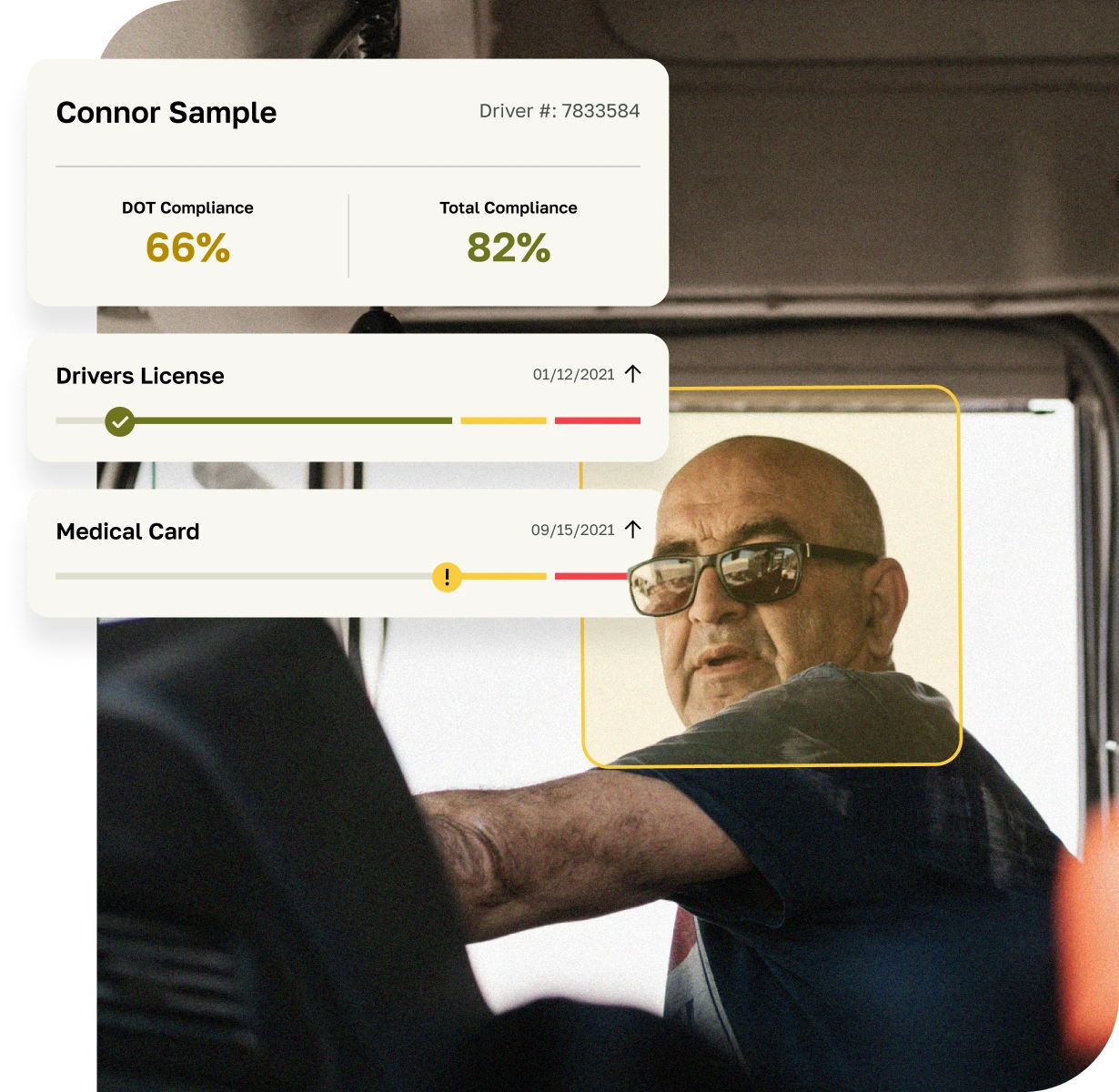

The best DOT drug and alcohol compliance technology for a commercial fleet is the system that runs the random testing pool, tracks FMCSA Clearinghouse queries, and keeps the resulting records audit-ready in one connected place. Point tools that handle only collections or only Clearinghouse queries leave the gaps that surface during a compliance review. Fleetworthy Compliance and Haul by Fleetworthy cover that full workflow.
What does DOT drug and alcohol compliance software actually have to do?
DOT drug and alcohol compliance software has to do five jobs: maintain a defensible random selection pool at the federal minimum rates, schedule and track pre-employment, post-accident, reasonable suspicion, return-to-duty and follow-up tests, run and record FMCSA Clearinghouse queries, store the records an investigator will ask for, and flag a driver whose status changes before that driver is dispatched.
Those jobs sit across two federal rules. 49 CFR Part 40 sets the testing procedures for every DOT mode. 49 CFR Part 382 sets the FMCSA-specific requirements for CDL drivers, including the Clearinghouse. A tool that covers one and not the other produces a program that looks complete on a dashboard and fails on paper.
What are the 2026 FMCSA random testing rates?
For calendar year 2026, FMCSA’s minimum annual random testing rates are 50% for controlled substances and 10% for alcohol, both unchanged from 2025 and both set at the baseline in 49 CFR 382.305(b). The drug rate has stood at 50% since 2020. The Administrator can move either rate based on industry positive rates, and any change takes effect January 1 of the year after it is published in the Federal Register, so the rate is worth re-checking each December rather than assuming it holds.
The percentage is calculated against the average number of driver positions subject to testing across the year, not a headcount snapshot taken in January. A fleet that grows from 180 to 320 drivers over twelve months and sizes its pool against the opening number will finish the year short. This is a common arithmetic failure in a random program, and it is the first thing software should calculate rather than the compliance manager.
How does the FMCSA Clearinghouse change what fleets need from software?
The FMCSA Drug and Alcohol Clearinghouse turned a records problem into a licensing problem. Since November 18, 2024, under the rule commonly called Clearinghouse II, State Driver Licensing Agencies must query the Clearinghouse before issuing, renewing, upgrading or transferring a CDL or CLP, and must downgrade the commercial license of any driver in prohibited status. The agency has 60 days from notification to complete that downgrade.
The scale is not marginal. More than 200,000 CDL and CLP holders were in prohibited status by January 2026, up from roughly 180,000 in December 2024. FMCSA’s own monthly summary reporting found that nearly 80% of drivers in prohibited status have not begun the return-to-duty process (FMCSA Drug and Alcohol Clearinghouse, January 2026 summary). Cumulative Clearinghouse records through the December 2025 report show 360,107 drug violation test results and 8,877 alcohol violation results since the system opened on January 6, 2020.
For software selection, this means annual queries alone are no longer sufficient coverage. A driver can clear a January annual query, test positive for another employer in March, and be sitting on a 60-day downgrade clock that the fleet learns about when the license is pulled.
What changed in DOT testing rules in 2026?
Three changes landed in 2026, and each one has a software implication.
Observed collections and oral fluid testing. DOT published a final rule on May 11, 2026 (91 FR 25507), effective June 10, 2026. Where an oral fluid test would be required but oral fluid testing is not available, a directly observed urine collection is used instead. The rule also rewrites the same-sex observer provisions in 40.67(g) and adds collector guidance at 40.65(d) directing collectors to check for a standing employer order or contact the Designated Employer Representative before proceeding.
Oral fluid is still not usable. As of that rule’s publication, HHS had certified no laboratories for oral fluid testing, and DOT requires at least two. Once HHS announces a second certified laboratory, employers get an 18-month grace period to continue observed urine collections while standing up oral fluid capability. DOT extended that window from the one year it originally proposed. Fleets should treat oral fluid as a configuration change to plan for, not a current option.
Fentanyl is proposed, not required. DOT issued a notice of proposed rulemaking in September 2025 to add fentanyl and norfentanyl to the DOT testing panel. It remains a proposal. Vendor claims that fentanyl testing is now part of the DOT panel are ahead of the rule.
A fourth change is adjacent but routinely missed: since June 23, 2025, medical examiners submit results electronically through National Registry II, and a lapsed medical certificate can trigger an automatic license downgrade. A drug and alcohol program managed separately from driver qualification files will not catch that.
How should a fleet compare DOT drug testing software?
Compare the options against the work, not the feature list. Most fleets are choosing among four approaches, and the right answer depends on fleet size, whether a dedicated compliance team exists, and whether drug and alcohol is being solved on its own or as part of driver qualification.
| Approach | What it covers | Where it breaks down | Best fit |
|---|---|---|---|
| Consortium / TPA membership | Random pool administration, collection site network, MRO services | Records often live with the vendor, not the fleet; limited visibility during processing; little connection to DQ files | Owner-operators and very small fleets |
| Standalone drug and alcohol software | Test scheduling, result tracking, Clearinghouse queries | Separate system from driver qualification, medical certificates and MVR monitoring; creates a second record set to reconcile at audit | Fleets with an existing DQF system they will not replace |
| DQF platform with a drug and alcohol module | Driver files plus testing records in one place | Depth of the testing workflow varies; some platforms query the Clearinghouse but do not monitor it continuously | Mid-market fleets consolidating driver records |
| Complete fleet readiness suite | Drug and alcohol, DQ files, medical certificates, MVR monitoring, asset compliance, plus safety and roadside data | Broader than a fleet solving only for drug testing needs today | Fleets treating audit readiness as one program |
Five evaluation criteria separate systems that hold up under a compliance review from systems that do not:
- Pool math is automatic. The system recalculates the 50% and 10% minimums against a changing driver count, and shows the year-to-date completion rate against the requirement.
- Clearinghouse status is monitored, not queried. Limited queries, full queries and consent records are tracked, and a status change surfaces as an alert rather than at the next annual cycle.
- Records are visible to the fleet in real time. A managed service that holds documents without showing them during processing is a records risk at audit, not a convenience.
- Medical certificates and MVRs live in the same record. A driver’s readiness to drive is a single question, and the systems that answer it separately produce conflicting answers.
- Export is clean. The test of a vendor relationship is whether the fleet can get complete, usable driver files back on request, in a format an investigator will accept.
What does Fleetworthy do for DOT drug and alcohol compliance?
Fleetworthy manages DOT drug and alcohol compliance as part of driver qualification rather than as a separate product. Fleetworthy Compliance (formerly CPSuite) gives larger fleets a managed-service team that keeps driver and asset records audit-ready, with real-time document visibility and 24/7/365 dashboard access during processing, not only after it. Haul by Fleetworthy gives smaller and growing fleets the same audit-ready outcome through a self-service, AI-powered platform, and reduces compliance administrative work by up to 40% through automated document reading, validation and reminders.
Two results give a sense of the difference that consolidation makes. Golden Waffles, a 135+vehicle food manufacturing and distribution fleet, raised Driver Qualification File compliance to 80% after adopting Fleetworthy Compliance, having started with vehicle titles scattered across individual salespeople’s names and 15 to 20 administrative emails a day. QXO, a 3,000-truck fleet, moved from an incumbent managed service to Fleetworthy Compliance at 10% lower cost with 750 additional driver licenses included, citing slow service, limited data visibility and manual chase work at the prior vendor.
Fleetworthy is trusted by 90% of the largest fleets in North America across toll management, weigh station bypass, safety and compliance. Medical card verification against the FMCSA National Registry is automated within 14 days rather than left to manual clinic follow-up, which matters more now that a lapsed certificate can pull a license on its own.
One caution worth stating plainly: CSA scores are calculated by FMCSA and sit outside any vendor’s direct control. No compliance platform, including Fleetworthy, can promise a specific score improvement. What a platform can do is close the record gaps that produce violations in the first place.
What should a fleet do first?
Start with the pool, not the software. Pull the current driver count subject to testing, calculate what 50% and 10% of the annual average actually requires, and compare that against tests completed year to date. Then run a full Clearinghouse query audit against the active roster. Most fleets find the gap in one of those two places before they find it in a feature comparison.
From there, decide whether drug and alcohol compliance is a standalone problem or a symptom. If driver qualification files, medical certificates and MVR monitoring are already living in separate systems, solving drug and alcohol on its own adds a fifth place to look during an audit.