

Fleet compliance officer reviewing driver qualification compliance dashboard with truck fleet visible through office window
Summary: This guide explores the critical role of Driver Qualification (DQ) file management in commercial fleet operations. It outlines how structured documentation – from initial driver applications and Motor Vehicle Records (MVRs) to annual reviews and medical certifications – serves as an active operational asset rather than mere paperwork. By analyzing the entire driver lifecycle, identifying common documentation gaps that trigger FMCSA findings, and providing a step-by-step framework for building a robust compliance system, this article helps safety and fleet leaders minimize risk, streamline onboarding, and maintain constant audit readiness.
What Is Driver Qualification File Management and Why Does It Matter for Fleet Compliance?
In the commercial transportation industry, regulatory compliance is often viewed as an administrative burden – a mountain of paperwork that must be filed away to satisfy government inspectors. However, forward-thinking motor carriers understand that driver qualification (DQ) file management is not a passive filing exercise; it is an active, strategic safeguard that protects a company’s operational authority, reduces legal liability, and ensures public safety. Under the Federal Motor Carrier Safety Administration (FMCSA) regulations, specifically 49 CFR Part 391, every motor carrier must maintain a complete and up-to-date Driver Qualification file for every commercial motor vehicle (CMV) driver they employ or contract.
At its core, DQ file management is the structured process of collecting, verifying, updating, and archiving the essential records that prove a driver is legally licensed, medically fit, and safety-compliant. When a fleet fails to manage these files effectively, the consequences can be catastrophic. Missing documents, expired medical cards, or unverified safety histories can trigger severe FMCSA penalties, lead to costly out-of-service orders, and result in safety rating downgrades that cripple a carrier’s ability to secure profitable contracts or affordable insurance coverage.
Furthermore, in the event of a highway accident, the driver qualification file is the very first asset that plaintiff attorneys and safety investigators will demand. A disorganized, incomplete, or non-compliant file is an admission of corporate negligence, exposing the motor carrier to significant legal liabilities. Conversely, a robust, highly structured DQ file management system serves as an ironclad defense, demonstrating that the carrier has exercised due diligence and maintained a rigorous state of control. By treating qualification files as vital operational assets, fleets can streamline their processes, accelerate driver onboarding, and ensure they are always ready for an unannounced DOT audit.
Where Does Driver Qualification Live in the Broader Fleet Compliance Lifecycle?

Driver qualification lifecycle showing five stages: application, screening, qualification, monitoring, re-qualification
To build an effective compliance program, it is essential to understand where driver qualification fits within the broader fleet operational lifecycle. Just as a commercial vehicle must undergo rigorous inspection and maintenance before it is deemed road-ready, a commercial driver must pass through a structured qualification process before they are permitted behind the wheel. This driver lifecycle spans from the initial job application and pre-hire screening to annual performance evaluations and continuous license monitoring.
The lifecycle begins with the Driver’s Application for Employment, which must capture a complete ten-year employment history for CDL drivers and a detailed record of past safety violations and accidents. This initial step is critical, as it establishes the foundation of the driver’s record and informs the subsequent verification processes. From the application, the motor carrier must initiate the Pre-Employment Screening and verification phase. This involves requesting a three-year Motor Vehicle Record (MVR) from every state where the driver held a license, conducting a comprehensive Safety Performance History investigation with past employers, and querying the FMCSA Drug and Alcohol Clearinghouse.
Once the pre-hire verifications are complete, the driver enters the Initial Qualification phase. This requires verifying that the driver holds a valid Commercial Driver’s License (CDL) with the appropriate endorsements, obtaining a valid Medical Examiner’s Certificate (DOT Medical Card), and ensuring the completion of a road test or its equivalent. The transition from a candidate to an active, qualified driver is only complete when all of these artifacts are compiled into a structured qualification file.
However, qualification is not a one-time event. The driver must be maintained in a qualified state through continuous monitoring, annual reviews, and timely updates. This includes conducting an annual review of the driver’s MVR, obtaining a signed annual Certificate of Violations, and tracking the expiration of medical certificates and licenses. For a deeper look at the specific DOT driver requirements that govern this process, review the full FMCSA guidance on 49 CFR Part 391.
The Driver Qualification Lifecycle: A Visual Overview

Table showing the five stages of the driver qualification lifecycle under FMCSA 49 CFR Part 391
What Are the Core Components That Make Up an Audit-Ready Driver Qualification File?
An audit-ready qualification file is a comprehensive, highly organized collection of records that provides definitive proof of a driver’s eligibility and fitness. Under FMCSA 49 CFR Section 391.51, there are specific, non-negotiable documents that must reside in every driver’s primary qualification file, as well as several supporting records that must be maintained in associated files, such as drug and alcohol testing records. Understanding the anatomy of a complete qualification file is the first step toward eliminating compliance gaps.
The table below outlines the core document requirements, their regulatory references, and the specific retention schedules mandated by the FMCSA.

Table of core DQ file document requirements with FMCSA regulation citations and retention schedules
In addition to these core qualification documents, carriers must maintain several supporting records that auditors frequently request during an investigation. These include pre-employment drug test results, random drug and alcohol testing enrollment, records of safety training, certificates of compliance, and documented corrective actions or CAPAs (Corrective and Preventive Actions) following any safety infractions. For a comprehensive walkthrough of every required document, review Fleetworthy’s detailed driver qualification file checklist.
How Does Structured DQ File Management Support Daily Fleet Operations?
While the primary motivation for maintaining structured qualification files is regulatory compliance, the operational benefits of a well-managed system extend far across the organization. When driver records are centralized, accurate, and easily searchable, they cease to be a static compliance archive and instead become an active tool that drives operational efficiency, accelerates onboarding, and reduces administrative overhead.
One of the most immediate operational benefits of structured DQ file management is the acceleration of the driver onboarding process. In a highly competitive freight market, the speed at which a carrier can recruit, qualify, and dispatch a new driver is a critical competitive advantage. A disorganized onboarding process characterized by manual paperwork, back-and-forth emails, and delayed background checks can result in high driver abandonment rates and prolonged truck downtime. By centralizing driver documentation and automating workflows, carriers can streamline the collection of pre-hire records, initiate background checks instantly, and verify credentials in real-time. This reduces the onboarding cycle from weeks to just a few days, getting drivers on the road faster and maximizing asset utilization.

Bar chart comparing driver onboarding time: manual DQ file management vs automated Fleetworthy platform
Beyond onboarding, structured DQ file management plays a vital role in maintaining the fleet’s daily state of control. When safety managers have real-time visibility into driver credentials through a user-friendly interface, they can proactively manage expirations and prevent compliance lapses. Instead of waiting for a driver to realize their DOT medical card has expired, an automated system can trigger alerts 90, 60, and 30 days in advance, prompting the driver to schedule their physical exam well before their qualification lapses. This proactive approach eliminates the risk of dispatching an unqualified driver, which could lead to severe penalties, out-of-service violations at FMCSA roadside inspections, or significant liability in the event of an accident. Fleetworthy’s driver compliance platform centralizes all of these workflows into a single, intuitive system that keeps every driver file audit-ready at all times.
What Are the Most Common Documentation Gaps That Trigger DOT Audit Findings?

DOT compliance audit in progress with missing and expired driver qualification files on desk
During an FMCSA DOT audit or compliance review, the driver qualification file is one of the most heavily scrutinized areas. Investigators are highly skilled at identifying documentation gaps, and even minor administrative errors can lead to serious compliance violations and negative safety ratings. Understanding the most common failure modes and their real-world consequences is essential for building a preventive compliance strategy. For a complete breakdown of what triggers a compliance review, see Fleetworthy’s guide on what can trigger a DOT audit.

Chart showing primary triggers for FMCSA DOT audits and compliance reviews for motor carriers
The Most Common DQ File Gaps and Their Consequences

Table of most common driver qualification file gaps, their DOT audit consequences, and prevention strategies
To put these gaps into perspective, consider the real-world impact of a single missing annual MVR. Under FMCSA guidelines, failing to conduct the annual review of a driving record is a critical violation. If an auditor reviews a sample of 30 driver files and finds that more than 10% of them lack a current annual MVR, the carrier’s safety rating can be downgraded to “Conditional” or “Unsatisfactory.” This rating change can immediately prevent the carrier from hauling hazardous materials, securing government contracts, or obtaining affordable insurance coverage, resulting in massive financial losses and operational disruptions.
How Can You Build a Structured and Compliant DQ File Management System?

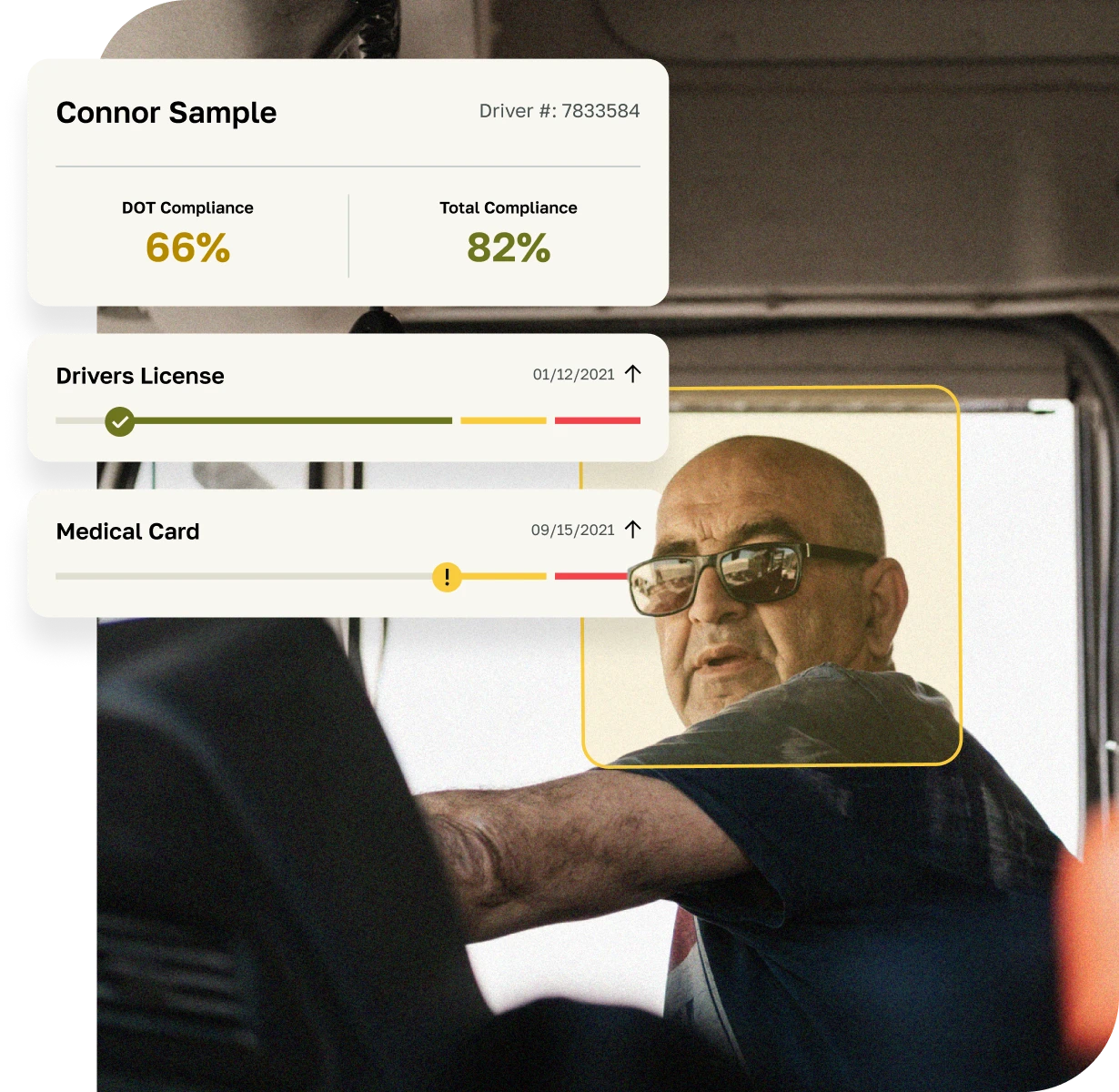
Digital driver qualification file management platform dashboard showing compliance status for fleet drivers
Building a highly structured, compliant, and scalable driver qualification file management system requires a systematic approach to information architecture, data governance, and workflow automation. It is not enough to simply scan paper files into a digital folder; you must establish a clear taxonomy, define robust version controls, and implement a living traceability backbone that links all qualification artifacts across the driver lifecycle.
The first step in building a structured system is defining a clear information architecture. This involves establishing standardized naming conventions, metadata schemas, and folder structures that make files easily navigable and complete. Every document in a driver’s qualification file should be indexed with key metadata fields, including the driver’s name and unique ID, the document type (such as CDL, Medical Card, or MVR), the issue date and expiration date, the verification status (such as Draft, Approved, or Pending Review), and the responsible compliance officer. By indexing files with this metadata, safety managers can instantly run reports, track upcoming expirations, and locate specific documents during an audit.
Next, motor carriers must implement strict version control and access management. Qualification documents are sensitive personnel records that contain personally identifiable information (PII) and protected health information (PHI). Access to these files must be restricted based on roles, ensuring that only authorized HR, safety, and compliance personnel can view or edit them. This is particularly important for trucking company record keeping best practices, which require carriers to demonstrate a documented chain of custody for all regulatory records.
Finally, the system must establish a living traceability backbone that links artifacts across the driver lifecycle. The driver’s application should be linked to the pre-employment MVR, which in turn should be linked to the safety performance history and drug testing records. By replacing manual tracking with a structured digital fleet compliance platform, motor carriers can eliminate administrative blind spots and ensure that their driver files are always complete, accurate, and audit-ready.
How to Structure DQ File Management in 5 Steps
- Define Your Information Architecture: Establish standardized naming conventions, metadata schemas, and document taxonomies that make every file instantly navigable and searchable.
- Implement Role-Based Access and Version Control: Restrict document access by role, enforce electronic signatures, and maintain an immutable audit trail of all changes and approvals.
- Automate Expiration Tracking and Alerts: Configure automated notifications for upcoming medical card renewals, CDL expirations, and annual MVR review deadlines to prevent compliance lapses.
- Build a Traceability Backbone: Link all qualification documents across the driver lifecycle, from the initial application to ongoing annual reviews, to demonstrate a continuous state of compliance.
- Establish Governance SOPs and a RACI Matrix: Define clear ownership, cross-functional workflows, and quality control checkpoints to sustain compliance over time.
What Governance, SOPs, and Roles Are Required to Maintain Qualification Files?
A structured DQ file management system is only as effective as the governance, standard operating procedures (SOPs), and human workflows that support it. Maintaining a continuous state of compliance requires clear ownership, defined cross-functional roles, and repeatable processes that ensure quality control over time. Without robust governance, even the most advanced digital platform will eventually suffer from data entry errors, missed updates, and compliance drift.
To establish clear accountability, motor carriers should implement a RACI (Responsible, Accountable, Consulted, Informed) matrix that defines the roles and responsibilities of every department involved in the driver qualification lifecycle.

RACI matrix showing roles and responsibilities for DQ file management governance across fleet departments
As shown in the matrix, while HR and recruiting are responsible for the initial collection of onboarding documents, the Safety and Compliance department remains ultimately accountable for verifying credentials, tracking expirations, and representing the company during a DOT audit. Fleet operations and the drivers themselves must be actively involved in the renewal process, ensuring that licenses and medical cards are updated before they expire.
In addition to defining roles, carriers must develop comprehensive SOPs that outline the step-by-step workflows for authoring, reviewing, executing, and archiving qualification records. These SOPs should include clear quality control checkpoints, such as cross-referencing the driver’s annual Certificate of Violations with their updated MVR to ensure complete accuracy. For guidance on managing FMCSA hours-of-service compliance alongside DQ file requirements, Fleetworthy provides integrated compliance workflows that address both regulatory areas simultaneously.
How Can Fleets Manage Legacy Files and Transition to Digital DQ Management?
For many established motor carriers, the greatest obstacle to achieving modern compliance is the sheer volume of legacy paper files and disjointed spreadsheets accumulated over years of operation. Transitioning from a manual, paper-based system to a centralized digital platform can seem like a daunting task, but a pragmatic, risk-based approach can help fleets clean up their records and achieve a successful migration without disrupting daily operations.
The transition process should be executed in three distinct phases over a structured 90-day timeline. During Phase 1 (Days 1 to 30), carriers must conduct a comprehensive inventory of all active driver files and perform a rigorous gap assessment. This involves identifying missing, incomplete, or expired documents across the entire fleet and prioritizing remediation efforts based on risk. In Phase 2 (Days 31 to 60), the focus shifts to scanning, indexing, and validating electronic document controls. Physical documents must be digitized into high-resolution, legible formats and indexed with the appropriate metadata fields. During Phase 3 (Days 61 to 90), safety teams must backfill any missing traceability records and secure retrospective approvals where justified.
90-Day Digital Migration Checklist

90-day checklist for transitioning from paper to digital driver qualification file management
By following this structured, phased approach, motor carriers can successfully eliminate legacy compliance debt and ensure their fleet is permanently audit-ready. Fleetworthy’s DOT compliance software is purpose-built to support this transition, providing the centralized infrastructure, automated workflows, and expert oversight needed to maintain a continuous state of control.
How Do You Measure Driver Qualification File Completeness and Audit Readiness?
In the world of fleet compliance, what gets measured gets managed. To maintain a continuous state of audit readiness, motor carriers must move away from periodic, reactive file reviews and instead implement a continuous improvement framework driven by key performance indicators (KPIs), regular quality checks, and visual dashboards. Fleetworthy’s Safety+ platform integrates compliance insights with proactive safety alerts, helping fleets manage risk before issues escalate into violations.
The primary metric for tracking driver compliance is the Qualification File Completeness Rate. This KPI measures the percentage of active driver files that contain all federally mandated, up-to-date documents. For a fleet to be considered low-risk and audit-ready, this rate must be maintained above 98%. Any drop below this threshold indicates a critical compliance gap that must be addressed immediately.

Chart showing how driver qualification file completeness rate impacts FMCSA audit risk and fine exposure
Monthly Compliance KPI Dashboard: Recommended Targets

Monthly compliance KPI dashboard metrics for driver qualification file management programs
To sustain these high standards, safety leaders should utilize visual compliance dashboards that provide real-time visibility into driver status. These dashboards should feature smart tiles and proactive alerts that highlight upcoming expirations, missing documents, and pending verifications, allowing safety teams to address issues before they escalate into regulatory violations. By embedding these metrics into daily operations and establishing a continuous feedback loop between safety, HR, and fleet operations, motor carriers can build a culture of compliance that protects their drivers, their assets, and their business.
Conclusion: Treat Driver Qualification Files as a Living Compliance Asset
Driver qualification file management is not a one-time administrative task; it is a daily operational discipline that directly impacts a fleet’s safety rating, legal liability, and operational continuity. By establishing a living traceability backbone, defining clear ownership through a RACI matrix, and tracking measurable KPIs, motor carriers can transform their DQ files from static archives into active compliance assets that continuously reduce risk and effort over time.
The most forward-thinking fleets treat their driver qualification files as an integral part of their overall safety and control strategy. They invest in structured digital platforms that automate expiration tracking, enforce version control, and provide real-time visibility into compliance status. They build cross-functional governance frameworks that ensure every department understands its role in maintaining the qualified status of every driver on the road.
As FMCSA enforcement continues to intensify and the consequences of non-compliance grow more severe, the gap between fleets that manage DQ files reactively and those that manage them proactively will only widen. By partnering with Fleetworthy’s driver qualification file management solution, motor carriers can build the infrastructure, workflows, and expertise needed to stay permanently ahead of regulatory requirements, protect their drivers, and operate with confidence on every road.
Frequently Asked Questions About Driver Qualification File Management
What is a DQ file and how is it different from other driver records?
A Driver Qualification (DQ) file is a federally mandated personnel record required by the FMCSA under 49 CFR Part 391. It contains specific documents proving a driver is legally licensed, medically fit, and qualified to operate a commercial motor vehicle (CMV). Unlike general HR files or payroll records, the DQ file is subject to strict regulatory requirements, specific retention schedules, and direct inspection by DOT auditors during a compliance review.
Which documents belong in a complete qualification file?
An audit-ready DQ file must contain ten core documents: the driver’s employment application, initial and annual Motor Vehicle Records (MVRs), a copy of their valid CDL, a valid Medical Examiner’s Certificate (DOT Medical Card), the full Medical Examination Report (MER) form, a completed Safety Performance History investigation, a pre-employment drug test result, a signed annual Certificate of Violations, a written annual review of their driving record, and a Road Test Certificate. For a complete checklist, see Fleetworthy’s FMCSA driver qualification file checklist.
How does dq file management reduce audit risk in practice?
Structured DQ file management reduces audit risk by centralizing driver records, automating expiration tracking, and enforcing compliance workflows. By utilizing digital platforms with proactive alerts, safety managers can identify and remediate compliance gaps long before a DOT inspector arrives. This proactive approach ensures a qualification file completeness rate above 98%, eliminating the critical violations that trigger fines and safety rating downgrades. Learn more about how Fleetworthy’s fleet compliance solutions support this process.
How long should driver qualification files be retained?
Core driver qualification files must be retained for the entire duration of the driver’s employment plus three years after their employment ends. Supporting records such as annual MVRs, annual driving record reviews, annual Certificates of Violations, and Medical Examiner’s Certificates only need to be retained for three years from the date they were executed. For a complete overview of trucking company record-keeping requirements, review Fleetworthy’s compliance resources.
How often should drivers be requalified and what triggers requalification?
Commercial drivers must undergo structured requalification based on specific regulatory triggers. The most common triggers include the annual MVR check and driving record review (required every 12 months), the driver’s self-certified Certificate of Violations (required every 12 months), and the DOT medical exam (typically required every 24 months, or more frequently for certain medical conditions). For guidance on FMCSA compliance requirements, Fleetworthy provides expert regulatory support.
What is a traceability matrix and why do auditors request it during a DOT audit?
In fleet compliance, a traceability matrix or compliance backbone is a structured log that links all qualification activities and documents across the driver’s lifecycle. It connects the driver’s application to their initial screening, medical exams, and ongoing annual reviews. Auditors request this documentation because it provides definitive, chronological proof of compliance, demonstrating that the carrier has maintained a continuous, unbroken state of control over the driver’s qualified status.
How do hybrid paper and electronic systems affect data integrity during a DOT audit?
Hybrid systems that mix paper documents and digital spreadsheets represent a high risk for data integrity and version control. Auditors frequently find discrepancies, such as missing signatures, uncoordinated expiration dates, and outdated templates, in hybrid files. To satisfy FMCSA data integrity standards, carriers must transition to a validated electronic document management system. Fleetworthy’s FMCSA drug and alcohol clearinghouse compliance tools integrate directly with the DQ file management platform to eliminate hybrid system risks.
References
[1] Federal Motor Carrier Safety Administration (FMCSA). (2026). 49 CFR Part 391 – Qualifications of Drivers. U.S. Department of Transportation. https://www.fmcsa.dot.gov
[2] Fleetworthy Solutions. (2026). FMCSA Truck Driver Qualification File Checklist. https://fleetworthy.com/resources/blog/driver-qualification-file-checklist/
[3] Federal Motor Carrier Safety Administration (FMCSA). (2026). Driver Qualification Files: FAQs and Best Practices. https://www.fmcsa.dot.gov