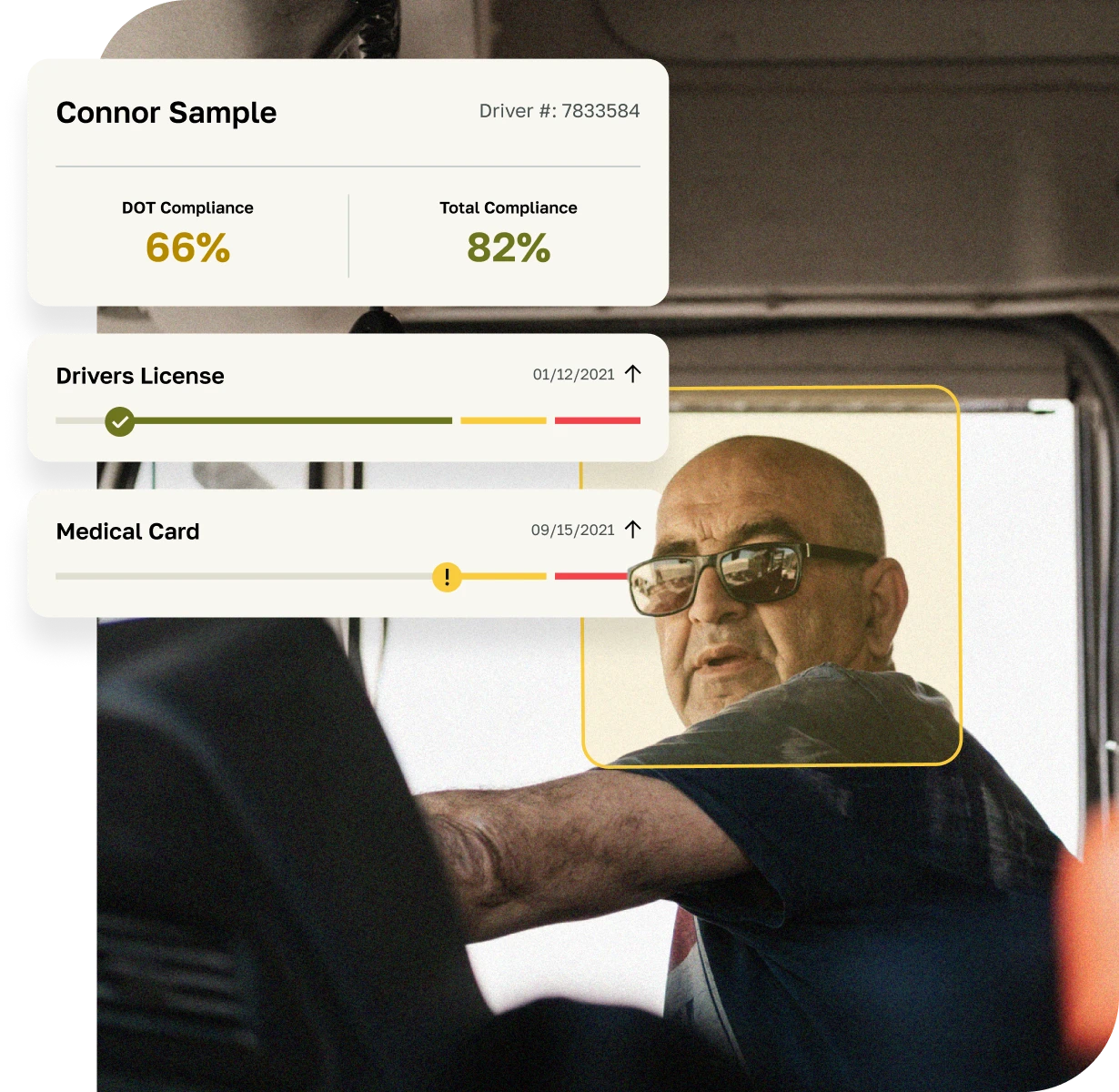

Effective record keeping is a foundational element of any successful trucking operation. Beyond just paperwork, it’s a critical function that impacts regulatory compliance, operational efficiency, driver safety, and financial performance. Whether you manage a small fleet or a large-scale operation, maintaining organized and accurate records is essential to demonstrate due diligence, protect your business in case of audits or accidents, and maintain a strong reputation in the industry.
In the trucking industry, the consequences of poor record keeping are severe, ranging from fines and out-of-service orders to increased CSA (Compliance, Safety, Accountability) scores, legal liabilities, and even the suspension of your operating authority. On the other hand, well-managed records help reduce risk, improve safety outcomes, and streamline operations by giving fleet managers easy access to critical information.
The Role of DOT and FMCSA in Regulating Safety and Compliance
The U.S. Department of Transportation (DOT) and its sub-agency, the Federal Motor Carrier Safety Administration (FMCSA), are responsible for establishing and enforcing safety regulations for commercial motor vehicles (CMVs). Their primary goal is to reduce crashes, injuries, and fatalities involving large trucks and buses.
To achieve this, the FMCSA mandates specific record keeping requirements that trucking companies must follow. These include documentation related to driver qualifications, hours of service (HOS), vehicle maintenance, drug and alcohol testing, and more. These records are not just for internal use, they are essential during DOT audits, compliance reviews, roadside inspections, and accident investigations.
FMCSA regulations (outlined in 49 CFR Parts 300–399) are precise about what records must be kept, how long they must be retained, and how they should be made available upon request. Companies that fail to meet these requirements may face hefty penalties, downgraded safety ratings, or even revocation of operating authority.

Why Trucking Company Record Keeping Matters
Effective record keeping is more than a bureaucratic requirement, it’s a strategic advantage in today’s highly regulated and safety-driven trucking environment. Here’s why it matters:
1. Ensuring Compliance with Federal Regulations (DOT/FMCSA)
At the core of a compliant fleet operation lies accurate and up-to-date documentation. The DOT and FMCSA mandate that motor carriers maintain detailed records in key areas such as:
- Driver Qualification Files (DQFs)
- Hours of Service (HOS) logs
- Vehicle inspection and maintenance records
- Drug and alcohol testing results
- Accident registers
These records prove that your company adheres to safety standards and operating procedures outlined in 49 CFR. Failure to maintain or produce these records upon request can lead to out-of-service orders, financial penalties, and increased CSA scores, all of which can negatively impact your operating authority and business reputation.
2. Reducing the Risk of Audits, Violations, and Fines
Trucking companies are frequently subject to DOT audits, compliance reviews, and roadside inspections. Incomplete or missing records are a major red flag during these events.
By keeping well-organized, readily accessible documentation, you:
- Reduce the likelihood of violations
- Avoid costly fines and penalties
- Demonstrate proactive compliance, improving your audit outcomes
Auditors often look for patterns of neglect, such as expired medical certificates or falsified HOS logs, that indicate broader safety issues. Consistent record keeping helps your fleet stay off their radar or perform better if selected for a review.
3. Supporting Operational Efficiency and a Culture of Safety
When records are accurate and easy to access, your team can:
- Respond quickly to internal or external inquiries
- Schedule maintenance and inspections efficiently
- Monitor driver performance and training needs
- Ensure that no expired documents (e.g., CDLs, medical cards) disrupt operations
Additionally, maintaining detailed records fosters a safety-first culture. Drivers and managers alike recognize the company’s commitment to compliance and accountability, which leads to better behavior behind the wheel, more timely inspections, and stronger overall performance.
4. Essential for Litigation Defense and Insurance Claims
In the unfortunate event of a crash, injury, or legal dispute, your records become your first line of defense.
- Accident registers, maintenance logs, and driver files can show that the company took all reasonable safety precautions
- Timely documentation can help exonerate your fleet from liability or reduce legal exposure
- Insurers often request documentation during claim investigations, accurate records can accelerate claim resolution and may lead to lower premiums over time
Failing to produce required documentation can lead to presumption of negligence, which can cost your company dearly in court, even if you weren’t at fault.
In summary, trucking company record keeping is not just a regulatory checkbox, it’s a key part of building a safe, efficient, and legally protected fleet operation.

Key Record Categories Required by DOT & FMCSA
Maintaining the right records isn’t just about organization, it’s about meeting specific federal requirements and preparing for potential audits, inspections, or legal challenges. Below are the essential record types mandated by the DOT and FMCSA, along with best practices for compliance.
A. Driver Qualification Files (DQFs)
Every driver operating a commercial motor vehicle (CMV) must have a complete and current Driver Qualification File (DQF) on record. This is one of the most commonly audited items and often a source of violations when incomplete.
What Must Be Included:
- Copy of Commercial Driver’s License (CDL)
- Motor Vehicle Records (MVRs) from every state where the driver has held a license (past 3 years)
- Medical examiner’s certificate and National Registry verification
- Proof of road test or equivalent certification
- Employment application
- Previous employer Safety Performance History inquiries (past 3 years)
- Annual MVR review and driver’s certification of violations
Retention Timelines:
- Maintain for duration of employment + 3 years after termination
- Certain documents, like the medical card, must be updated every 24 months (or sooner if medically required)
Best Practices:
- Digitally centralize DQFs with expiration alerts
- Automate MVR pulls and medical certificate tracking
- Conduct internal audits every quarter to catch missing items before an FMCSA audit
B. Hours of Service (HOS) Logs
HOS logs ensure drivers are complying with mandated driving and rest periods to prevent fatigue-related crashes. Most carriers are now required to use Electronic Logging Devices (ELDs).
ELD Compliance and Log Retention Rules:
- Drivers must log driving, on-duty, off-duty, and sleeper berth statuses
- ELD data must be retained for 6 months
- Supporting documents must also be retained for the same period
Common Errors and Red Flags:
- Missing logs on workdays
- Mismatches between ELDs and supporting documents (fuel, tolls)
- Unassigned drive time not accounted for
- Form and manner errors (e.g., missing location or remarks)
C. Vehicle Maintenance and Inspection Records
Proper vehicle maintenance documentation is vital for both safety and audit preparedness.
What Must Be Maintained:
- Preventive maintenance schedules and service records
- Records of annual DOT inspections
- Brake inspections, tire replacements, and safety system checks
- Driver vehicle inspection reports (DVIRs) pre- and post-trip (if applicable)
Retention Guidelines:
- Keep maintenance and inspection records for at least 12 months
- Maintain records for vehicles for 6 months after they leave the fleet
Best Practices:
- Use fleet maintenance software to log repairs and inspections
- Set up automatic service reminders by mileage or engine hours
- Store inspection reports digitally and link to vehicle IDs
D. Accident Register
Every DOT-recordable accident must be logged in an accident register, even if no citation was issued.
What Qualifies as a DOT-Recordable Accident:
- Crash involving fatality, bodily injury requiring immediate medical attention, or a tow-away vehicle
Required Details:
- Date and location of accident
- Driver’s name
- Number of injuries or fatalities
- Whether hazardous materials were released
- Copies of related police reports (if available)
Retention Timeline:
- Maintain records for 3 years from the date of the accident
E. Drug and Alcohol Testing Records
FMCSA requires detailed documentation of your Drug & Alcohol Testing Program under 49 CFR Part 382.
Required Documentation Includes:
- Pre-employment test results
- Random, reasonable suspicion, and post-accident test results
- Return-to-duty and follow-up testing records
- Written policies and driver notifications
- Records of driver refusals or violations
Clearinghouse Compliance:
- Employers must report drug/alcohol violations to the FMCSA Clearinghouse
- Employers must query the Clearinghouse during hiring and annually thereafter
Retention Periods:
- Varies from 1 to 5 years depending on the type of record (e.g., 5 years for positive tests or refusals)
F. Driver Logs & Supporting Documents
Besides ELD data, fleets are required to retain supporting documents to verify HOS compliance.
🧾 Examples of Supporting Documents:
- Fuel receipts
- Tolls and weigh station tickets
- Dispatch and trip sheets
- Hotel/lodging receipts
- Bills of lading
Cross-Verification Best Practices:
- Ensure that timestamps and locations on receipts align with ELD logs
- Audit supporting documents monthly to catch inconsistencies
- Retain documents for 6 months, same as HOS logs
G. Insurance and Lease Agreements
Insurance and leasing documents are critical not only for compliance but also for liability protection.
Required Insurance Certificates:
- Proof of liability insurance meeting FMCSA minimums (e.g., $750,000 – $5 million based on commodity)
- Cargo insurance if operating under certain authorities
- Must be filed via Form MCS-90 with the FMCSA
Owner-Operator Lease Agreements:
- Must be written and compliant with 49 CFR Part 376
- Must include terms of compensation, control, insurance responsibilities, and duration
- Maintain lease records for duration of the agreement + 1 year

Best Practices for Effective Record Keeping
Strong record keeping isn’t just about compliance, it’s about building systems that promote efficiency, reduce liability, and support a culture of accountability. The following best practices can help you move from reactive documentation to a proactive, audit-ready fleet operation.
1. Transitioning from Paper to Digital Systems
Manual, paper-based record keeping is time-consuming, error-prone, and risky, especially when documents go missing, get damaged, or are not updated in real-time.
Why Go Digital:
- Faster access to records during audits, inspections, or internal reviews
- Automated alerts for expirations (CDLs, medical cards, annual inspections)
- Cloud-based backups reduce risk of data loss
- Easier compliance with FMCSA’s request for digital file delivery in modern audits
Transition Tips:
- Scan and upload existing paper files into a secure cloud or compliance platform
- Standardize file naming conventions and folder structures
- Train staff and drivers on how to submit digital forms (e.g., DVIRs, expense logs)
2. Using Fleet Management or Compliance Software
Technology can streamline every aspect of record keeping and reduce the manual workload for your team.
Recommended Tools:
- Fleet management systems (e.g., Samsara, Geotab, KeepTruckin/Motive) for integrated telematics, ELDs, DVIRs, and maintenance logs
- Compliance management platforms (e.g., Tenstreet, Foley, Encompass by J. J. Keller) for DQFs, drug/alcohol testing, and document tracking
- HR software (e.g., BambooHR, Paycor) for storing employment applications, safety training records, and certifications
Key Benefits:
- Centralized document storage across departments
- Built-in audit preparation tools
- Notifications for missing or expiring documents
- Enhanced data accuracy and consistency
3. Assigning Responsibilities (Safety Manager, HR, Compliance Officer)
Record keeping is not a one-person job. Clear delegation ensures accountability and reduces the chance of compliance gaps.
Recommended Roles:
- Safety Manager: Oversees driver logs, training records, DVIRs, and accident registers
- HR Department: Manages DQFs, hiring documents, medical certifications, and drug testing records
- Compliance Officer (or DOT Compliance Specialist): Coordinates FMCSA compliance efforts, conducts internal audits, and prepares for external reviews
Best Practices:
- Create a compliance task calendar with due dates for document updates and renewals
- Hold monthly compliance meetings to review outstanding items and upcoming expirations
- Use shared dashboards or compliance scorecards to monitor progress

4. Creating a Record Retention Policy
A clear record retention policy helps ensure that your fleet complies with federal regulations and is protected legally, while avoiding unnecessary document overload.
What to Include in Your Policy:
- Types of records to retain (by category: driver, vehicle, incident, compliance, etc.)
- Retention periods (e.g., 3 years for accident logs, 6 months for HOS logs)
- Storage method (cloud-based, physical, or hybrid)
- Access control (who can view, edit, or delete records)
- Destruction protocol for outdated records (shredding or secure digital deletion)
Benefits:
- Reduces liability for outdated or irrelevant data
- Prepares your company for FMCSA audits or litigation
- Ensures consistent procedures across departments and terminals
To maintain an effective system, conduct quarterly internal audits of your records to spot issues before the DOT or FMCSA does. Consistent reviews help your team stay sharp, your documents stay current, and your fleet stay on the road.