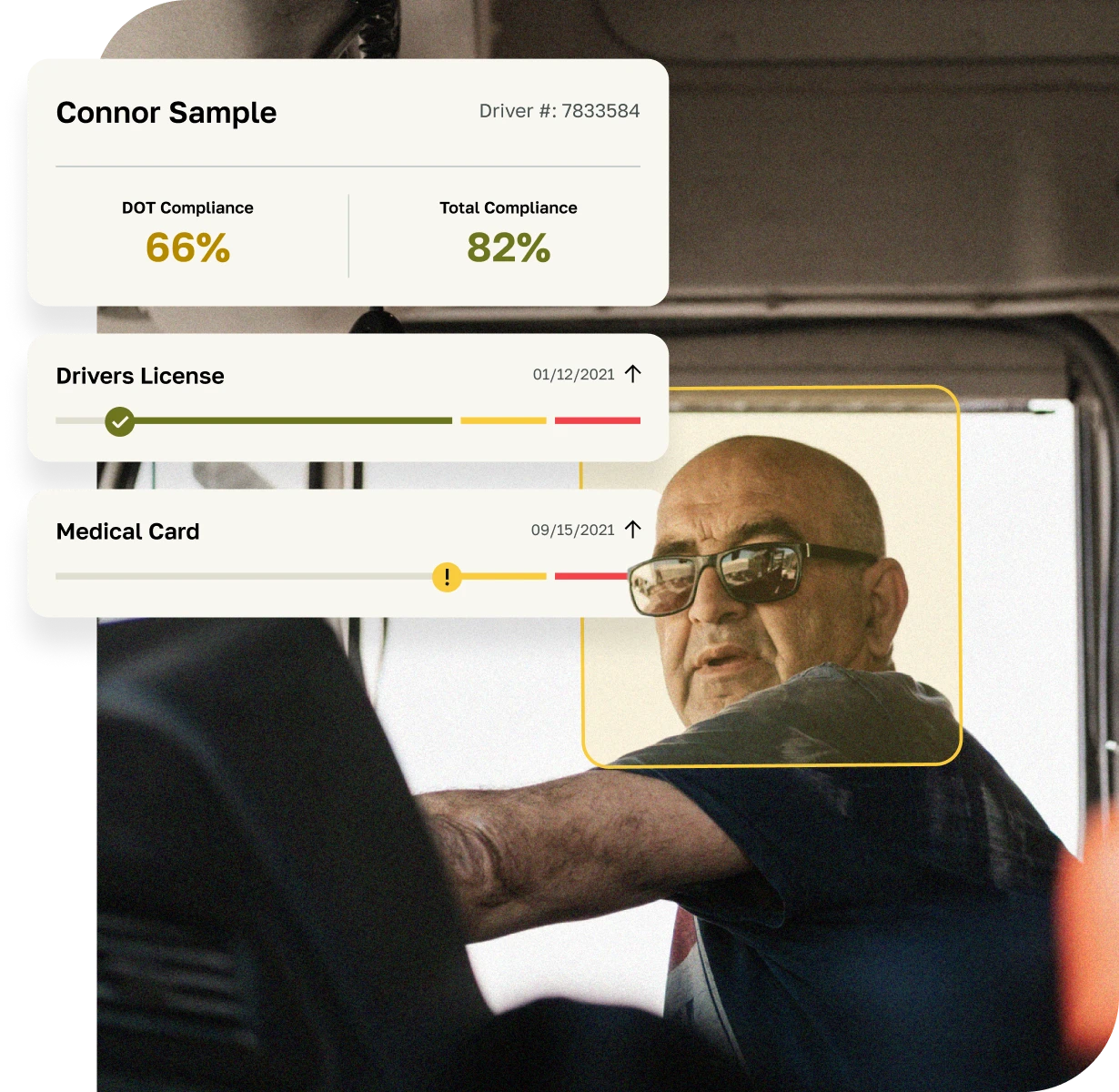

When a compliance manager inherits a program, the first instinct is to trust what is already in place. The files exist, whether they live in a folder, a shared drive, a cabinet, or some combination of all three, and on the surface, everything appears complete.
In reality, it rarely is.
Expiring
Medical cards are the #1 missed document in DQ files
1 gap
is all it takes to trigger a full-fleet audit review
100%
of DQ issues are preventable with the right visibility
Medical cards expire without anyone noticing, MVRs are not always pulled on time, and road test documentation ends up in the wrong file or never gets filed at all. These gaps are usually not the result of negligence. More often, they come from processes that were never designed to keep up with the pace of day to day operations.
That is where the real risk begins. It is not just about missing documents, but about missing visibility into what is current, what is incomplete, and what is about to fall out of compliance.
If an auditor walked in tomorrow, how quickly could you prove that every driver is fully compliant?
The Problem Is Not the File
Driver Qualification files are not static records. They are made up of documents that follow different rules, timelines, and sources, from CDLs and medical certificates to MVRs and annual reviews.
When those pieces are spread across multiple systems and manual processes, compliance naturally becomes reactive. Even when everything technically exists, there is no single place to see the full picture, which makes it difficult to spot issues before they turn into real exposure.
Where Compliance Breaks Down
Most problems do not start during an audit. They build gradually during everyday operations, where speed and competing priorities often take over.
Hiring is a good example. A new driver is onboarded quickly, the file gets started, and the assumption is that anything missing will be handled later. In practice, later comes quickly and often at the worst possible time.
Expirations pass without being flagged, documents fall through the cracks between systems, and required reviews get delayed. None of these issues seem critical in isolation, but together they create a pattern that becomes highly visible during an audit.
At that point, a single missing document rarely stays isolated. Instead, it signals a broader issue and can lead to a deeper review across the fleet.
Not sure where your gaps are?
Talk to a Fleetworthy compliance expert and get a clear picture of where your DQ files stand.

What Audit Ready Fleets Do Differently
Fleets that perform well in audits are not scrambling to assemble files when the auditor arrives. They already have a clear and current view of their compliance status.
In most cases, that comes down to having a system that keeps everything in one place and continuously monitors what matters. Documents are tracked as they come in, expirations are flagged ahead of time, and gaps are visible early enough to fix them without urgency.
Some fleets take it a step further by adding structured workflows and additional oversight, which helps ensure that files are complete before a driver is ever fully onboarded and reduces the risk of issues slipping through later.
The result is not just better audit outcomes, but a different operating model where compliance is built into the process instead of handled after the fact.
What That Changes
When DQ file management is handled this way, the impact extends beyond compliance itself.
Onboarding becomes more efficient because requirements are clear and consistently enforced. Administrative workload decreases as teams spend less time tracking deadlines and chasing missing documents. And when an audit does happen, preparation is minimal because records are already organized and up to date.
How Compliance Changes With The Right System
Visibility Is What Keeps Fleets Audit Ready
Most fleets do not realize they have a DQ file problem until an auditor points it out.
The fleets that avoid that situation are not reacting faster. They have built systems that keep them compliant on an ongoing basis.
Fleetworthy’s Driver Qualification File Management brings driver records into one place, with automated tracking and ongoing oversight so nothing slips through the cracks.
Know your compliance status before the auditor does
Fleetworthy's DQ File Management keeps every driver record current, complete, and audit-ready automatically.