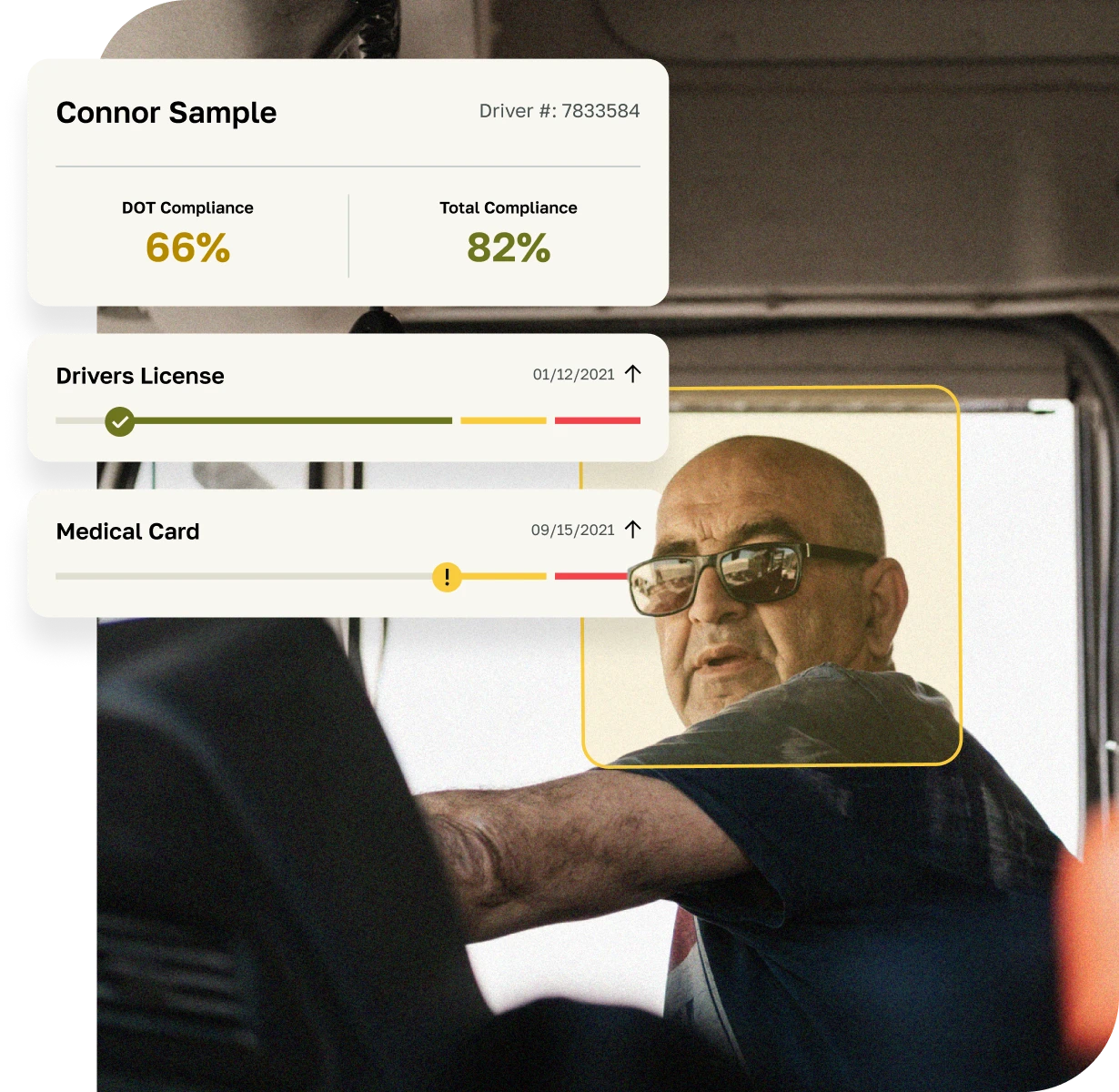

A fleet safety platform is software that brings together data such as driver qualification records, vehicle maintenance information, telematics, and roadside inspection history, helping carriers identify and address compliance and safety risks. By catching issues before they result in roadside violations or other compliance problems, these platforms can help carriers improve the safety performance reflected in FMCSA’s Safety Measurement System, or SMS.
That capability is particularly important as FMCSA prepares to implement significant changes to SMS. The agency first implemented SMS in December 2010 and, on November 20, 2024, published its Enhanced Carrier Safety Measurement System notice outlining approved changes to the methodology. The forthcoming system will reorganize the current BASICs into compliance categories, change how roadside violations are grouped and weighted, modify certain intervention thresholds, and place greater emphasis on recent violations. As of 2026, however, FMCSA has not yet launched the enhanced methodology, and carriers continue to operate under the current SMS while being able to preview how the forthcoming methodology could affect their results.
This guide explains how fleet safety platforms can help carriers manage safety and compliance under today’s SMS while preparing for the forthcoming changes, what to look for in a platform, and how carriers using Fleetworthy can put their data to work.
What is a fleet safety platform?
A fleet safety platform is a cloud-based system that consolidates a commercial fleet’s safety and compliance data, such as driver qualification files, hours-of-service records, vehicle inspections and maintenance, drug and alcohol testing, telematics and dashcam events, and FMCSA roadside inspection and crash data, into one connected platform, then flags the gaps that create regulatory and crash risk.
The defining feature is integration. A carrier that keeps medical certificates in a shared drive, maintenance records in a shop system, and CSA data in a browser tab has three separate blind spots. A fleet safety platform closes them by connecting those sources and applying rules against them continuously, rather than at audit time. Fleetworthy’s platform, for example, integrates with 40+ ELD and telematics providers, including Geotab, Samsara, and Motive, as well as OEM and dealer service systems, the FMCSA Clearinghouse, and TMS, HR, and payroll systems through APIs.
How do fleet safety platforms improve CSA scores?
Fleet safety platforms improve CSA scores by removing the conditions that produce violations at roadside, expired driver credentials, deferred maintenance, and unsafe driving behavior, before an inspector records them. Because CSA scores are percentile rankings built from roadside inspection and crash data, the only durable way to lower a score is to reduce the number and severity of violations that enter the record.
In practice, a platform contributes in four ways:
- Prevention. Automated alerts on expiring CDLs, medical certificates, and preventive maintenance intervals stop a driver or vehicle from leaving the yard in a violable state.
- Detection. Telematics and dashcam data surface speeding, harsh braking, and distracted driving as coachable events rather than as citations discovered months later.
- Attribution. Trend analysis across compliance categories shows which specific behaviors, terminals, or assets are pushing a percentile up, so remediation is targeted instead of general.
- Documentation. A continuously maintained, audit-ready record supports DataQs challenges and shortens investigations.
Fleetworthy pulls CSA data directly from the FMCSA portal and analyzes trends across compliance categories, giving safety leaders a view of which weaknesses are most likely to trigger a DOT intervention. Fleetworthy’s safety solutions pair that analysis with driver qualification file automation and preventive maintenance tracking. These are the two areas that generate the highest volume of routine roadside violations.
What are the CSA compliance categories, and what changed?
The CSA compliance categories are the scored groupings FMCSA uses to prioritize carriers for intervention, and under the Enhanced SMS they replace the terminology and structure previously known as BASICs. FMCSA states it adopted “compliance categories” instead of “safety categories” because the term is simpler and more relatable to carriers.
Seven changes were carried through from FMCSA’s February 2023 proposal into the final Enhanced SMS methodology:
- Reorganized compliance categories: Vehicle Maintenance is split into Vehicle Maintenance and Vehicle Maintenance: Driver Observed. Controlled substances/alcohol and operating-while-out-of-service violations move into Unsafe Driving.
- Consolidated violations: Roughly 2,000 violation codes are reorganized into about 100 violation groups. Violations in the same group count once for prioritization, so a single underlying issue cited several ways no longer compounds.
- Simplified severity weights: Weights move from a 1-to-10 scale to 1 or 2, reducing the distorting effect of outlier violations.
- Proportionate percentiles: Safety event groups are replaced by proportionate percentiles, changing how a carrier is ranked against peers.
- Improved intervention thresholds: Thresholds are recalibrated by category; Driver Fitness and Hazardous Materials sit at a higher percentile than other categories.
- Greater focus on recent violations: Recent performance carries more weight, so remediation shows up in scores faster, and so does backsliding.
- Updated utilization factor: Adjusts for exposure so high-mileage and low-mileage carriers are compared more fairly.
The Vehicle Maintenance: Driver Observed category is the one most fleets underestimate. It separates defects a driver should have caught during a pre-trip inspection from defects that only surface in a detailed inspection. That means violations involving defects that drivers could reasonably have observed will be tracked in a separate compliance category. Carriers can preview their results under the enhanced methodology through FMCSA’s CSA Prioritization Preview, and view their current SMS data at the FMCSA Safety Measurement System site. One nuance worth knowing: under Section 5223 of the FAST Act, FMCSA removed SMS percentiles and alerts from the public SMS website for property-carrying motor carriers. Passenger carrier percentiles and alerts remain publicly available, as do inspection, investigation, crash, and registration data for all carriers. Property carriers can still see their own percentiles when logged in, which is precisely why a platform that pulls and trends that logged-in data has value a public lookup cannot replicate.
What features should a fleet safety platform include?
A fleet safety platform should include driver qualification file management, hours-of-service and ELD integration, vehicle maintenance and inspection tracking, driver behavior monitoring, CSA score analysis, drug and alcohol program integration, and audit-ready document management. Anything less leaves a compliance category unmonitored.
- Driver qualification file management, or DQF. Protects: Driver Fitness. What good looks like: Automated creation, storage, and expiration monitoring for CDLs, medical certificates, and background checks, with alerts before renewal dates.
- HOS and ELD integration. Protects: Hours-of-Service Compliance. What good looks like: Real-time data from leading telematics providers, with trend reporting rather than log-by-log review.
- Maintenance and inspection tracking. Protects: Vehicle Maintenance; Vehicle Maintenance: Driver Observed. What good looks like: Integration with OEM and dealer service systems so repair history is captured automatically, not re-keyed.
- Driver behavior and MVR monitoring. Protects: Unsafe Driving; Crash Indicator. What good looks like: Continuous MVR monitoring plus telematics and dashcam events, scored per driver.
- Drug and alcohol program integration. Protects: Controlled Substances/Alcohol, now within Unsafe Driving. What good looks like: Enrollment, testing cadence, and FMCSA Clearinghouse queries tracked in the same system as the DQF.
- CSA analysis and scorecarding. Protects: All categories. What good looks like: Trended percentiles by category, benchmarked over time, broken out by driver, vehicle, and location.
How does driver safety monitoring reduce crash risk?
Driver safety monitoring reduces crash risk by identifying the small number of drivers whose behavior patterns predict incidents, then intervening with coaching before a crash occurs. Speeding, harsh braking, following distance, and distracted-driving events are leading indicators; crashes are lagging ones. Monitoring converts a retrospective metric into a preventable one.
Predictive analytics extend this further. Fleetworthy combines telematics and dashcam data with predictive models to forecast which drivers or vehicles pose the highest risk, so training and coaching are directed at the drivers most likely to generate a claim. The financial stakes are significant: commercial auto liability premiums have risen sharply, and jury awards in truck-involved cases have grown faster than crash rates. Monitoring also creates a defensible record. A fleet that can show documented coaching following a flagged event is in a materially different position, in both a DOT investigation and civil litigation, than one that cannot.
How do fleet safety platforms prepare a fleet for a DOT audit?
Fleet safety platforms prepare a fleet for a DOT audit by maintaining complete, timestamped, retrievable records continuously, so an investigator’s document request is a matter of exporting rather than reconstructing. Most audit findings stem from missing or incomplete documentation, not from unsafe operations.
Under Section 5305 of the FAST Act, FMCSA is required to ensure a review is conducted on motor carriers that demonstrate, through performance data, that they are among the highest-risk carriers for four consecutive months. Because SMS results are recalculated monthly, a carrier that lets a category sit above threshold has a predictable window before an investigation follows. A platform that trends percentiles month over month makes that window visible.
Fleetworthy prepares and supports fleets during audits, helping them avoid citations, downgraded safety ratings, or loss of operating authority. Secure cloud-based document management keeps DQFs, maintenance histories, testing records, and training acknowledgments in one retrievable place.
Fleet safety platform vs. fleet management software: what is the difference?
A fleet safety platform is built around regulatory compliance and risk reduction, while fleet management software is built around operational efficiency: routing, dispatch, fuel, and asset utilization. The two overlap in telematics but answer different questions: fleet management software asks whether the fleet is running efficiently; a fleet safety platform asks whether it is running legally and safely.
- Primary objective. Fleet safety platform: Reduce violations, crashes, and regulatory exposure. Fleet management software: Reduce cost per mile and improve asset utilization.
- Core records. Fleet safety platform: DQFs, inspections, testing records, CSA data. Fleet management software: Routes, loads, fuel, dispatch, work orders.
- Primary user. Fleet safety platform: Safety and compliance leadership. Fleet management software: Operations and dispatch.
- Success metric. Fleet safety platform: CSA percentiles, accidents per million miles, audit outcomes. Fleet management software: On-time delivery, fuel economy, utilization.
Many fleets run both. The integration question is what matters: a safety platform that reads from the TMS, HR, and payroll systems eliminates duplicate data entry and the reconciliation errors that come with it.
How long does it take to improve a CSA score?
CSA scores move on a monthly cycle, because FMCSA recalculates SMS results monthly, but meaningful percentile movement typically requires several months of clean inspections. A carrier cannot delete a violation; it improves by accumulating clean inspection history that dilutes the existing record and by letting older violations age out of the measurement window.
Two factors compress that timeline. First, the Enhanced SMS places greater weight on recent violations, so recent clean performance counts for more than it did under the prior methodology. Second, inspection volume matters: a carrier with more inspections accumulates clean data faster. Weigh station bypass programs reduce inspection frequency for high-performing fleets, which is a benefit for uptime but means clean history builds more slowly, a tradeoff worth understanding rather than ignoring.
How to choose a fleet safety platform
- Map your current violation profile first. Pull your percentiles by compliance category. The platform should be strongest where your exposure is greatest.
- Confirm integration with your existing telematics and maintenance systems. A platform that requires manual data entry recreates the problem it is meant to solve.
- Check coverage of the split Vehicle Maintenance categories. Driver-observed defects are scored separately, so driver vehicle inspection report quality needs its own workflow.
- Ask how CSA data is sourced and refreshed. Direct integration with the FMCSA portal is more reliable than manual uploads or screenshots.
- Evaluate audit support, not just software. Some providers supply expert review alongside the platform; that matters most during an investigation.
- Test the reporting. Safety leaders need scorecards by driver, vehicle, and location, not a single fleet-wide number.
Fleetworthy unites Safety, Compliance, Toll Management, and Weigh Station Bypass into one connected platform, with single sign-on across every solution. Trusted by 90% of the largest fleets in North America, it scales from large enterprise fleets to owner-operators.