Most Expensive Toll Roads in the U.S. – Complete Guide for Fleets
Governments worldwide use tolling to pay for road construction and maintenance. The money collected from toll roads provides an alternative funding source when traditional options fall short. Toll management systems bring significant value by making infrastructure projects more sustainable, improving the driver experience and preventing backups.
In 1989, the introduction of electronic toll collection ushered tolling into the digital age, removing the need to collect manual payments. The result made toll roads far more efficient and aided traffic flow. However, despite these advancements, toll costs continue to be a significant expense for fleet operators and owner-operators.
While tolls contribute to operational and infrastructural improvement, the fees can add up quickly for owner-operators and large fleets alike. Knowing which toll roads cost the most to travel through will help you plan more cost-effective trucking routes, saving your company hundreds in operating costs, truck maintenance and fuel expenses.
Most Expensive Toll Roads: Where Are the Priciest Routes in the U.S.?
Toll rates can vary depending on factors such as vehicle type, distance traveled, time of day and the specific toll road. Some toll roads have fixed rates, and others may implement dynamic pricing to manage traffic flow and encourage off-peak travel.
Route planning can save owner-operators and trucking companies a small fortune in toll charges and fuel while maximizing efficiency, meeting deadlines, enhancing customer satisfaction and avoiding traffic congestion. Understanding the most expensive toll roads allows you to make informed decisions about your routing strategy.
A comprehensive toll management solution can help you identify cost-saving opportunities and optimize your routes to minimize toll expenses.
The Three Most Expensive Toll Routes in America
These are the three U.S. routes with the highest per-mile toll truck prices. Understanding these expensive corridors can help you plan alternative routes or negotiate better rates.
- Chicago to New York City: The two most expensive trips on this list are to and from New York City. Getting there from Chicago will cost over $440. The journey is 826 miles long, which means each mile will cost you $0.53. This route traverses multiple toll authorities and expensive toll roads in Pennsylvania and New York.
- New York City to Baltimore: Driving from NYC to Baltimore can cost between $200 and $250 in tolls. This trip is 210 miles long, which means toll costs add up to approximately $1 for every mile driven. This is one of the most expensive per-mile toll routes in the country.
- Atlantic City to Chicago: Costs can quickly accumulate when traveling between these cities. The total will be around $402, which equals $0.49 per mile. As an 831-mile drive, this is a long and expensive route that requires careful toll management.
For fleets regularly traveling these routes, implementing a toll cost reduction strategy can result in significant annual savings.
The Cheapest Toll Points in the U.S.
While some toll roads are extremely expensive, others offer more affordable options. These five toll points have the lowest commercial truck toll rates and can help you save money on routes where tolls are unavoidable.
- The Boulevard Bridge in Virginia is America’s most cost-effective toll road for commercial trucks. At only $0.35, this is the route to take if you want to save on fees.
- You’ll find the second-lowest toll price at Florida’s Goldenrod Road Extension, at $0.50 to pass.
- Memorial Bridge is a toll facility in West Virginia that also costs $0.50 to pass.
- The next on the list is in Virginia, costing a mere $0.70 to pass Route 195.
- The fifth and final toll point on this list is also in West Virginia. You only need $0.75 to get through the toll and continue your journey.
The Most Expensive Toll Points in the U.S. – Detailed Analysis
These are the country’s most expensive toll roads. Many of them are on central arteries, but you can avoid them with careful planning. Understanding the cost structure of these facilities is essential for effective route planning and toll management.
Pennsylvania Turnpike: The Most Expensive Toll Road in the World
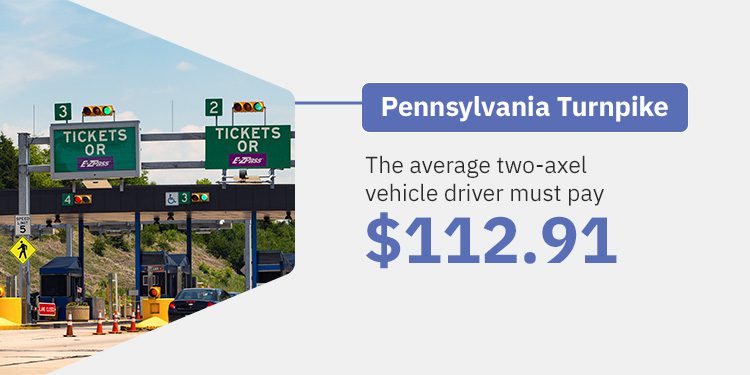
The Pennsylvania Turnpike is the most expensive toll road in the world by a considerable margin. The average two-axel vehicle driver must pay $112.91, but it can cost trucks over $200. This toll road spans 360 miles across Pennsylvania and connects major metropolitan areas including Philadelphia and Pittsburgh.
For commercial trucking operations, the Pennsylvania Turnpike represents a significant operating expense. The high toll rates are due to the extensive infrastructure maintenance required and the heavy traffic volume the road handles daily. Fleet managers should carefully evaluate whether using the Pennsylvania Turnpike is necessary or if alternative routes might be more cost-effective.
Professional toll management services can help you negotiate better rates and ensure you’re receiving any available discounts on high-toll routes like the Pennsylvania Turnpike.
Whiteface Mountain Memorial Highway: New York’s Expensive Toll Road
The second most expensive toll road in the U.S. is Whiteface Mountain Memorial Highway in New York. It will cost $28.05 to get past. While this is a high price for one toll, it is only around 25% of the Pennsylvania Turnpike’s price. This scenic toll road provides access to Whiteface Mountain in the Adirondacks and is primarily used by tourists and local traffic rather than commercial trucking.
Florida’s Ronald Reagan Turnpike
Florida’s Ronald Reagan Turnpike toll road charges commercial trucks $26.45 to pass through. This toll road is part of Florida’s extensive toll road system and handles significant traffic volumes. For fleets operating in Florida, understanding the toll-by-plate options can help streamline payments and reduce administrative overhead.
James W. Shocknessy Ohio Turnpike
The James W. Shocknessy Ohio Turnpike costs $20.50 for commercial vehicles. This toll road spans 241 miles across Ohio and connects major transportation corridors. For fleets regularly using this route, implementing a toll management system can help track expenses and identify savings opportunities.
Understanding Toll Road Pricing and Vehicle Classification
Toll rates for commercial vehicles are typically higher than passenger vehicle rates due to the increased wear and tear heavy trucks place on road infrastructure. Vehicle classification systems used by toll authorities determine the toll rate charged based on factors such as:
- Number of axles – More axles typically result in higher toll rates
- Gross vehicle weight rating (GVWR) – Heavier vehicles pay higher tolls
- Vehicle type – Trucks, trailers, and combination vehicles have different rates
- Time of travel – Some toll roads implement dynamic pricing for peak hours
- Distance traveled – Per-mile or per-segment toll calculations
Understanding these classification systems is crucial for accurate budgeting and identifying when toll transponders or alternative payment methods might offer better rates.
The Evolution of Tolling Technology and Infrastructure
Toll roads’ primary advantage is the ability to generate revenue that governments can reinvest into maintaining and enhancing highways. They make infrastructure projects more financially sustainable and contribute to efficient traffic management. Toll road authorities can enhance the overall transportation network by implementing innovative technologies and adopting user-friendly practices.
Tolling on bridges, roads and tunnels has significantly improved the user experience over the past three decades. With electronic toll collection, drivers can experience faster and smoother transactions, eliminating the need to stop and search for exact change. These systems increase efficiency and reduce congestion at tolls, improving traffic flow and reducing environmental impact.
However, despite these advancements, there are still complications. According to a Deloitte report, U.S. toll authorities fail to collect approximately $2.24 billion annually due to breakdowns and errors in the collection process. This eye-opening statistic illustrates how much room for improvement there is.
The industry must adopt advanced payment collection methods, including third-party apps and toll bypass solutions, to streamline operations, make toll payments as seamless as possible and avoid costly mistakes. Simplifying processes for fleets and tolling authorities is the best way to keep moving forward.
Route Planning Strategies to Minimize Toll Expenses
Effective route planning is one of the most direct ways to reduce toll expenses for your fleet. Consider the following strategies:
- Analyze toll costs by route – Compare the total toll expenses for different routing options, not just the shortest distance
- Evaluate fuel costs vs. toll savings – Sometimes a longer route with lower tolls is more economical
- Consider time-of-day pricing – Some toll roads offer lower rates during off-peak hours
- Use toll management software – Automated systems can identify optimal routes based on your specific criteria
- Negotiate volume discounts – Large fleets may qualify for better rates through toll management providers
A comprehensive toll management solution can automate much of this analysis and provide real-time recommendations for cost-effective routing.
The Value of Professional Toll Management Solutions
Without a standardized process, many fleets pay far more in toll expenses than they need to. Even the most organized fleet manager can quickly become overwhelmed with paperwork, violations, and fees for each vehicle. Trucking company owners should periodically review their processes to identify what works and what needs more attention, especially when juggling multiple vehicles and routes.
A toll management solution lets you avoid expensive violations and other fees. Professional toll management services offer several key benefits:
- Consolidated billing – Receive one invoice instead of multiple bills from different toll authorities
- Violation management – Automated resolution of toll violations and misreads
- Volume discounts – Access to negotiated rates you couldn’t get independently
- Real-time reporting – Detailed insights into your fleet’s toll expenses
- Payment processing – Streamlined payment handling across multiple toll authorities
Managing tolls internally is one option, but outsourcing might make more sense for a thriving or growing fleet. Besides benefiting your bottom line, third-party toll management services can save time on administrative tasks and reduce the paperwork you must file.
Toll Violations and How to Prevent Them
One of the hidden costs of toll management is violations and fines. Understanding toll violations and how to prevent them is essential for fleet managers. Common causes of violations include:
- Transponder misreads or malfunctions
- License plate misreads
- Incorrect vehicle classification
- Expired or inactive transponders
- Toll booth equipment failures
By implementing toll violation prevention strategies and using professional management services, you can significantly reduce or eliminate these costly violations.
Simplify Tolling With Professional Management
Failing to pay a toll can result in violations and fines for your company, but managing your fleet’s toll payments can be a lot of hard work on top of everything else you need to do. Professional toll management providers understand what it takes to manage a trucking business and offer beneficial toll management solutions for fleets.
Modern toll management software and services are on the cutting edge of toll management, toll-by-plate coverage and payment processing. These solutions offer flexible transponder options with regional, local and national coverage. When you partner with a professional provider, you will also gain access to commercial toll experts who can help optimize your toll strategy and reduce expenses.
Professional toll management is the best way to simplify the complexities of managing toll payments. By understanding the most expensive toll roads and implementing a strategic approach to toll management, you can significantly reduce your fleet’s operating costs.
Contact us or sign up for our services today to learn more about how professional toll management can benefit your fleet.