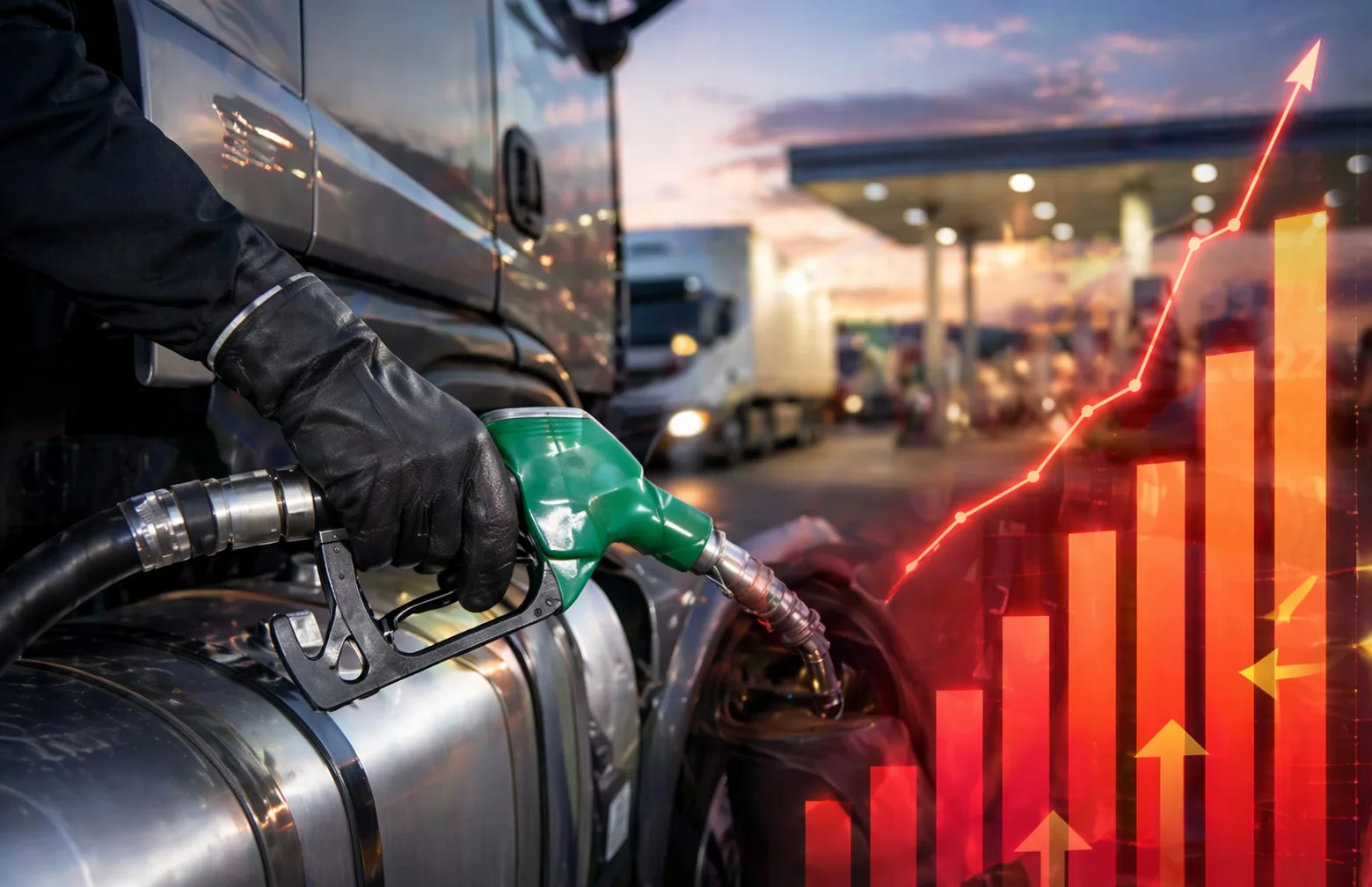
Fuel is already one of your biggest costs — accounting for 20–30% of total operating expenses for most. And unlike labor or equipment, you can’t negotiate the price at the pump.
What you can control is how efficiently your fleet burns it. Here’s what the best operators are doing right now.
1. They’re rethinking the route — including whether to take the toll
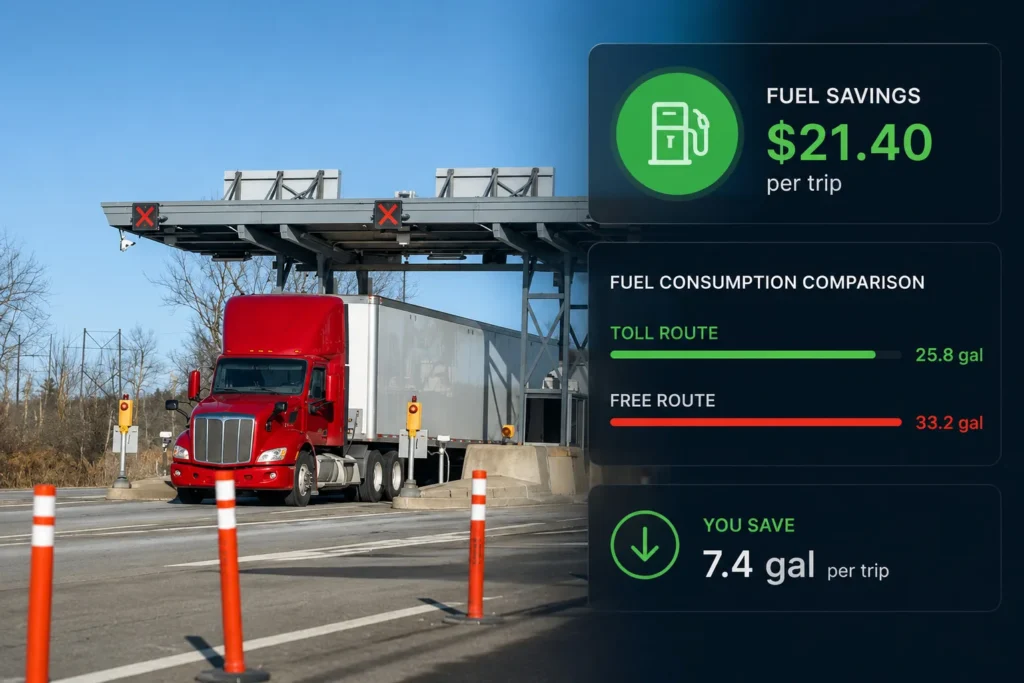 Avoiding toll roads to save money sounds logical. It isn’t always.
A longer route to dodge a $12 toll can easily burn $20 in extra fuel depending on the vehicle and load. The math doesn’t work. It just feelslike it does.
Proactive route planning that factors in both toll costs and fuel consumption gives fleet managers a truer picture of what each mile actually costs. AI-powered routing software now factors in vehicle type, load weight, real-time traffic, and historical patterns — finding the path that’s genuinely cheapest, not just the one that avoids the toll plaza.
2. They’re killing idle time — especially at weigh stations
Here’s one that surprises people: every hour of idle time burns approximately one gallon of fuel.
Multiply that across a fleet. Across a quarter. Suddenly mandatory stops like weigh stations look a lot more expensive than anyone budgeted for. Fleets using weigh station bypass solutions move through compliance checkpoints faster — fewer stops, less idle time, less fuel burned.
Start Cutting Costs Today
Let our experts help identify potential solutions and develop a plan that saves your fleet money - on fuel or anything else.
3. They’re making their fuel tax data work harder
IFTA filings aren’t just a compliance requirement. They’re a detailed record of every mile driven and every gallon consumed — by state, by vehicle, by driver.
Fleets that treat that data as an operational asset don’t just stay compliant. They spot the patterns pointing directly to waste: inefficient routes, underperforming vehicles, drivers burning more fuel than their peers on identical lanes.
4. They’re tracking MPG variance across the fleet
Not every truck performs the same. The gap between your best and worst fuel efficiency can be significant — and expensive.
Increasing average fuel efficiency by just 0.5 MPG across a fleet of 100 vehicles can save tens of thousands of dollars per year. MPG variance analysis helps fleet managers identify which vehicles — or which drivers — are the outliers, so they can take targeted action instead of blanket cost-cutting that never really moves the needle.
One underperforming truck caught early. Thousands saved annually. That’s not a rounding error.
The bottom line
Fuel prices will do what they do. You can't control that. But the fleets that come out ahead aren't just watching the pump. They're watching their data — their routes, their idle time, their filings, their MPG. And they're finding margin where everyone else sees a fixed cost. Fleetworthy gives fleet operators the visibility to do exactly that. From IFTA and IRP filing support to MPG variance analysis — especially today, when every gallon counts.