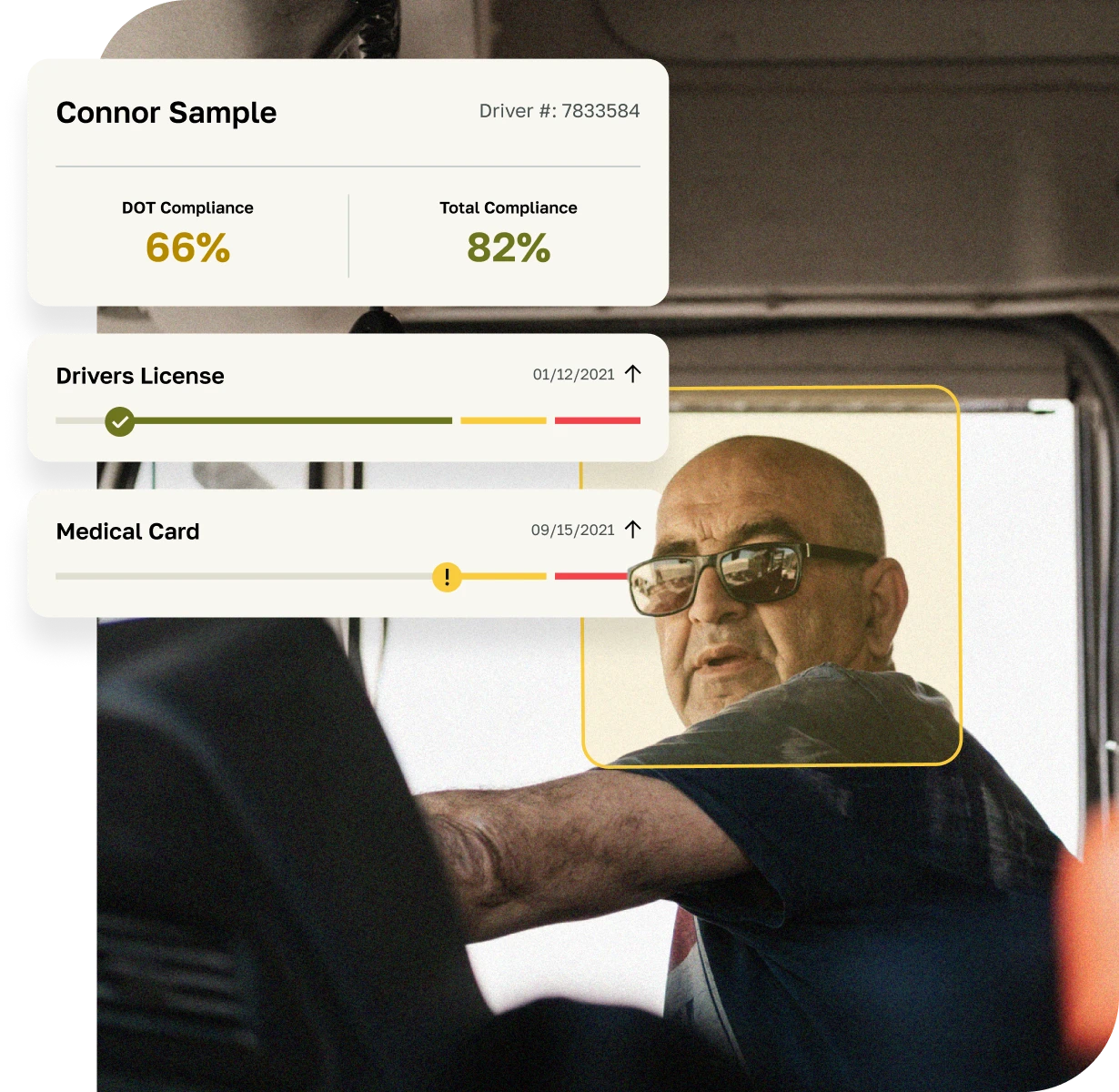
At its best, fleet maintenance software is not just a digital work-order board. It is the system of record that links asset health, service history, utilization, defect reporting, parts usage, and compliance documentation to the same vehicle and driver profiles. That unified structure matters because most fleet inefficiency does not come from a lack of data; it comes from data fragmentation. A shop may know what was repaired, dispatch may know where the truck is, finance may know what was charged, and compliance may know which records are missing, but if those facts do not meet in one workflow, the fleet still operates with blind spots.
A unified platform solves that by establishing one authoritative asset record. Each vehicle record can include the VIN, weight class, title and permit status, warranty details, PM templates, inspection history, repair history, toll activity, and other operational events. Driver profiles can include qualifications, training, and assignment history. When work orders, DVIRs, telematics signals, and financial transactions connect to those records, every downstream team sees the same vehicle identity, the same timestamps, and the same service history. That reduces duplicate entry, eliminates conflicting IDs, and makes audit trails materially easier to defend.
The business value becomes clearer when you compare siloed workflows with unified ones.

| Operating Model | What Usually Happens | Operational Consequence | Strategic Effect |
| Siloed tools and spreadsheets | DVIRs, PM schedules, tolls, invoices, and tax records sit in separate systems | Teams rekey data, reconcile mismatches, and miss exceptions late | Slower decisions, weaker audit readiness, and more avoidable downtime |
| Unified fleet maintenance platform | Asset, driver, defect, repair, and cost data share one operating record | Workflows trigger automatically and records stay synchronized | Faster intervention, stronger compliance posture, and clearer cost control |
The shift away from siloed tools is also a response to the economics of trucking. ATRI’s operational-cost benchmarking remains one of the best-known sources for industry cost comparisons, and maintenance leaders increasingly use those benchmarks not only to compare cost per mile, but also to understand how shop performance affects broader operating margins.1 When a fleet is running on tight margins, even small delays in repair closure, toll reconciliation, or document retrieval become expensive.
In practical terms, that means a modern fleet maintenance platform should do more than store repairs. It should connect inspections to work orders, tie parts and labor to each asset, validate meter readings, enforce service templates, and preserve complete service histories. It should also make it possible to extend that same data spine into telematics, tolls, and tax compliance so operations and finance are not forced to build their own parallel versions of the truth.
How Does Fleet Maintenance Software Reduce Unplanned Downtime?
Unplanned downtime falls when fleets make three things predictable: when maintenance is due, how defects are routed, and how technicians execute the work. Software cannot eliminate failures by itself, but it can remove the process failures that allow manageable wear items to become roadside events.
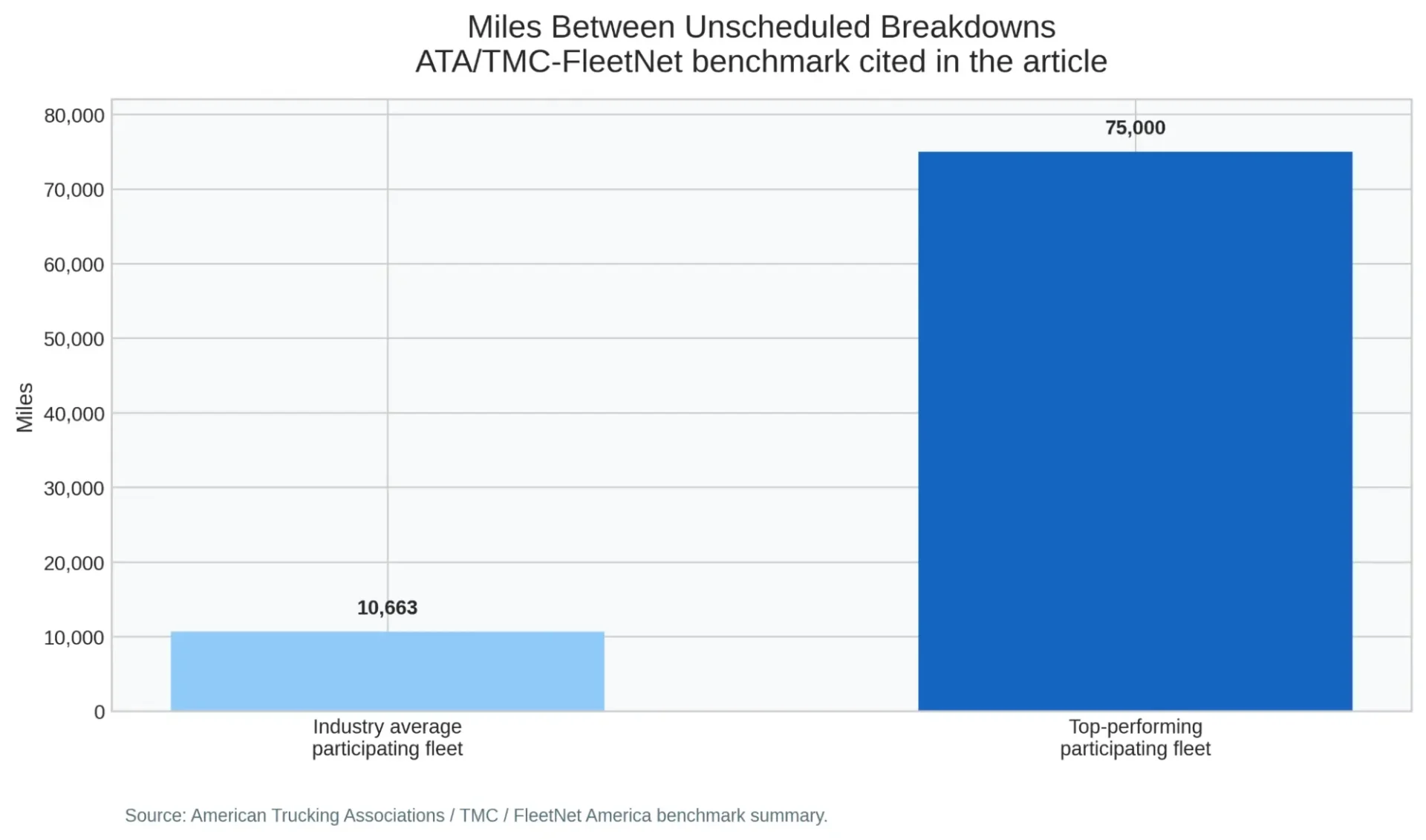
A useful benchmark comes from the ATA Technology & Maintenance Council and FleetNet America. In the benchmark cited on the ATA site, the average participating truckload carrier ran 10,663 miles between unscheduled breakdowns, while one top-performing participating fleet reached 75,000 miles between breakdowns.2 That gap is the clearest possible reminder that breakdown frequency is not dictated by fate. It is shaped by maintenance discipline, data quality, and workflow execution.
How Do Usage-Based PM Schedules Prevent Late Service?
Calendar-only maintenance plans fail because they assume all vehicles age the same way. They do not. A linehaul tractor, a city route truck, a switcher, and a seasonal spare accumulate risk differently. Usage-based fleet maintenance software corrects for that by running time, mileage, and engine-hour triggers at the same time and applying them by asset class.
That matters because engine wear is often driven by operating pattern rather than calendar age. A truck with heavy idle time may need service based on hours, not miles. Another vehicle may hit its mileage threshold well before the scheduled date. When telematics or ELD meter feeds update PM counters automatically, planners can pull a vehicle at the right time instead of too early or too late. The result is better PM compliance, fewer emergency repairs, and less wasted shop capacity.
How Does DVIR-to-Work-Order Automation Improve Defect Closure?
Many fleets think they have a maintenance problem when they actually have a handoff problem. Drivers identify defects, but those issues sit in an inbox, a text thread, or a separate inspection tool before anyone turns them into actionable work. That delay is where small defects become repeated defects, and repeated defects become downtime.
A better workflow is to turn a DVIR defect directly into a work order with severity, photos, due date, and unit assignment already attached. The repair should not be considered closed until the correction is documented and verified. This is more than a convenience. FMCSA and CVSA enforcement expectations assume that vehicle defects affecting safe operation are corrected before the vehicle returns to service, and the inspection record must be defensible if reviewed later.3
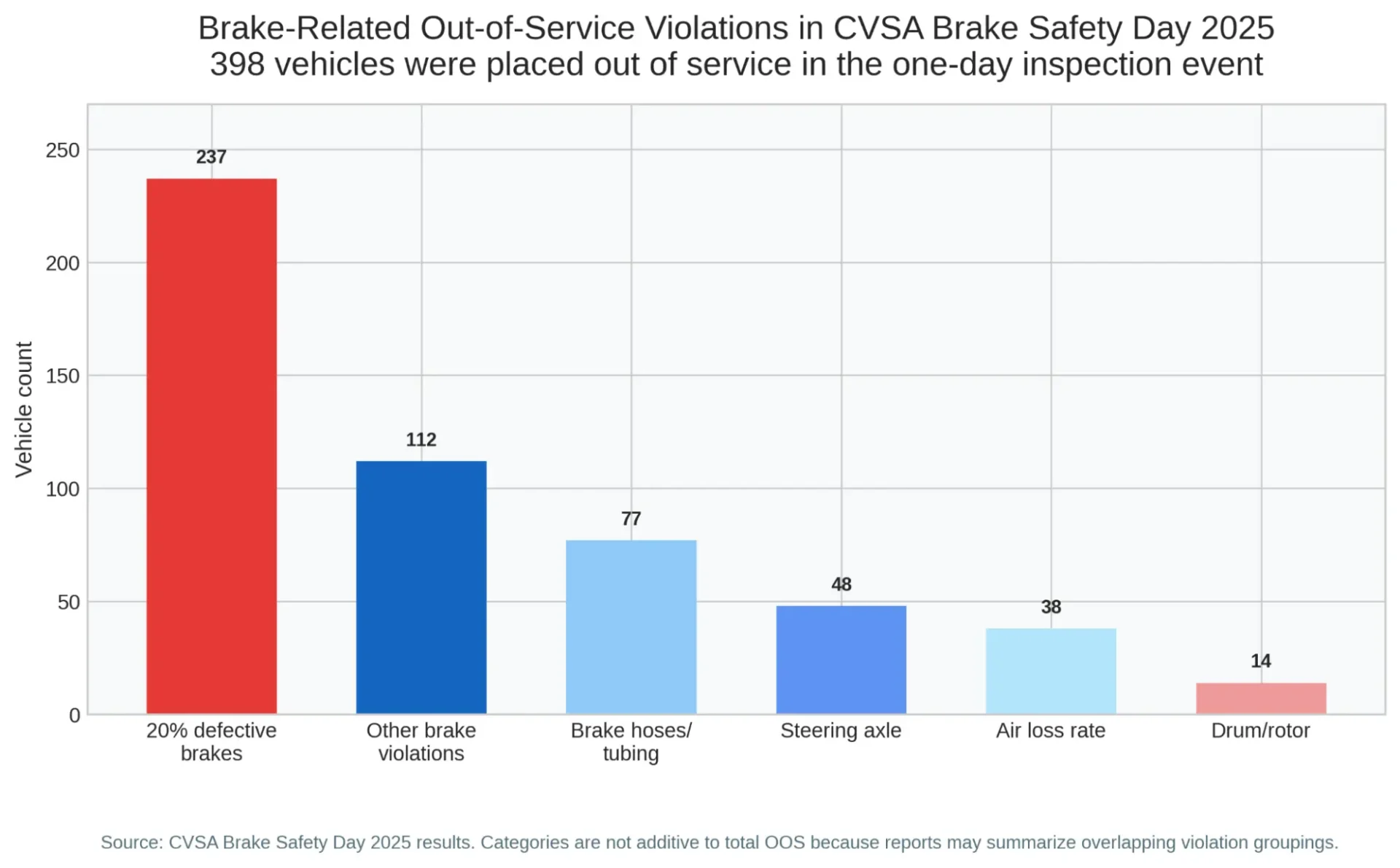
The recent CVSA Brake Safety Day results make the cost of weak defect control visible. Inspectors conducted 4,569 inspections and placed 398 vehicles, or 8.7%, out of service for brake-related violations in one day.4 Even more telling, 237 of those out-of-service cases, or 59.5%, met the 20% defective brakes criterion.4 Those figures underscore a simple point: defect closure is not paperwork. It is uptime protection.
Why Do Standardized Technician Workflows Matter So Much?
Even when fleets schedule work correctly, inconsistent execution can erase the benefit. Standardized service templates aligned to OEM guidance help technicians follow the same torque checks, fluid requirements, inspection steps, and labor coding practices across locations. That reduces rework, protects warranty eligibility, and improves the reliability of KPI reporting.
It also improves accountability. If technician assignments, parts pick lists, photos, labor clocks, and approvals all live inside the same work order, foremen can see bottlenecks in real time. That shortens mean time to repair and gives management better evidence when a repair becomes the subject of a safety review, customer dispute, or warranty claim.
How Do Parts and Warranty Controls Protect Margins?
A surprising amount of fleet maintenance waste comes from poor parts discipline. If the system does not tie parts to the work order, it becomes difficult to know whether a repair used the correct component, whether the part was under warranty, or whether the fleet is overstocking some items while repeatedly running out of others.
Unified maintenance software improves this in two ways. First, it links parts, vendors, and labor directly to the asset and repair history. Second, it flags warranty-covered components before the fleet pays retail for a replacement that should have been recovered. Over time, that makes the service history more valuable because management can see not just what failed, but whether failures cluster by component, vendor, route type, or asset model.

How Do Real-Time Tracking and Telematics Improve Preventive Maintenance?
Telematics changes maintenance planning because it replaces assumptions with operating evidence. Instead of treating maintenance as a calendar event, the fleet can time service around actual utilization, route profile, idle exposure, and location.
That is important because not all wear patterns appear first in the shop. Some begin in the field, where route conditions, driver behavior, and dwell patterns shape component life long before a vehicle reaches a bay. A unified platform that combines telematics with service history can detect those patterns early enough to influence PM timing and parts staging.
What Can Real-Time Fleet Tracking Tell Maintenance That a Static Record Cannot?
A static maintenance history tells you what already happened. Real-time tracking tells you what is happening now and what is likely to happen next. Odometer feeds and engine-hour updates can move a PM trigger forward in the middle of the week. Arrival alerts can notify the shop that a vehicle with an open defect is entering the yard. Geofences can help planners identify the most practical service window without disrupting loads.
Telematics also helps maintenance distinguish between assets that look similar in the ledger but operate very differently in the field. A tractor on steady highway lanes may tolerate a different inspection cadence than one that runs stop-start urban routes or mountain grades. When those route conditions are linked back to part life, the fleet can tune PM templates with far more precision.
How Does Location Intelligence Reduce Repair Delays?
When shops know where the asset is and when it will arrive, they can pre-stage bays, labor, and parts. That may sound simple, but the operational effect is significant. A repair that begins with the right defect record, the right meter reading, and the right part on hand is far more likely to become a first-time fix.
Location intelligence is equally useful when defects arise away from a terminal. If a vehicle under warranty reports a defect on route, a unified platform can route it toward an authorized repair location, attach the existing defect record, and preserve the timestamps and usage data needed for the warranty process. That saves labor on the back end and reduces the chance that the claim fails because the supporting record was incomplete.
Why Does Idle Visibility Matter to Maintenance Planning?
Idle time is often treated as a fuel problem first, but it is also a maintenance variable. High idle hours accelerate engine-hour-based service intervals, affect aftertreatment load, and consume shop capacity that could have been reserved for higher-value work. When telematics reveals chronic idle by route, terminal, or stop type, maintenance leaders can see where excessive idle is pulling forward service unnecessarily.
That matters because the value of preventive maintenance is not simply in doing more PMs. It is in doing them at the right moment. Fleets that understand idle, duty cycle, and route context can avoid both over-servicing low-use equipment and under-servicing high-stress units.

Why Should Tolls, DVIRs, and Form 2290 Live in the Same Fleet Maintenance Platform?
Many fleets still treat tolls and tax workflows as back-office tasks that sit outside maintenance. That separation looks harmless until a fleet tries to reconcile a violation, defend a chargeback, confirm a vehicle’s weight category, or retrieve proof tied to a specific unit. At that point, the cost of fragmented systems becomes obvious.
Unified platforms create value here because they connect administrative workflows to the same asset identity used by the shop. That reduces reconciliation effort, improves auditability, and gives finance a cleaner path to cost attribution.
How Does Unified Toll Management Reduce Leakage and Administrative Waste?
Manual toll reconciliation is expensive not because tolls are conceptually complex, but because toll data is fragmented across agencies, tags, plates, vehicles, trips, and accounting codes. When transactions are normalized against a consistent asset ID and trip reference, the fleet can identify duplicate charges, unassigned transponders, misclassified vehicles, and late fees before those exceptions snowball.
The value is not just operational. Clean toll allocation improves customer profitability analysis because finance can attribute toll spend by lane, asset, customer, or cost center with less rework. That makes toll control part of margin management rather than just an administrative cleanup exercise. The same logic extends to weigh-station bypass and related roadway data: benchmark reporting from PrePass highlights the large cumulative operational value of bypass efficiency, reinforcing the case for tying roadway events back to the same fleet record used for maintenance and compliance.6
Why Is Form 2290 Really a Data-Governance Problem?
Form 2290 is often framed as a once-a-year filing event, but the IRS requirements make clear that it is actually an ongoing asset-data management issue. The form applies to highway motor vehicles with a taxable gross weight of 55,000 pounds or more and also covers mileage suspensions, weight-category changes, certain credits, and other changes in vehicle status.5 If the fleet expects a vehicle to stay under the mileage threshold, it may claim suspension, but that status must still be supported with correct ongoing vehicle-use data. The IRS notes a 5,000-mile threshold, or 7,500 miles for agricultural vehicles, for those low-mileage suspension rules.5
In other words, Form 2290 accuracy depends on the same things maintenance software already manages well: clean VINs, accurate in-service dates, correct weight categories, document retention, and visibility into asset status changes. When those data points live in separate systems, the risk of rekeying errors and delayed amendments increases. When they live in a unified asset record, the filing process becomes easier to govern.
The comparison below helps illustrate the trade-offs.
| Form 2290 Operating Model | Strengths | Weaknesses | Best Fit |
| Spreadsheets plus IRS e-file | Low direct cost and full manual control | Error-prone, weak version control, fragmented proof storage | Small, stable fleets with disciplined processes |
| Standalone 2290 tool | Better automation and reminders | Separate data source, ongoing rekeying, manual handoffs | Moderate-complexity fleets still filing in-house |
| Outsourced service bureau | Access to specialists for edge cases | Slower turnarounds, variable fees, less visibility | Lean teams with infrequent but complex cases |
| Unified compliance backbone inside fleet maintenance software | Strongest data integrity, workflow governance, and document retrieval | Higher implementation effort and subscription commitment | Growing, multi-entity, or change-heavy fleets |
What Happens When Compliance Workflows Share the Same Asset Record?
Once DVIRs, tolls, maintenance events, and tax-related records point to the same asset master, compliance stops being a scramble for scattered evidence. A closed defect can update vehicle status. A toll dispute can be supported by trip timestamps. A Form 2290 amendment can be flagged by a weight or asset-status change. Registration teams can retrieve the right supporting documents without chasing multiple departments.
This is the deeper reason unified fleet software matters. It does not merely centralize records. It reduces the number of times a fleet has to rediscover the same fact about a vehicle.
How Do Reporting and Analytics Improve Repair-versus-Replace Decisions?
Most fleets track familiar metrics such as cost per mile, PM compliance, road calls, and downtime hours. Those metrics are useful, but they can also mislead if they are interpreted without operating context. An average may look healthy even as one subset of assets becomes unstable.
A stronger analytics model normalizes maintenance cost by duty cycle, route profile, idle exposure, terrain, and warranty recovery. It also weights safety-related backlog differently from cosmetic or convenience work. Once those variables are present, lifecycle decisions become much more defensible.
Why Is Cost per Mile Not Enough on Its Own?
Cost per mile is often treated as the headline maintenance metric because it is simple and comparable. The problem is that it can flatten meaningful differences between two units. One tractor may have a stable preventive pattern, clean defect closure, and steady warranty recovery. Another may show the same current cost per mile while also accumulating deferred DVIR defects, chronic idle, and shorter intervals between road calls.
Without integrated data, those two assets can look interchangeable. With integrated data, they do not. One may justify a planned PM and continued service. The other may be approaching the point where reassignment or replacement is the better financial choice.
How Does Analytics Become an Operating System Rather Than a Dashboard?
Analytics becomes operational when it changes priorities in real time. That means the insights should not live only in a month-end report. They should influence work-order priority, parts purchasing, service scheduling, and capital planning.
For example, a rising trend in repeated alternator failures on one model might justify a parts strategy change before more road calls occur. A backlog item tied to a safety-critical defect should outrank older but lower-risk work. A cluster of toll violations on one lane may reveal an asset-assignment or transponder-management issue rather than a pure back-office problem.
Once maintenance, compliance, and finance data are connected, reporting moves from explanation to intervention. Leaders can see rates of change, not just static averages, and they can act before the next avoidable event occurs.

How Should a Fleet Choose Fleet Maintenance Software for Scale, Security, and Adoption?
Feature comparison is necessary, but it is not sufficient. The right platform must scale with organizational complexity, protect sensitive data, and earn adoption across multiple roles. Otherwise, even strong functionality will turn into shelfware or partial process capture.
What Does Scale Really Mean in Fleet Maintenance Software?
Scale is not just the ability to support more units. It is the ability to support more entities, terminals, data feeds, approval paths, and exceptions without losing control of the data model. A fleet that grows through acquisitions, opens new regions, changes telematics providers, or adds new asset classes needs a platform that can absorb those changes while preserving reporting continuity.
The best systems standardize the record structure while remaining flexible about data sources.
Which Security and Governance Controls Actually Matter?
Transportation data now has clear financial, operational, and regulatory consequences. Maintenance histories, tax documents, and driver-linked records are not casual data assets. Fleets should expect role-based access, audit logs, encryption in transit and at rest, configurable retention policies, and workflow controls that support segregation of duties.
These features are not just for IT checklists. They make daily operations safer and cleaner. When permissions are tightly defined and each workflow step is logged, the fleet relies less on informal controls and has a better chance of surviving an audit, an internal review, or a data dispute without losing confidence in the record.
How Do You Improve Adoption Without Overwhelming Teams?
Adoption improves when software rollout follows workflow frequency rather than organizational chart prestige. High-frequency, cross-team processes such as PM scheduling, DVIR closure, and work-order execution typically deserve priority because they create immediate value and establish cleaner source data for later phases.
Training should also be role-specific. Technicians need mobile repair and parts workflows. Dispatch needs availability visibility and shop status. Finance needs accruals, chargebacks, and cost-center attribution. Compliance needs accessible, defensible document retrieval. When each role sees a practical improvement in its own daily work, the platform is more likely to become habitual.
Why Unified Fleet Maintenance Software Has Become an Operating Backbone
The real issue is not whether a fleet needs maintenance software in the abstract. It is whether the fleet can continue to manage uptime, compliance, and cost control through disconnected tools without paying a hidden tax in downtime, rework, and risk.
The answer for most growing fleets is increasingly no. Modern fleet maintenance software matters because it connects events that are operationally related but too often managed as separate tasks: inspections, repairs, telematics signals, toll transactions, tax filings, and lifecycle analytics. Once those activities share a single operating record, leaders can schedule maintenance more accurately, close defects faster, allocate costs more cleanly, defend audits more confidently, and make replacement decisions with better evidence.
That is why the strongest fleet maintenance platforms are not just shop systems. They are operating backbones for transportation businesses that need reliability, traceability, and faster coordination across maintenance, operations, compliance, and finance. In an industry where delays compound quickly and margins stay under pressure, that kind of unification is no longer a nice-to-have. It is becoming the standard for resilient fleet performance.
Frequently Asked Questions about Fleet Maintenance Software
What should fleet maintenance software include if I want fewer breakdowns and better compliance?
The platform should include asset-based work orders, preventive maintenance scheduling by mileage and engine hours, DVIR defect workflows, parts and labor tracking, complete service history, and integrations for telematics and finance. If compliance matters, it should also support defensible document retention and easy retrieval of maintenance-related records.3 5
How does telematics improve preventive maintenance software for fleets?
Telematics improves maintenance planning by feeding real usage data into service intervals and by helping fleets align service with route conditions, idle exposure, and actual vehicle availability. That makes preventive maintenance more precise and reduces the waste of both early and late service.
Can toll management really belong inside a fleet maintenance platform?
Yes, because toll exceptions and violations are usually asset-identity problems as much as payment problems. When tolls are tied to the same vehicle and trip records used elsewhere in the fleet, finance can allocate costs more accurately and operations can resolve exceptions faster.
Why does Form 2290 belong in an article about fleet maintenance software?
Because accurate Form 2290 workflows depend on the same underlying asset data that maintenance systems already manage: VIN, taxable gross weight, in-service dates, mileage status, and document retention. Treating it as separate from fleet data governance creates more rekeying and more risk.5
Q: How can I tell whether a fleet maintenance platform will scale with my operation?
Look beyond the feature list and ask whether the platform supports multiple business entities, role-based access, audit trails, integration with telematics and finance systems, and workflow governance for growing operational complexity. The right question is not just whether it works today, but whether it preserves data integrity as the fleet changes.
Reliability and compliance improve fastest when every inspection, repair, signal, and charge ties back to a single asset record. Fleetworthy delivers a fleet maintenance platform that unifies PM scheduling, DVIR-to-work-order closure, parts and warranty controls, real-time tracking, toll reconciliation, weigh-station bypass, and Form 2290 governance—so teams act on one set of facts, not spreadsheets. The result is fewer process lapses, cleaner audits, tighter cost attribution, and clearer evidence for repair-versus-replace decisions. If you’re ready to connect shop operations, finance, and compliance in one operating backbone, request a brief Fleetworthy walkthrough tailored to your routes, asset mix, and growth plan.
Fleet Maintenance Software: A Unified, Audit-Ready Approach
Q: What is fleet maintenance software, and why are fleets moving off spreadsheets and siloed tools?
A: Fleet maintenance software is a system of record that ties asset health, service history, DVIRs, telematics, parts, and costs to each vehicle and driver profile. Fleets move off siloed tools because fragmented data creates rekeying, missed exceptions, and weak audit trails. A unified platform replaces conflicting IDs and manual handoffs with synchronized workflows and reliable records. The result is faster decisions, fewer errors, and clearer accountability.
Q: How does a unified asset record reduce downtime and compliance risk?
A: A unified record anchors every event—inspections, work orders, meter updates, tolls, and tax filings—to the same VIN and driver identity. Planners can trigger PMs based on actual usage, route DVIR defects immediately, and preserve timestamps for audits. Teams stop reconciling mismatched systems and start acting on one version of the truth, which shortens repair cycles and improves audit readiness.
Q: How do usage-based PM schedules work compared to calendar-only plans?
A: Usage-based schedules run time, mileage, and engine-hour counters in parallel and apply them by asset class. Telematics or ELD feeds update meters automatically, so a high-idle unit is serviced on hours while a high-mile tractor is serviced on distance. This prevents both early and late service, increases PM compliance, and reduces emergency repairs. It also helps allocate shop capacity to the right units at the right time.
Q: How does DVIR-to-work-order automation improve defect closure and audit readiness?
A: Automation converts a reported DVIR defect directly into a work order with severity, photos, unit, and due date attached. The work order stays open until the correction is documented and verified, creating a clear chain from defect to fix. This closes the handoff gap that turns small issues into repeat defects and road calls, and it produces a defensible inspection record if regulators review the file.
Q: What role do telematics and real-time tracking play in preventive maintenance?
A: Telematics replaces assumptions with evidence by feeding current odometer and engine-hour data into PM counters. Real-time location helps shops stage bays and parts when an at-risk vehicle is due to arrive, and geofences can flag the best service window with minimal disruption. Duty cycle insights—highway vs. stop-start, grades, idle—let fleets tune PM templates by operating pattern, cutting guesswork and improving first-time fix rates.
Q: How do parts, inventory, and warranty controls protect maintenance margins?
A: Linking parts and labor to each work order and asset makes it clear which component was used, whether it met spec, and whether it was under warranty. The system can flag coverage before the fleet pays retail and store the evidence needed for recovery. Over time, analytics reveal failure patterns by component, vendor, route type, or model. That guides stocking levels, vendor choices, and corrective maintenance.
Q: Why include toll management inside fleet maintenance software?
A: Toll exceptions are often identity problems—unassigned tags, plate mismatches, or vehicle misclassification—more than payment issues. When toll transactions normalize against the same asset and trip IDs used for maintenance, fleets can spot duplicates, late fees, and unassigned charges early. Finance gains cleaner allocation by lane, asset, or customer with less rework, and operations resolve disputes faster because supporting records and timestamps live in one place.
Q: How is IRS Form 2290 a data-governance problem, and how can software help?
A: Form 2290 accuracy depends on clean VINs, correct taxable weight, in-service dates, mileage status, and timely amendments. Those fields change over a vehicle’s life, so keeping them in separate systems invites rekeying errors and missed updates. A unified asset record centralizes the data and documents needed for filings, suspensions, and credits, reducing filing time, version confusion, and audit risk.
Q: Which analytics matter for repair-versus-replace decisions beyond cost per mile?
A: Cost per mile is a starting point, but it can hide instability. Stronger models weigh duty cycle, route profile, idle exposure, warranty recovery, and the severity and trend of DVIR defects and road calls. They also separate safety-critical backlog from cosmetic work when prioritizing spend. With integrated data, fleets can see when a unit’s failure rate is accelerating and justify reassignment or replacement.
Q: What should I look for in fleet maintenance software for scale, security, and adoption?
A: For scale, confirm support for multiple entities, terminals, asset classes, integrations, and approval paths without breaking the data model. For security, require role-based access, audit logs, encryption in transit and at rest, retention policies, and workflow controls that support segregation of duties. For adoption, roll out high-frequency workflows first—PM scheduling, DVIR closure, parts, and work orders—and train by role. The right platform preserves data integrity as you add assets, feeds, and teams.
Unified Fleet Maintenance Software: The Asset System of Record for Modern Fleets
Unifying maintenance, inspections, telematics, tolls, and Form 2290 in one platform creates a single, trustworthy view of each asset. When all activity ties back to the same VIN and driver, teams cut downtime, reduce risk, and eliminate error-prone rekeying across disconnected tools.
This article explains how unified fleet maintenance software functions as an asset system of record, outlines the core capabilities that matter, and highlights the operational and governance practices required to scale with confidence.
Q: What an Asset System of Record Delivers
An asset system of record centralizes the information that defines a vehicle’s life: inspections, repairs, telemetry, costs, and compliance events. It links people, parts, and processes to each asset so that decisions are made with complete, current data.
In practice, that means every inspection, work order, and administrative transaction is captured against the same unit. Dispatch, shop, and finance teams operate from a common source of truth instead of reconciling spreadsheets and point solutions.
Core Capabilities That Cut Downtime and Risk
Maintenance Tied to the Asset, Not the Tool
- Connect inspections, work orders, telematics, parts, and costs to the same VIN and driver.
- Replace manual rekeying and fragmented histories with a complete, searchable record.
- Give technicians, managers, and auditors the same authoritative data.
Usage-Based Preventive Maintenance
- Run time, mileage, and engine-hour counters in parallel, fed automatically by meter and telematics data.
- Schedule service at the right moment to reduce emergency repairs and roadside events.
- Standardize PM programs across locations with consistent intervals and parts lists.
DVIR Automation and Compliance
- Convert reported defects directly into work orders with verification steps to ensure closure.
- Maintain defensible, timestamped records that satisfy regulatory requirements.
- Shorten the loop from driver report to repair completion and return-to-service.
Parts, Labor, and Warranty Control
- Link parts and labor to each work order to surface warranty eligibility before purchasing.
- Spot failure patterns to refine stocking strategies, preferred vendors, and repair decisions.
- Improve cost attribution at the component level for more accurate total cost of ownership.
Unified Administrative Workflows
- Tie toll transactions and Form 2290 data directly to the asset record.
- Reduce reconciliation effort and improve cost attribution by unit, route, and entity.
- Lower filing and audit risk with complete, consistent documentation and audit trails.
Operational Impact at Scale
When these capabilities operate from one system, the gains compound. PM schedules align with real-world usage, shop capacity is planned proactively, and repeat failures are addressed with better parts and procedures. Finance teams see true unit costs, while compliance teams can produce clean records in minutes instead of days.
The result is fewer unscheduled events, faster cycle times from defect to repair, and clearer decision-making about when to repair, rotate, or retire equipment.
Governance and Data Integrity
As fleets grow, governance becomes as important as features. Look for platform controls that preserve data quality across teams, locations, and business units.
- Multi-entity support to segment data, users, and workflows where needed.
- Role-based access to ensure technicians, managers, and auditors see the right information.
- Audit trails that log changes to records, approvals, and completions.
- Workflow governance to standardize PM programs, inspection forms, and approval steps.
These controls protect the integrity of the asset record and build trust in the data as the organization changes.
Q: How to Compare Platforms
When evaluating unified fleet maintenance software, confirm the following:
- The system truly functions as the asset system of record, with all maintenance, inspection, telematics, toll, and Form 2290 workflows tied to the unit.
- Usage-based PM supports time, mileage, and engine-hour counters with automatic meter feeds.
- DVIRs convert to work orders with closure verification and traceable compliance logs.
- Parts, labor, and warranty are linked to each work order to prevent unnecessary spend.
- Administrative workflows unify cost attribution and audit readiness.
- Governance features—multi-entity scale, role-based access, audit trails, and workflow controls—are mature and easy to administer.
Conclusion
A single system of record for assets aligns maintenance, compliance, and finance around accurate, timely data. By consolidating maintenance, inspections, telematics, tolls, and Form 2290 workflows, fleets reduce downtime and risk while easing administrative burdens. The right platform pairs comprehensive capabilities with strong governance so the data remains reliable as the fleet grows.