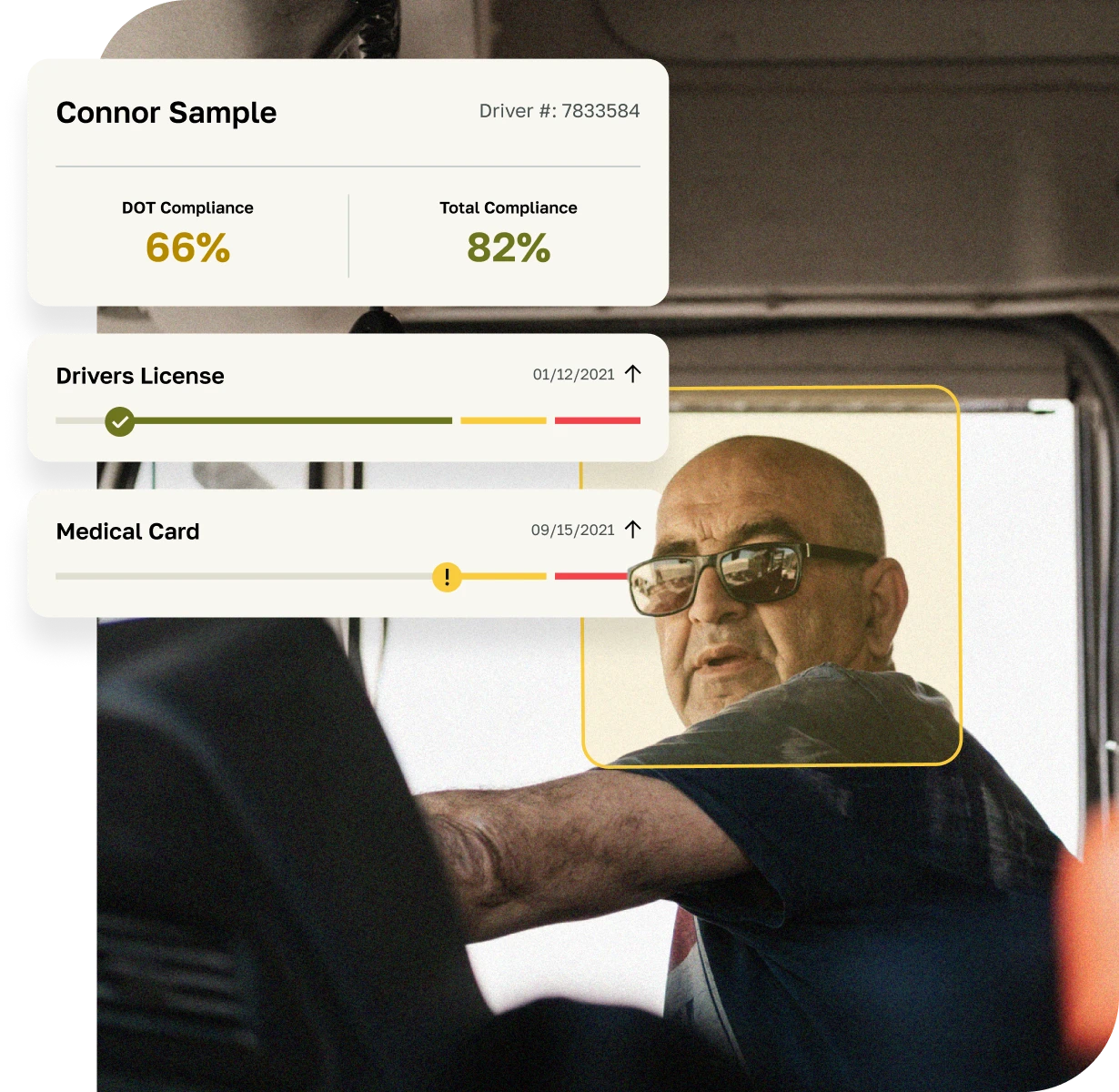

Understanding the metrics that govern your fleet’s safety performance is essential. One of the most critical systems influencing fleet operations, insurance costs, and compliance reviews is the CSA program, short for Compliance, Safety, Accountability, developed by the Federal Motor Carrier Safety Administration (FMCSA).
The CSA program is designed to improve road safety by holding motor carriers and drivers accountable for their performance. It uses data collected from roadside inspections, crash reports, and violations to identify high-risk carriers and drivers, encouraging fleets to proactively address safety and compliance issues before they escalate.
What Is a Truck Driver CSA Score?
A Truck Driver CSA Score refers to the performance data associated with an individual driver under the CSA system. While the FMCSA doesn’t officially assign a public numeric score to individual drivers, they do track each driver’s performance through violations that contribute to a carrier’s CSA scores, particularly in the Behavior Analysis and Safety Improvement Categories (BASICs). These include areas such as Unsafe Driving, Hours of Service, and Vehicle Maintenance, among others.
Each time a driver is involved in a roadside inspection, violates a regulation, or is part of a reportable crash, that data is recorded and associated with both the driver and their carrier. Drivers with frequent or severe violations can negatively impact their carrier’s CSA performance, even if the rest of the fleet operates safely.
Breakdown of the 7 BASICs Categories
Each category evaluates a specific aspect of driver or carrier behavior and is assigned a score based on violations. Here’s a breakdown of each:
1. Unsafe Driving
This category measures dangerous or careless driving behaviors such as:
- Speeding
- Reckless or aggressive driving
- Failure to wear a seatbelt
- Following too closely
- Improper lane changes or signaling
Impact: Violations in this category often carry significant weight, especially for repeat offenses.
2. Crash Indicator
This BASIC is based on a carrier’s crash history, including:
- Frequency of crashes
- Severity (injuries or fatalities)
- Preventability (in future audits or investigations)
Note: Even if a crash isn’t the driver’s fault, it still impacts the crash indicator until reviewed.
3. Hours of Service (HOS) Compliance
This measures compliance with regulations around:
- Driving time limits
- Rest breaks
- Logbook (ELD) violations
- False logs
Impact: Fatigue-related violations can severely damage CSA scores and are a top focus for enforcement.
4. Vehicle Maintenance
Covers the condition and upkeep of CMVs, including:
- Faulty brakes
- Inoperable lights
- Worn tires
- Failure to conduct or record pre-trip inspections
Impact: Vehicle-related violations are frequent and can indicate poor fleet maintenance policies.
5. Controlled Substances/Alcohol
Tracks violations related to:
- Drug and alcohol use
- Possession or impairment while operating a CMV
- Refusal to submit to testing
Impact: These violations are extremely serious and may result in immediate disqualification or termination.
6. Hazardous Materials Compliance
Applies to fleets or drivers transporting hazardous materials (hazmat), focusing on:
- Proper packaging, labeling, and placarding
- Hazmat paperwork
- Securement and handling practices
Impact: Hazmat violations are high-risk and can lead to large fines and penalties.
7. Driver Fitness
This evaluates whether drivers are legally qualified to operate a CMV, including:
- Valid CDL
- Medical certification
- English language proficiency (for U.S. operations)
- History of driving violations or disqualifications
Impact: Lack of qualifications can lead to audit triggers and affect fleet safety ratings.

How CSA Scores Are Calculated
CSA scores are determined using the Safety Measurement System (SMS), which processes data gathered from:
- Roadside inspections
- Traffic violations
- Crash reports
- DOT audits and investigations
Each violation is assigned a severity weight (1 to 10), with higher points for more dangerous behaviors. Other factors include:
- Time weighting: Violations within the past 6 months count more heavily than older ones.
- Crash involvement: Severity and frequency are considered.
- Peer comparison: Carriers are ranked against similar-sized fleets.
While the FMCSA does not assign formal CSA scores to individual drivers, a driver’s violations directly affect the motor carrier’s CSA percentile ranking within each BASIC category.
Driver-Level Data vs. Carrier CSA Scores
- Driver-Level Data: Stored in the Pre-Employment Screening Program (PSP) and used by carriers for hiring decisions. It includes:
- 5 years of crash history
- 3 years of inspection and violation data
- Doesn’t include a public score but reflects performance trends
- 5 years of crash history
- Carrier CSA Scores: These are the percentile rankings used by FMCSA to prioritize interventions. They are visible (with some data restricted) and impact:
- Safety ratings
- Audit risk
- Insurance premiums
- Shipper and broker relationships
- Safety ratings
While truck drivers don’t have an official “CSA score” displayed publicly, their individual safety behavior heavily influences the carrier’s CSA performance. Repeated violations by one or more drivers can elevate the fleet’s BASIC percentiles, increasing the risk of FMCSA scrutiny or intervention.

Understanding Fleet Safety Ratings
A fleet’s safety rating is a critical indicator of its overall compliance with federal safety regulations and its operational risk on the road. Assigned by the Federal Motor Carrier Safety Administration (FMCSA), these ratings are publicly available and serve as a snapshot of a carrier’s ability to operate safely and within regulatory standards. For fleets, this rating can influence everything from audit frequency to insurance costs and business partnerships.
FMCSA Safety Ratings: Satisfactory, Conditional, Unsatisfactory
The FMCSA assigns one of the following three official safety ratings to a motor carrier after conducting a Compliance Review (CR):
- Satisfactory
- The carrier has adequate safety management controls in place.
- There are no critical violations that suggest a risk to public safety.
- This rating is ideal and typically required by many shippers and brokers.
- The carrier has adequate safety management controls in place.
- Conditional
- The carrier has safety management controls in place, but they are inadequate to ensure compliance with safety regulations.
- This rating suggests the company is at a moderate risk of non-compliance or accident involvement.
- Carriers with this rating often face increased scrutiny, reduced business opportunities, and higher insurance costs.
- The carrier has safety management controls in place, but they are inadequate to ensure compliance with safety regulations.
- Unsatisfactory
- The carrier lacks adequate safety management controls and poses a significant safety risk to the public.
- An Unsatisfactory rating may lead to an order to cease operations if not corrected quickly.
- This is a severe rating that endangers a fleet’s legal authority to operate.
- The carrier lacks adequate safety management controls and poses a significant safety risk to the public.
The presence of “critical” or “acute” violations (e.g., falsifying logs, operating without a valid CDL, or drug/alcohol violations) can quickly push a fleet into Conditional or Unsatisfactory territory. A pattern of non-compliance in any BASIC category may also trigger a compliance review.

Impact of Safety Ratings on Fleet Operations
Your fleet’s safety rating doesn’t just reflect compliance, it has real-world consequences across many areas of operation:
DOT Audits and Interventions
- Fleets with poor CSA scores or Conditional ratings are more likely to be flagged for DOT audits or targeted interventions.
- Higher frequency of inspections, increased paperwork, and a higher chance of receiving a Notice of Claim or Out-of-Service (OOS) order.
- A poor safety rating also increases your risk of compliance monitoring or follow-up audits.
Insurance Premiums
- Insurers use FMCSA safety ratings and CSA scores to assess a carrier’s risk profile.
- A Conditional or Unsatisfactory rating can lead to:
- Higher premiums
- Limited coverage options
- In some cases, denial of coverage
- Higher premiums
- Insurance underwriters may request corrective action plans before renewal.
Shipper and Broker Relationships
- Many shippers and freight brokers refuse to work with carriers that do not hold a Satisfactory rating.
- A Conditional or Unsatisfactory rating may result in:
- Lost contracts
- Removal from preferred carrier lists
- Reputational damage in the freight marketplace
- Lost contracts
- Some companies use transportation management systems (TMS) that automatically flag carriers with lower ratings for removal or reduced load assignments.
Risk Exposure and Legal Liability
- In the event of a crash, an Unsatisfactory or Conditional rating can be used in litigation to establish negligence or liability.
- Plaintiffs’ attorneys often investigate a fleet’s safety history to support nuclear verdicts (multi-million-dollar settlements).
- A documented history of non-compliance can weaken your legal defense, even if the crash wasn’t your fault.

Patterns of Violations and Their Cumulative Impact
FMCSA looks for trends, not just isolated violations. When multiple violations appear within a specific BASIC or across multiple drivers, they indicate:
- Poor internal safety controls
- Gaps in driver training and oversight
- Weakness in maintenance or compliance programs
Patterns of violations can result in:
- Mandatory corrective action plans from FMCSA
- Conditional safety rating designation
- Loss of shipper confidence
- Increased insurance premiums or policy cancellations
The more consistent the violations, the harder it becomes to argue that your fleet is safe and well-managed, regardless of size.
Your fleet’s CSA profile is only as strong as its weakest driver. One high-risk driver can sink your entire safety standing. That’s why effective driver vetting, training, coaching, and real-time monitoring are essential to protecting your safety rating and staying FMCSA-compliant.
A fleet’s safety rating is more than a government-issued score, it’s a reflection of your safety culture, compliance discipline, and risk exposure. Keeping a Satisfactory rating not only ensures uninterrupted operations but also builds trust with clients, insurers, and regulators. A proactive focus on safety policies, driver behavior, maintenance, and compliance documentation is essential to maintain or improve your fleet’s standing.