
As fleets expand their operations across state lines, they encounter a maze of varying regulations, enforcement practices, and legal exposures. Each state has its own Department of Transportation (DOT) requirements, liability standards, and compliance expectations, creating a complex landscape that can easily overwhelm even the most seasoned fleet managers.
This multi-jurisdictional complexity increases the risk of non-compliance, legal penalties, and civil liability, especially when companies lack a unified compliance strategy. Without clear oversight and consistent practices, it becomes difficult to track regulatory changes, maintain accurate documentation, or ensure drivers meet all required safety and qualification standards across different states.
To stay ahead of these challenges, proactive compliance is essential not just as a legal obligation, but as a cornerstone of effective risk management. This is where fleet compliance solutions come into play. By integrating centralized tools, standardized processes, and real-time data insights, fleet compliance solutions help companies streamline operations, ensure adherence to all applicable regulations, and minimize liability exposure, no matter where their vehicles travel.
Understanding the Landscape of Multi-State Fleet Liability
Operating in multiple states introduces a new level of regulatory complexity and with it, a greater potential for costly liability. Fleet managers must navigate a shifting patchwork of laws that differ not only by state, but sometimes by region, municipality, or enforcement district. These inconsistencies make it critical for companies to understand how and why multi-state compliance challenges occur, and how they can impact overall fleet liability.
State-Level Variations in DOT Fleet Compliance Requirements
While the Federal Motor Carrier Safety Regulations provide a national compliance baseline, each state retains authority to impose additional requirements. These may include:
- Intrastate operating authority and permits
- State-specific driver qualification rules
- Unique vehicle inspection or emissions testing protocols
- Differing hours-of-service exceptions and enforcement practices
- Additional insurance or tax reporting requirements
For example, California enforces stricter emissions standards through the California Air Resources Board, while states like Texas or Florida may prioritize different areas of DOT enforcement based on local conditions. A fleet vehicle that complies in one jurisdiction may be out of compliance in another without any operational changes.
Inconsistent Enforcement Priorities Create Hidden Risk
Beyond the regulations themselves, enforcement intensity and priorities vary widely. Some states conduct frequent roadside inspections or emphasize safety audits, while others may focus on intrastate permitting or tax compliance. These discrepancies can catch fleet operators off guard, especially when relying on outdated assumptions or inconsistent internal policies.
When companies fail to account for these enforcement differences, they open themselves up to:
- Unforeseen citations or fines
- Detention of vehicles during inspections
- Driver disqualifications
- Elevated CSA scores that impact insurance premiums and DOT audit risk
Real-World Consequences of Compliance Failures
The impact of overlooking multi-state liability is more than theoretical; it’s measurable and expensive. According to FMCSA data, over 900,000 violations were cited during roadside inspections in 2024, many stemming from documentation issues, driver qualification lapses, and HOS violations, all of which are exacerbated by multi-state inconsistencies.
Case in point: A mid-sized carrier operating across the Midwest was recently fined over $300,000 after a compliance audit revealed that several of its drivers, while qualified in their home state, lacked the proper credentials to operate in neighboring states due to overlooked medical certification and intrastate registration rules. The oversight not only led to fines but also resulted in several service disruptions and reputational damage.
Why Liability Exposure Grows with Operational Footprint
As fleets grow into new regions, so does their exposure to litigation and regulatory penalties. A minor oversight in one jurisdiction could lead to serious consequences if a crash occurs and investigators uncover compliance gaps. Plaintiffs’ attorneys often leverage these gaps to demonstrate negligence, which can dramatically increase the cost of settlements or judgments.
Multi-state liability issues aren’t just a legal risk; they’re a business continuity threat. That’s why understanding and actively managing this regulatory diversity is essential for long-term fleet sustainability.
Why DOT Fleet Compliance Is Non-Negotiable
Compliance with Department of Transportation regulations is not simply a box to check; it is a legal requirement and operational necessity that directly impacts the safety, reputation, and financial stability of any fleet. Whether operating intrastate or across multiple states, maintaining a strong DOT compliance posture is essential for avoiding costly disruptions and minimizing liability.
What Is DOT Fleet Compliance?
DOT fleet compliance refers to adherence to the regulations set forth by the Federal Motor Carrier Safety Administration, along with additional state-specific rules governing commercial motor vehicle operations. These regulations are designed to ensure safety, accountability, and operational consistency across the transportation industry.
Key components of DOT fleet compliance include:
- Driver Qualification Files: Ensuring each driver meets physical, licensing, and experience standards. This includes background checks, medical certifications, and Motor Vehicle Record reviews.
- Hours of Service Compliance: Monitoring and managing driver work and rest schedules to prevent fatigue-related accidents, often using Electronic Logging Devices.
- Drug and Alcohol Testing: Conducting pre-employment, random, post-accident, and return-to-duty drug and alcohol screenings, as required under Part 382.
- Vehicle Inspections and Maintenance: Maintaining up-to-date inspection reports, preventive maintenance logs, and repair records to meet FMCSR standards.
- International Fuel Tax Agreement Reporting: Accurately tracking fuel purchases and mileage across jurisdictions to meet tax reporting obligations.
- Recordkeeping and Audit Readiness: Retaining compliance documentation in a structured and accessible format to prepare for DOT audits and roadside inspections.
Operational and Legal Consequences of Non-Compliance
The consequences of falling short in any of these areas can be significant and far-reaching. From a regulatory perspective, non-compliance can lead to:
- Civil penalties and monetary fines
- Out-of-service orders
- Increased frequency of DOT audits
- CSA score deterioration
- Loss of operating authority
But beyond regulatory fines, non-compliance carries deeper implications. If a non-compliant vehicle or driver is involved in an accident, the incident is more likely to trigger a lawsuit. In such cases, a history of failed inspections, expired driver certifications, or missing records can serve as compelling evidence of negligence.
Fleet Disruption and Reputational Risk
Even a single compliance infraction can lead to cascading operational issues. A vehicle detained during a roadside inspection delays deliveries and disrupts schedules. A suspended driver can leave routes uncovered. An audit failure can put an entire fleet’s operating authority at risk.
Moreover, reputational damage is a real concern. Shippers, brokers, and insurance providers increasingly monitor CSA scores and DOT audit histories as part of their risk assessment process. A poor compliance track record can result in lost business opportunities and higher insurance premiums.
DOT Compliance as a Shield Against Lawsuits and Liability
One of the most powerful benefits of maintaining DOT fleet compliance is its role in reducing legal liability. In the event of a crash or claim, having robust compliance documentation and a history of regulatory adherence can serve as a defensive shield. It demonstrates that your organization takes safety and responsibility seriously, which can help mitigate legal exposure and limit financial damages.
On the other hand, even a relatively minor violation, such as a missed medical card update or incomplete logbook, can be used to establish a pattern of negligence. In today’s legal environment, plaintiffs’ attorneys actively seek these vulnerabilities to strengthen their case.
Leveraging Fleet Compliance Solutions for Multi-State Success
Navigating the compliance challenges of operating across multiple states requires more than manual checklists or siloed policies. Today’s most effective fleets rely on fleet compliance solutions, a combination of technology platforms, automation tools, and expert support to streamline compliance efforts, ensure data accuracy, and maintain visibility across all jurisdictions.
Fleet compliance solutions empower companies to be proactive, not reactive, by providing centralized control over a decentralized operation.
What Are Fleet Compliance Solutions?
Fleet compliance solutions encompass the digital tools, software systems, and third-party services that help carriers monitor, manage, and automate regulatory requirements. These solutions typically support a wide range of compliance areas, including:
- Driver qualification management
- Hours-of-service and ELD compliance
- Drug and alcohol program tracking
- IFTA and IRP tax reporting
- Inspection and maintenance recordkeeping
- Safety performance monitoring
- Audit readiness and documentation control
In multi-state operations, fleet compliance solutions serve as the connective tissue between regional teams, local policies, and federal regulations. They reduce the need for manual data entry, eliminate guesswork, and help ensure that everyone, from drivers to safety managers, is working from the same set of compliance expectations.
Key Features to Look for in Multi-State Compliance Platforms
Not all compliance tools are built for multi-state operations. To ensure long-term value and effectiveness, look for platforms and service providers that include:
1. Real-Time Alerts and Notifications
Timely alerts help prevent violations before they happen. A robust system should generate reminders and flags for:
- Expiring CDLs, medical cards, and endorsements
- Upcoming preventive maintenance
- HOS limits and violations
- Missed DVIR submissions
- Drug and alcohol testing compliance deadlines
These automated alerts can be routed to both drivers and managers, ensuring swift action and reduced oversight risk.
2. Centralized Compliance Dashboards
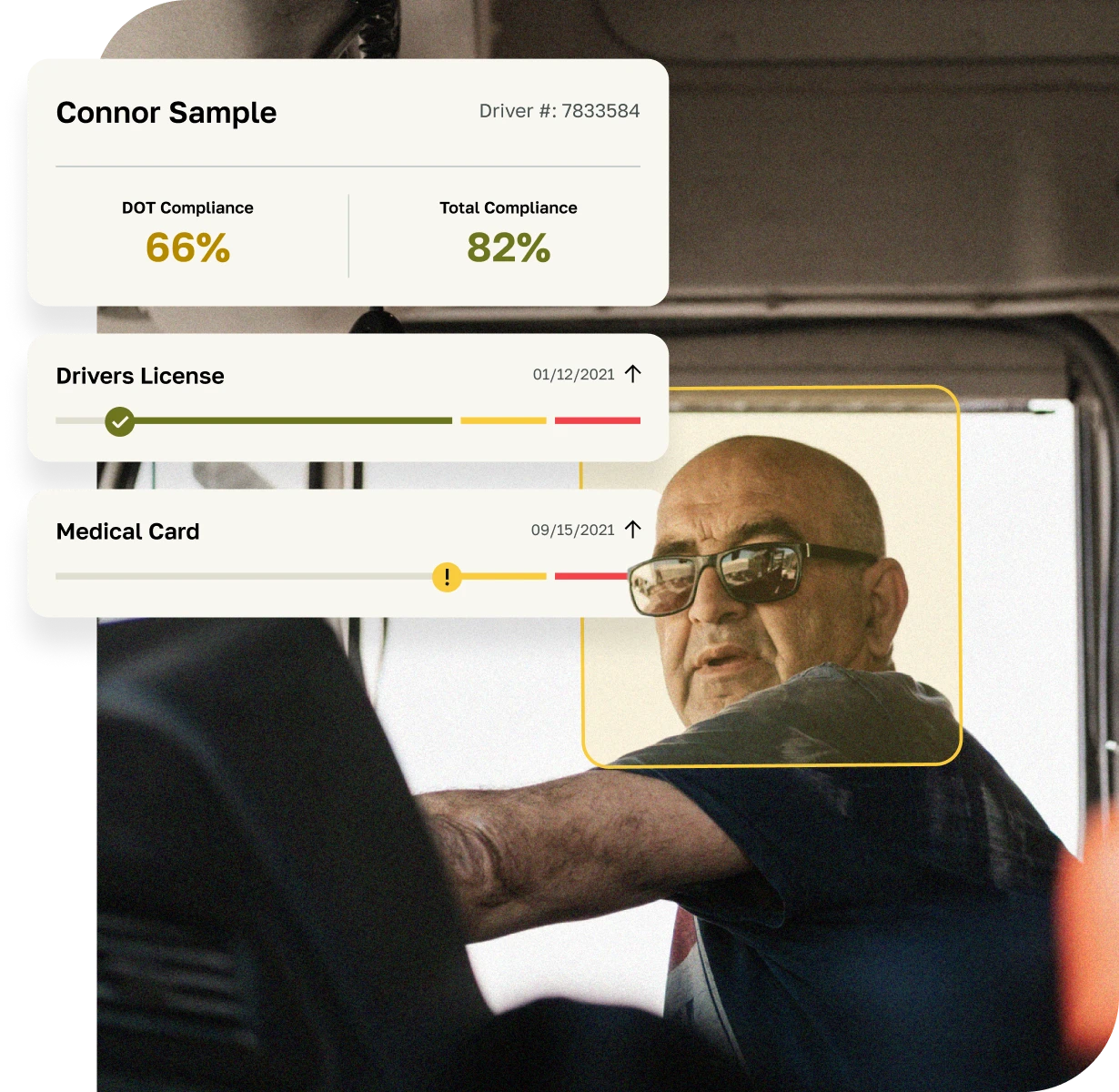
Dashboards offer a real-time snapshot of fleet compliance status across all terminals and regions. A good dashboard should provide:
- Compliance scorecards by location or driver
- Trend reports for unsafe driving or inspections
- Audit readiness indicators
- Custom filters for jurisdictional tracking
Having one unified view allows decision-makers to spot patterns, track KPIs, and intervene before small issues become systemic problems.
3. Automated Documentation and Audit Trails
Automating document storage and version control helps fleets stay organized and prepared for audits. Look for tools that provide:
- Secure cloud storage for DQ files, logs, and forms
- Digital signatures and submission timestamps
- Customizable access roles for safety, HR, and compliance teams
- Pre-built audit report exports
This type of system makes it easy to respond to DOT inquiries and prove regulatory adherence across multiple states.
4. Multi-Jurisdictional Mapping and Rule Sets
Fleet compliance solutions should accommodate varying state requirements and flag state-specific discrepancies. Platforms that include dynamic regulatory maps or jurisdictional rule engines help fleets:
- Identify state-specific inspection or licensing rules
- Track local HOS exceptions or enforcement differences
- Generate accurate IFTA, IRP, and tax filings
This eliminates guesswork for compliance teams and prevents oversights that can lead to penalties.
The Value of Centralized Compliance Data Across Jurisdictions
Centralizing compliance data is a powerful strategy for multi-state fleets. It allows organizations to break down silos and gain a true enterprise-level understanding of their regulatory posture.
Benefits of Centralized Data Management Include:
- Improved Visibility: Compliance officers can oversee operations across multiple terminals without needing to request reports from each one.
- Faster Decision-Making: Data-driven insights help safety and operations teams take immediate corrective action.
- Reduced Redundancy: A single system eliminates duplication of work and ensures consistent policy enforcement across every location.
- Stronger Legal Defense: Centralized records are easier to retrieve and present in the event of a DOT audit, lawsuit, or insurance investigation.
- Scalability: As the fleet grows, centralized systems make it easier to onboard new drivers, vehicles, and terminals without increasing risk.
By unifying data sources, fleets can monitor compliance health in real time, benchmark safety performance by location, and develop targeted improvement plans based on actionable insights.
Simplify Multi-State Compliance With the Right Partner
Ready to simplify your multi-state compliance challenges? Fleetworthy offers comprehensive fleet compliance solutions designed to reduce liability, ensure safety, and keep you audit-ready across every state you operate in.
Our centralized compliance platform helps fleets of all sizes gain visibility, automate reporting, standardize processes, and build a strong foundation for long-term operational success.
Take the next step toward safer, smarter fleet operations. Contact us today to schedule a demo or consultation.