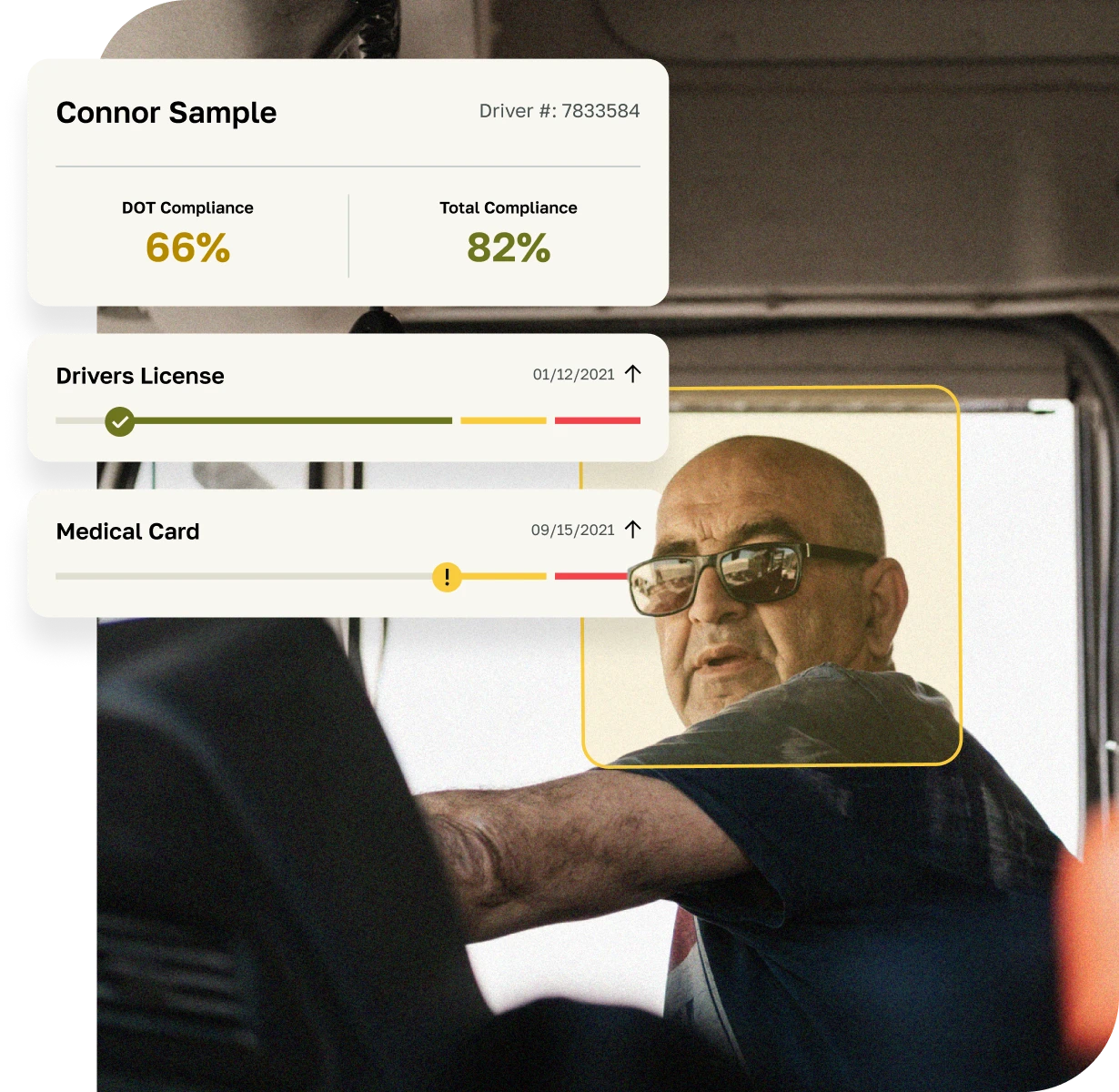

Experienced fleets can find themselves blindsided by a single oversight. Consider this: a failed DOT audit can cost a fleet upwards of $10,000 in fines, not to mention the downstream impact of lost contracts, increased insurance premiums, and CSA score degradation. Worse still, non-compliance can result in out-of-service orders, sidelining vehicles and disrupting critical business operations.
Fleet compliance is about far more than checking boxes for FMCSA regulations, it’s the foundation of safe, efficient, and legally sound operations. As regulations evolve and oversight increases, staying compliant has become more complex and high-stakes than ever. Mistakes, whether due to outdated driver files, missed maintenance, or incomplete training records, don’t just lead to penalties. They expose your business to risk, endanger lives, and erode your company’s reputation.
Why Compliance Mistakes Matter
Compliance in fleet operations is not just a regulatory checkbox, it’s a critical layer of protection for your company, your drivers, and the public. When compliance mistakes happen, the consequences can ripple far beyond a simple citation or warning. Even small errors, if overlooked or repeated, can lead to escalated liability, increased costs, operational disruption, and long-term damage to your business.
Here’s why compliance mistakes should never be taken lightly:
1. Fines and Penalties (FMCSA/DOT)
The Federal Motor Carrier Safety Administration (FMCSA) and Department of Transportation (DOT) have strict regulations in place to ensure public and driver safety. Violations, such as missing driver qualification files, hours of service infractions, or failed vehicle inspections, can result in hefty fines, sometimes reaching tens of thousands of dollars per violation. A single DOT audit can uncover multiple issues, compounding penalties and triggering Corrective Action Plans or even shutdown orders in severe cases.
2. Increased Insurance Premiums
Insurance providers view non-compliance as a key indicator of risk. When your fleet racks up violations, insurance underwriters take note. Fleets with poor compliance histories often see premium hikes, reduced coverage options, or policy cancellations altogether. This drives up your operating costs and makes it harder to remain competitive, especially in bids for safety-conscious clients or contracts requiring proof of compliance performance.
3. CSA Score Deterioration
The Compliance, Safety, Accountability program tracks a carrier’s performance across several BASIC categories (Behavior Analysis and Safety Improvement Categories). Violations tied to unsafe driving, hours of service, maintenance, or drug/alcohol testing directly impact your CSA scores. Low scores can lead to:
- Targeted inspections
- Intervention by the FMCSA
- Loss of contracts with shippers who monitor CSA data
Poor CSA scores are a red flag to both regulators and partners, signaling increased risk and non-compliance culture.
4. Reputational Damage
Your compliance record is public and that visibility matters. A negative safety profile can cause shippers, brokers, and customers to lose trust in your operation. It can also hurt your ability to attract and retain drivers who want to work for safe, reliable carriers. In today’s competitive market, your reputation is a business asset, and repeated compliance mistakes can tarnish it permanently.
5. Risk to Public and Driver Safety
At the core of every compliance regulation is a focus on safety. Ignoring or mishandling requirements increases the likelihood of:
- Preventable accidents
- Equipment failures
- Driver fatigue or impairment incidents
These not only threaten lives but also expose your company to massive liability claims, lawsuits, and even criminal charges in the event of a serious or fatal crash. Compliance is a frontline defense against catastrophic risk.CSA monitoring software
Link to Risk Exposure: How Minor Mistakes Escalate
One of the most dangerous aspects of compliance errors is how quickly they can compound into high-risk situations. For example:
- A missing medical certificate can lead to a driver being disqualified.
- A skipped vehicle inspection can result in a mechanical failure on the road.
- A few unchecked HOS violations can trigger an audit, which uncovers broader issues.
These seemingly small lapses often go unnoticed until it’s too late, by which point the damage is already done. In the eyes of regulators, insurers, and clients, consistent compliance is a sign of operational control and accountability. Mistakes, especially repeated or systemic ones, send the opposite message.
Ultimately, compliance mistakes are more than paperwork problems, they are strategic risks that directly affect your fleet’s financial health, safety record, and long-term viability. Identifying and correcting them proactively is not just good practice, it’s essential to protecting your people, your business, and the public.
Top Compliance Mistakes in Fleet Operations
Compliance mistakes don’t always come from willful neglect, often, they result from disorganization, outdated systems, or a lack of internal oversight. Below are the most common mistakes that put fleets at risk, along with why they occur and how to prevent them.
1. Incomplete or Outdated Driver Qualification Files
DQFs are a critical component of compliance, and even a single missing document can lead to a violation during an audit or roadside inspection.
- Missing documents (MVRs, medical cards, licenses): Failure to maintain a complete file, such as lacking a valid Medical Examiner’s Certificate (Med Card) or a current Motor Vehicle Report, can result in a driver being deemed ineligible to operate.
- Outdated records or expired credentials: Many fleets forget to update documents like CDL renewals or medical cards, which expire regularly. Without an automated reminder system, these expirations can be easily missed.
- Lack of automated tracking systems: Relying on spreadsheets or manual tracking makes it easy to overlook expiring documents. This mistake leads to avoidable violations and increased audit risk.
Best Practice: Use a digital DQF management system with expiration alerts and audit readiness dashboards.
2. Poor Hours of Service Compliance
HOS violations are among the most frequently cited in FMCSA audits and can severely impact your CSA scores and driver safety.
- Misuse or falsification of ELDs: Some drivers may attempt to edit logs to gain extra driving time or to avoid violations, but falsifying ELD records is a serious offense with severe penalties.
- Inadequate HOS training: Drivers may not fully understand how to properly use ELDs or the rules around rest breaks and drive-time limits, leading to unintentional violations.
- Failing to monitor driver fatigue patterns: Without real-time visibility into HOS data, fleet managers miss warning signs of overworked or fatigued drivers, increasing the risk of fatigue-related crashes.
Best Practice: Train all drivers thoroughly on ELD use and monitor compliance dashboards to detect patterns of non-compliance early.
3. Inadequate Vehicle Maintenance and Inspection Records
Vehicle maintenance-related violations are a leading cause of roadside inspections and out-of-service orders.
- Missing DVIRs or pre-trip inspection logs: Skipping or poorly documenting inspections increases the risk of preventable breakdowns and FMCSA citations.
- Delayed repairs or overlooked maintenance schedules: Operating vehicles with known issues or overdue service creates safety hazards and liability exposure.
- Inconsistent documentation: Maintenance logs that are incomplete or scattered across paper files and emails create audit vulnerabilities.
Best Practice: Implement a digital fleet maintenance system that tracks inspections, schedules service, and retains full documentation.
4. Ignoring CSA Violations and Trends
Too many fleets take a reactive approach to compliance, waiting until violations accumulate instead of addressing the root causes.
- Failure to monitor and act on BASIC scores: Ignoring rising BASIC percentile scores (e.g., in Unsafe Driving or Vehicle Maintenance) can result in targeted enforcement.
- Repeated violations in key categories: Unaddressed violations signal to the FMCSA that the fleet lacks effective safety controls.
- Not using telematics to spot at-risk patterns: Without analyzing driving behavior or vehicle alerts, opportunities to prevent violations go unnoticed.
Best Practice: Review CSA scores monthly and integrate telematics data into your safety review process.
5. Gaps in Drug & Alcohol Testing Programs
Non-compliance with FMCSA drug and alcohol testing regulations can have catastrophic consequences, both legally and financially.
- Missed random testing requirements: Fleets are required to test a set percentage of drivers annually. Failing to meet this threshold can trigger audits or fines.
- Incomplete post-accident testing protocols: Not performing or documenting tests after qualifying accidents is a serious compliance failure.
- No audit trail for compliance: Without a well-documented testing history, it’s difficult to prove compliance during audits.
Best Practice: Partner with a third-party consortium and maintain a centralized digital record of all tests and protocols.
6. Inaccurate or Late Recordkeeping and Reporting
Timely and accurate reporting is critical to demonstrating regulatory compliance and protecting your fleet from penalties.
- Late MCS-150 updates: Carriers must update their registration biennially or risk deactivation or fines.
- Poor IFTA/IRP recordkeeping: Inaccurate fuel tax and mileage reporting can result in audits and financial penalties.
- Not logging inspection or incident reports correctly: Missing or delayed reports can skew safety data and weaken your safety posture.
Best Practice: Set calendar reminders for recurring filings and use integrated fleet software to automate reporting.
7. Lack of Ongoing Driver Training and Safety Coaching
Compliance isn’t a “set it and forget it” effort, it’s an ongoing process. Without reinforcement, even trained drivers can slip into bad habits.
- No corrective action for violations: Drivers who commit unsafe acts without follow-up coaching are likely to repeat the behavior.
- Failure to document training programs: Training that isn’t logged may as well not have happened, especially during audits or litigation.
- Missing safety meeting logs: If you can’t show regular safety engagement, it’s harder to prove a culture of accountability.
Best Practice: Establish monthly safety meetings and track all coaching interactions and training completion.
8. Weak Internal Compliance Auditing
Many fleets assume their compliance is solid, until an external audit proves otherwise.
- Not performing regular internal checks: Without routine reviews, compliance issues can go unnoticed for months or years.
- Blind reliance on third-party systems: Outsourcing compliance is fine, but only if it’s paired with internal validation and oversight.
- Ignoring red flags from audit results: Warning signs like frequent roadside violations or driver complaints should prompt immediate investigation, not be swept under the rug.
Best Practice: Conduct quarterly internal audits and address any findings with clear corrective actions and accountability.
Each of these mistakes may seem small on its own, but together, they form a pattern of non-compliance that can put your entire operation at risk. The key to preventing them is proactive oversight, smart use of technology, and a culture of continuous improvement.
How to Avoid These Mistakes
While compliance mistakes can be costly, the good news is that they are entirely preventable with the right systems, training, and oversight in place. Building a resilient compliance framework starts with intentional processes and a culture of accountability. Here are the most effective strategies to avoid common compliance pitfalls:
1. Implement a Compliant Drivers Program
A Compliant Drivers Program (CDP) is a structured, systematic approach to ensure that every driver consistently meets FMCSA requirements, company policies, and safety standards.
- What it includes:
- Thorough onboarding with all required DQF documents
- Ongoing monitoring of driver qualifications and behavior
- Scheduled performance reviews and safety coaching
- Automated alerts for license renewals, medical card expirations, and training deadlines
- Thorough onboarding with all required DQF documents
- Why it works: A CDP centralizes driver compliance efforts, ensuring no requirement falls through the cracks. It also reinforces a culture of continuous compliance, where drivers understand that safety and accountability are part of the job, not optional extras.
Tip: Document your CDP policy and ensure every driver signs off on it as part of orientation.
2. Use Integrated Fleet Management Systems (ELD + Telematics + DQF Automation)
Technology is a powerful tool for reducing human error and increasing visibility into compliance across your fleet.
- Integrated systems help you:
- Monitor HOS in real-time through your ELD
- Flag unsafe driving behaviors (speeding, harsh braking) via telematics
- Track driver file expirations, test results, and safety coaching through DQF management platforms
- Monitor HOS in real-time through your ELD
- Why it works: Combining ELDs, telematics, and compliance automation gives you a single source of truth for driver and vehicle performance. It eliminates paper trails, manual tracking, and data silos that lead to mistakes.
Tip: Choose systems that sync across platforms or work with a unified compliance dashboard.
3. Schedule Regular Compliance Audits
Regular internal audits are essential to catch and correct issues before they become violations.
- Audit focus areas:
- Driver qualification files (completeness and currency)
- ELD logs and HOS compliance
- Maintenance records and inspection reports
- Drug and alcohol testing program adherence
- CSA scores and BASIC category trends
- Driver qualification files (completeness and currency)
- Why it works: Audits give you an objective look at your current risk exposure. They also help establish a pattern of due diligence, which can be favorable in case of a DOT audit or legal scrutiny.
Tip: Perform quarterly internal audits and prepare an annual third-party compliance review for a fresh perspective.
4. Train Staff and Drivers on Compliance Expectations
Even the best systems fail without informed people behind them. Ongoing education ensures that everyone, from drivers to dispatch to HR, knows what compliance requires.
- Training should cover:
- How to use ELDs and log hours correctly
- Pre- and post-trip inspection procedures
- Document retention policies
- What to do during roadside inspections or post-accident scenarios
- Reporting unsafe conditions or behaviors
- How to use ELDs and log hours correctly
- Why it works: Compliance training reinforces safe behavior and reduces unintentional errors. It also builds driver confidence in handling compliance-related issues independently and correctly.
Tip: Track all training participation and include compliance modules in onboarding, refresher courses, and corrective action plans.

5. Assign Accountability (Compliance Manager or Safety Officer)
Without clear ownership, compliance efforts can easily become fragmented or overlooked. Designating responsibility ensures someone is always focused on maintaining standards.
- Who this might be:
- A dedicated compliance manager or fleet safety officer
- A member of the HR or operations team trained in FMCSA/DOT requirements
- A third-party compliance partner working in tandem with your internal team
- A dedicated compliance manager or fleet safety officer
- Why it works: Accountability brings consistency and follow-through. Having a go-to person for compliance ensures tasks like file audits, system reviews, and safety meetings are scheduled, executed, and documented.
Tip: Define roles and responsibilities in writing and align them with measurable compliance KPIs (e.g., driver file accuracy rate, HOS violations per month, CSA score thresholds).
Avoiding compliance mistakes doesn’t require perfection, it requires a proactive, systemized approach. By implementing a structured Compliant Drivers Program, leveraging technology, and fostering a culture of compliance through training and accountability, you can significantly reduce risk, improve safety, and stay well ahead of DOT scrutiny.
Compliance isn’t just a legal requirement, it’s a strategic advantage. While many fleets view it primarily as a way to avoid FMCSA fines or pass audits, the true value of compliance runs much deeper. A well-managed compliance program acts as a foundation for safety, operational efficiency, driver accountability, and business continuity.
Every regulation exists for a reason, whether it’s to ensure drivers are healthy and qualified, to keep vehicles roadworthy, or to prevent fatigue-related accidents. When your fleet consistently meets or exceeds these standards, you’re not only avoiding penalties, you’re creating a safer environment for your drivers, the public, and your business as a whole.
Even small, incremental improvements in compliance, such as automating driver file alerts, performing more frequent internal audits, or enhancing driver training, can produce significant returns:
- Fewer violations and lower CSA scores
- Improved fleet uptime and reliability
- Reduced insurance costs and liability exposure
- Higher driver retention and morale
- Stronger reputation with clients, regulators, and insurers
In today’s competitive and highly regulated industry, compliance isn’t optional, it’s essential to staying fleetworthy.
Prioritize compliance not just to stay legal, but to stay safe, efficient, and competitive. By investing in your compliance infrastructure today, you’re protecting your fleet, and your future, tomorrow.