
The Supreme Court handed down a unanimous ruling in Montgomery v. Caribe Transport II that every freight broker, 3PL, and digital freight platform in North America needs to read before they book another load.
The short version: freight brokers can now be sued under state law for negligently hiring unsafe carriers. The federal shield they have relied on for years — the FAAAA preemption defense — is gone.
Nine to zero. No dissent.
For those of us who work in compliance, this is not a surprise. It is a reckoning that has been building for a long time.
What the Court Actually Said
The case centered on Shawn Montgomery, a driver who lost his leg when a Caribe Transport truck hauling plastic pots veered off an Illinois highway and struck his tractor-trailer, which was stopped on the shoulder of the road. The load had been brokered by C.H. Robinson. Montgomery sued under a negligent-hiring theory, arguing the broker should have known the carrier presented a safety risk.
The District Court dismissed the claim, applying Seventh Circuit precedent from Ye v. GlobalTranz, which held that the FAAAA expressly preempted negligent-hiring claims against brokers. The Seventh Circuit affirmed. The Supreme Court reversed. Justice Barrett, writing for the court, held that the FAAAA’s safety exception preserves state law claims tied to motor vehicle safety. Requiring a broker to exercise ordinary care when selecting a carrier is exactly the kind of safety regulation states are permitted to enforce.
The legal question a jury can now ask in every state is direct: Did you check? Did you look at the carrier’s FMCSA safety data? Did you see the elevated crash rates, the conditional safety rating, the out-of-service history? Did you have a documented vetting process? Or did you book the cheapest truck and move on?
If the answer to the last question is yes, a broker now owns the consequences.
This Changes the Calculus for Everyone in the Non-Asset World
Brokers and 3PLs have operated for years with the assumption that carrier selection was a business decision, not a legal one. That assumption is gone.
Carrier vetting is no longer a best practice. It is a legal obligation. And the data a broker used (or failed to use) when making that selection is fully discoverable in litigation.
The plaintiff’s bar has been building these case files for years, waiting for exactly this moment. That wave arrived within days. Four days after the ruling, the U.S. Court of Appeals for the Fourth Circuit issued an order in Fuelling v. Echo Global Logistics, Inc., removing the case from abeyance, vacating the district court’s grant of summary judgment in favor of the broker, and remanding for further proceedings in light of Montgomery. Fuelling is not an isolated development. It is the first visible sign of a broad re-litigation of cases that were dismissed or stayed on FAAAA preemption grounds. Discovery requests in these cases will seek carrier vetting policies, internal screening criteria, dispatch records, and any safety data the broker reviewed or chose not to review.
If a broker has no documented carrier vetting process, that absence is itself evidence.
What the Industry Has to Do Now
There is no meaningful federal safety regulation governing how brokers select carriers. FMCSA requires that brokers work with a federally registered carrier. That is it. The rest is up to the broker, And now, the rest is up to a jury.
Justice Kavanaugh, in his concurrence, put it plainly: if brokers can be held liable for disregarding poor safety records, they have a strong incentive to do business only with safe and reliable carriers. He is right. That incentive is now legally enforced.
Two important limits on the ruling are worth noting. First, this is not strict liability. The standard remains ordinary negligence. Plaintiffs must still prove that the broker failed to act reasonably and that the failure contributed to the harm. Kavanaugh and Alito said it directly in their concurrence: the decision “should not be read to mean that brokers will routinely be subject to state tort liability in the wake of truck accidents.” A broker with a documented, defensible vetting process has a path to win these cases. Second, the ruling applies to interstate shipments governed by 49 U.S.C. §14501(c), which contains the safety exception. The FAAAA’s preemption of intrastate broker activity under subsection (b) does not carry the same safety exception. Brokers with significant intrastate operations should consult legal counsel on where they stand.
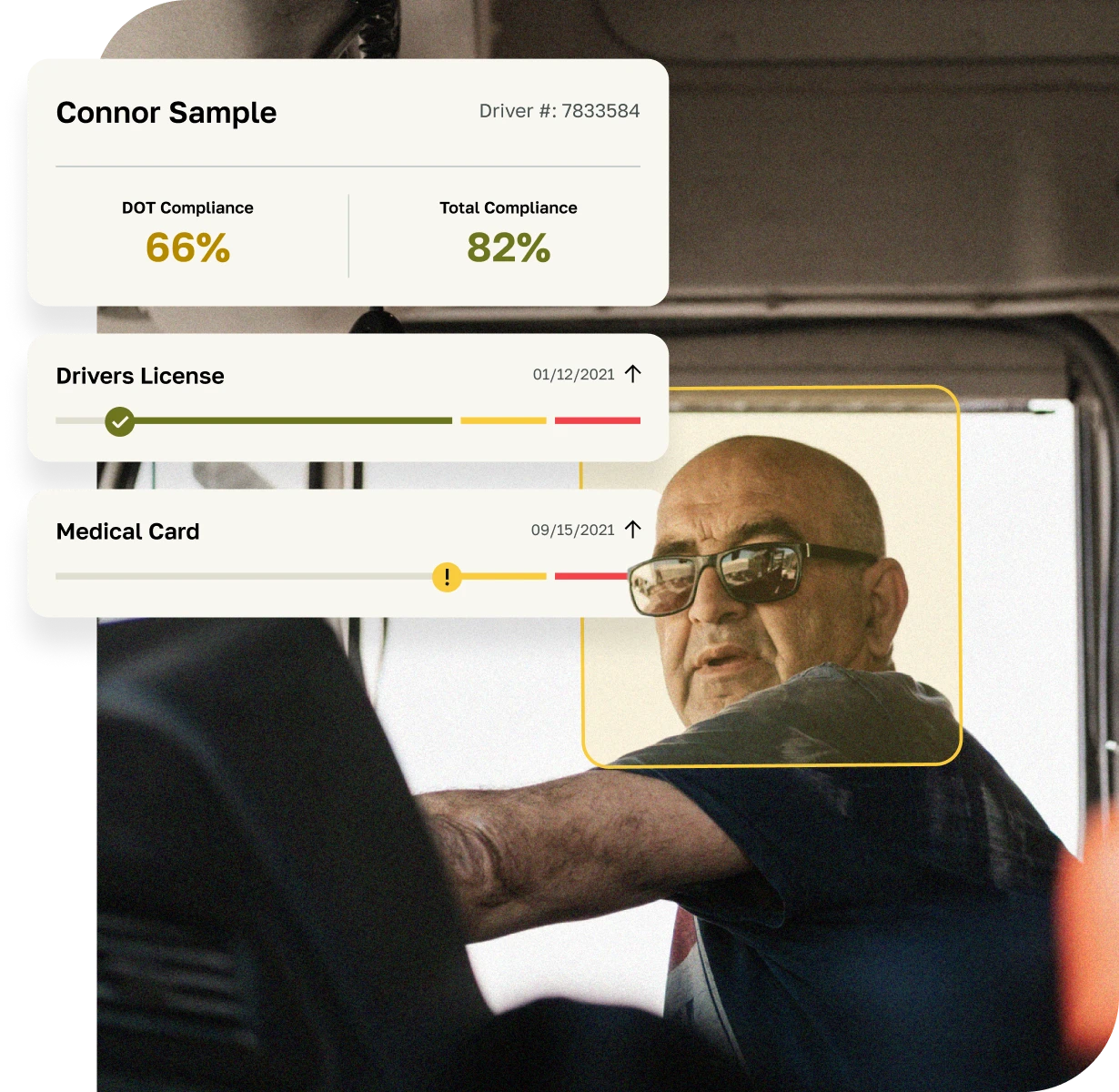
What this demands is systematic, documented, repeatable carrier compliance verification. Not a one-time check, but process with a paper trail.
The carrier you selected, the safety data you reviewed, the criteria you applied, the decision you made: all of it needs to be timestamped and stored. When a subpoena arrives three years from now asking what you knew about the carrier on a load that ended in a fatality, you want a file, not a shrug.
This is the gap that compliance infrastructure exists to close. Fleets have understood this for years, building documented, auditable safety and compliance programs precisely because the cost of not having one is not abstract. It shows up in courtrooms. The broker world is now in the same position.
The Bottom Line
The Supreme Court did not rewrite the rules. It removed the shield that let bad decisions go unexamined.
The underlying obligation has always been there: if you pick the carrier, you own the choice. The FAAAA preemption defense just meant you could avoid being held to it in court. That defense is now gone.
Brokers that build a documented, data-driven vetting process will be in a defensible position. Brokers that do not will find out what it costs to answer for a decision they never bothered to document.
Justice Kavanaugh said it plainly: the broker is not going to have a problem if it is asking the hard questions of the carrier.
The operative word is asking. The new obligation is proving it.