Driver Qualification File Management
Simplify one of fleet compliance’s most complex requirements by centralizing records, tracking expirations, and keeping every driver audit-ready.
Learn More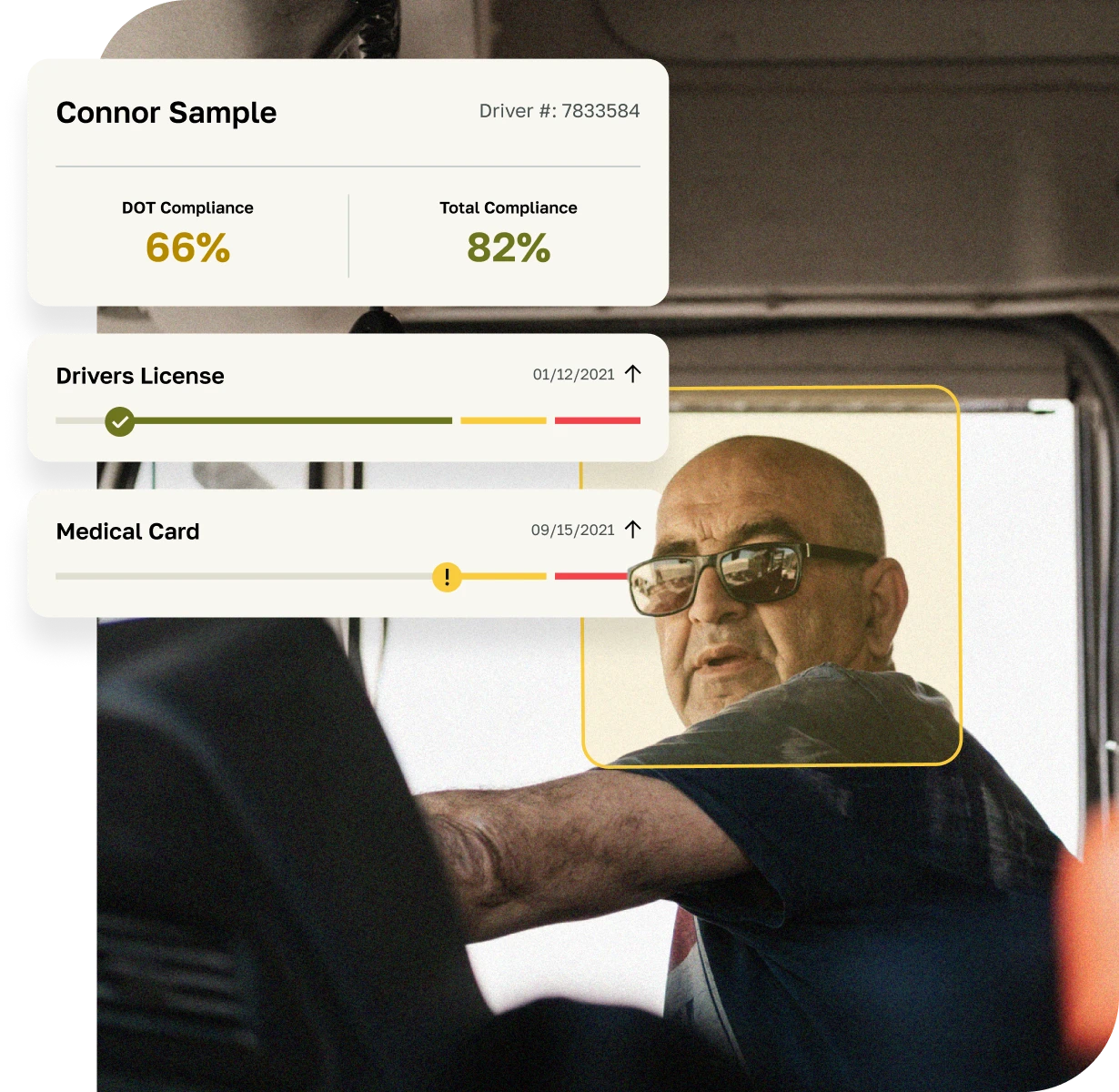
Driver Qualification File Management
Simplify one of fleet compliance’s most complex requirements by centralizing records, tracking expirations, and keeping every driver audit-ready.
Learn More
DOT fleet compliance refers to meeting all safety, maintenance, and operational regulations established by the U.S. Department of Transportation. These rules are designed to keep commercial vehicles, drivers, and the public safe on the road. For carriers and fleet operators, DOT compliance typically includes maintaining driver qualification files (CDLs, medical certificates, background checks), keeping vehicles properly inspected and serviced, and following Hours of Service regulations tracked by electronic logging devices.
DOT compliance also covers record-keeping, such as vehicle maintenance logs, accident reports, drug and alcohol testing results, and driver training documentation. Fleets that fail to meet these standards risk fines, penalties, or being placed out of service.
For businesses, achieving DOT fleet compliance requires a mix of ongoing monitoring, proper documentation, and internal policies. Many fleets use compliance software or partner with compliance service providers to stay audit-ready. In short, DOT fleet compliance ensures safe, legal, and efficient operations.
The U.S. Department of Transportation (DOT) regulates the safety of commercial fleets to protect drivers, companies, and the public. For fleet operators, “DOT fleet compliance” means meeting all required regulations regarding vehicles, drivers, inspections, and record-keeping. Non-compliance can result in hefty fines, loss of operating authority, or accidents that damage reputation and increase liability.
DOT compliance is broad, but for fleets it typically includes four main areas:
Driver Compliance
Maintaining complete Driver Qualification Files (DQFs).
Verifying valid Commercial Driver’s Licenses (CDLs), endorsements, and medical exam certificates.
Conducting regular background checks, drug/alcohol testing, and safety training.
Vehicle Compliance
Performing regular DOT inspections and preventive maintenance.
Keeping detailed records of repairs, inspections, and certifications.
Meeting federal requirements for vehicle markings and safety equipment.
Hours of Service (HOS) & Electronic Logging Devices (ELDs)
Ensuring drivers adhere to legal limits on driving and rest hours.
Installing and monitoring ELDs for accurate tracking.
Retaining ELD logs and compliance reports for DOT audits.
Record-Keeping & Reporting
Storing documentation of driver files, accident reports, and compliance audits.
Keeping drug and alcohol testing results.
Being able to produce records quickly during inspections or audits.
Avoiding Penalties and Fines: DOT audits can result in costly violations if records are incomplete or outdated.
Protecting Safety: Compliance ensures that only qualified drivers operate safe vehicles.
Maintaining Operating Authority: Serious violations can lead to a fleet being placed “out of service.”
Reducing Insurance Costs: Strong DOT compliance often lowers insurance premiums by improving CSA (Compliance, Safety, Accountability) scores.
Maintaining compliance is an ongoing process, not a one-time checklist. Successful fleets typically:
Use Fleet Compliance Software to automate reminders for inspections, license renewals, and reporting deadlines.
Partner with Compliance Service Providers who conduct audits, manage files, and keep fleets updated on changing regulations.
Train Drivers Regularly on DOT requirements and safe-driving practices.
Conduct Mock Audits to identify risks before DOT inspections.
Some of the most frequent violations include:
Expired medical certificates or CDLs.
Incomplete driver qualification files.
Missing or outdated vehicle maintenance logs.
HOS violations due to improper ELD usage.
Failure to conduct drug and alcohol testing.
Preventing these requires proactive monitoring and strong documentation systems.
DOT is the overarching body that regulates transportation safety. The Federal Motor Carrier Safety Administration (FMCSA) operates under DOT and focuses specifically on commercial trucking and bus operations. In practice, DOT fleet compliance often overlaps with FMCSA rules, especially regarding driver qualifications, HOS and vehicle inspections.
When deciding how to manage DOT compliance, fleets should consider:
Size of Fleet — Smaller fleets may manage compliance internally, while larger carriers benefit from dedicated services.
Technology Needs — Integration with telematics, GPS, and ELDs can make compliance more seamless.
Audit Frequency — Fleets subject to frequent DOT inspections may prefer outsourcing compliance to specialists.
DOT fleet compliance is not optional, it’s a core requirement for operating legally, safely, and profitably. By keeping drivers qualified, vehicles inspected, and records audit-ready, companies avoid penalties and build a safer fleet culture.
Many businesses rely on a mix of compliance software and professional services to maintain DOT readiness without overwhelming staff. Whether you manage five trucks or five hundred, investing in DOT compliance protects your company from costly violations and supports long-term success.