Driver Qualification File Management
Simplify one of fleet compliance’s most complex requirements by centralizing records, tracking expirations, and keeping every driver audit-ready.
Learn More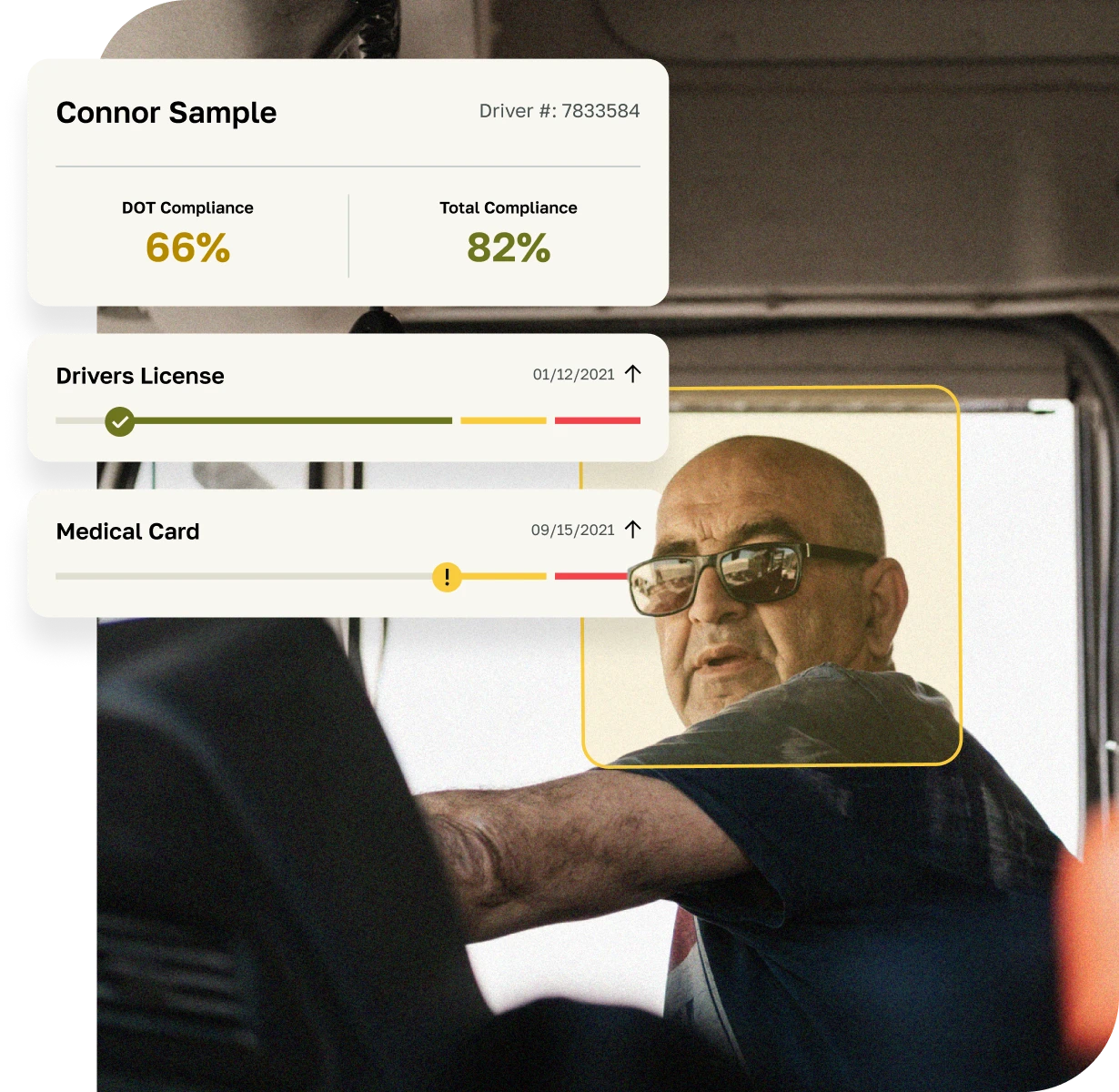
Driver Qualification File Management
Simplify one of fleet compliance’s most complex requirements by centralizing records, tracking expirations, and keeping every driver audit-ready.
Learn More
Common fleet compliance violations are the regulatory mistakes or oversights that cause commercial carriers to fail Department of Transportation or Federal Motor Carrier Safety Administration inspections. These violations often result in fines, poor CSA scores, or out-of-service orders.
Some of the most common fleet compliance violations include:
Incomplete or missing Driver Qualification Files
Expired Commercial Driver’s Licenses or medical certificates
Hours of Service violations and inaccurate electronic logging device records
Missed vehicle inspections or maintenance documentation
Failure to maintain drug and alcohol testing records
Improper accident reporting or record retention
These errors are typically preventable through regular audits, training, and compliance software that tracks deadlines and documentation.
By understanding and correcting common violations early, fleets can avoid costly penalties, improve safety performance, and maintain strong DOT and FMCSA compliance ratings.
Fleet compliance violations occur when transportation companies fail to meet the standards set by the Department of Transportation and the Federal Motor Carrier Safety Administration. Even small lapses in documentation or procedures can lead to fines, increased insurance costs, or a damaged safety record.
Below are the most common compliance violations and how to prevent them.
Each driver must have a complete and up-to-date DQF. Common issues include:
Missing copies of CDLs or medical examiner’s certificates.
Failure to conduct annual Motor Vehicle Record checks.
Missing employment verifications or drug/alcohol testing records.
Prevention Tip: Use compliance software to track file expirations and run quarterly internal audits.
Drivers operating with expired CDLs, endorsements, or DOT medical cards are among the most frequent FMCSA violations.
Prevention Tip: Implement automated alerts for license renewals and keep digital copies in your compliance management system.
HOS violations occur when drivers exceed daily or weekly driving limits, fail to take required breaks, or misuse ELDs. Common issues include:
Inaccurate log entries or falsified logs.
ELD malfunctions not reported within required timelines.
Prevention Tip: Train drivers on HOS regulations, review logs weekly, and ensure ELD devices are FMCSA-certified and properly maintained.
DOT requires fleets to perform and document regular inspections and maintenance. Frequent violations include:
Missed annual inspections.
Incomplete or missing Driver Vehicle Inspection Reports.
Operating vehicles with known mechanical defects.
Prevention Tip: Use preventive maintenance scheduling tools, and retain maintenance records for at least 12 months per FMCSA guidelines.
FMCSA Part 382 mandates pre-employment, random, post-accident, and return-to-duty testing. Common violations include:
Failing to conduct random testing.
Not maintaining secure testing records.
Failing to register with the Drug & Alcohol Clearinghouse.
Prevention Tip: Partner with a qualified consortium/third-party administrator and perform regular compliance checks.
Incomplete, disorganized, or missing records can trigger audit failures even if operations are otherwise compliant.
Prevention Tip: Move to digital record-keeping systems with document indexing, cloud storage, and secure audit portals.
Fleets are required to report qualifying accidents per FMCSA Part 390.15 and maintain supporting records for three years. Violations include:
Failure to report accidents within required timeframes.
Missing accident investigation or corrective action documentation.
Prevention Tip: Create a written accident response policy, and train drivers on proper reporting procedures.
DOT and FMCSA require that fleets maintain continuous safety education. Violations arise when fleets skip training or fail to record participation.
Prevention Tip: Schedule annual training and track completion through compliance software or learning management systems.
Without formal written policies, fleets struggle to maintain consistent standards. This leads to repeated violations and inconsistent safety practices.
Prevention Tip: Develop and maintain up-to-date fleet compliance policies covering driver conduct, maintenance, reporting, and training.
Civil Fines: Ranging from hundreds to tens of thousands of dollars per violation.
Out-of-Service Orders: Vehicles or drivers removed from operation until compliance is restored.
Poor CSA Scores: Leading to higher insurance premiums and reduced business opportunities.
Operating Authority Revocation: For repeated or severe non-compliance.
Avoiding these penalties starts with prevention not reaction.
Conduct Regular Mock Audits – Review your own compliance files quarterly.
Automate Tracking – Use compliance management systems to monitor deadlines and certifications.
Train Continuously – Keep drivers informed about new regulations and internal policies.
Review CSA Scores Monthly – Identify trends and corrective actions early.
Work With Compliance Experts – External audits or consulting services can catch issues before regulators do.
Common fleet compliance violations are often the result of oversight, not intent but even small mistakes can have major consequences. By maintaining accurate records, training your team, and using technology to automate compliance tracking, you can prevent violations and keep your fleet safe, efficient, and audit-ready.
Compliance isn’t a one-time task; it’s a continuous commitment to safety, organization, and accountability.