Driver Qualification File Management
Simplify one of fleet compliance’s most complex requirements by centralizing records, tracking expirations, and keeping every driver audit-ready.
Learn More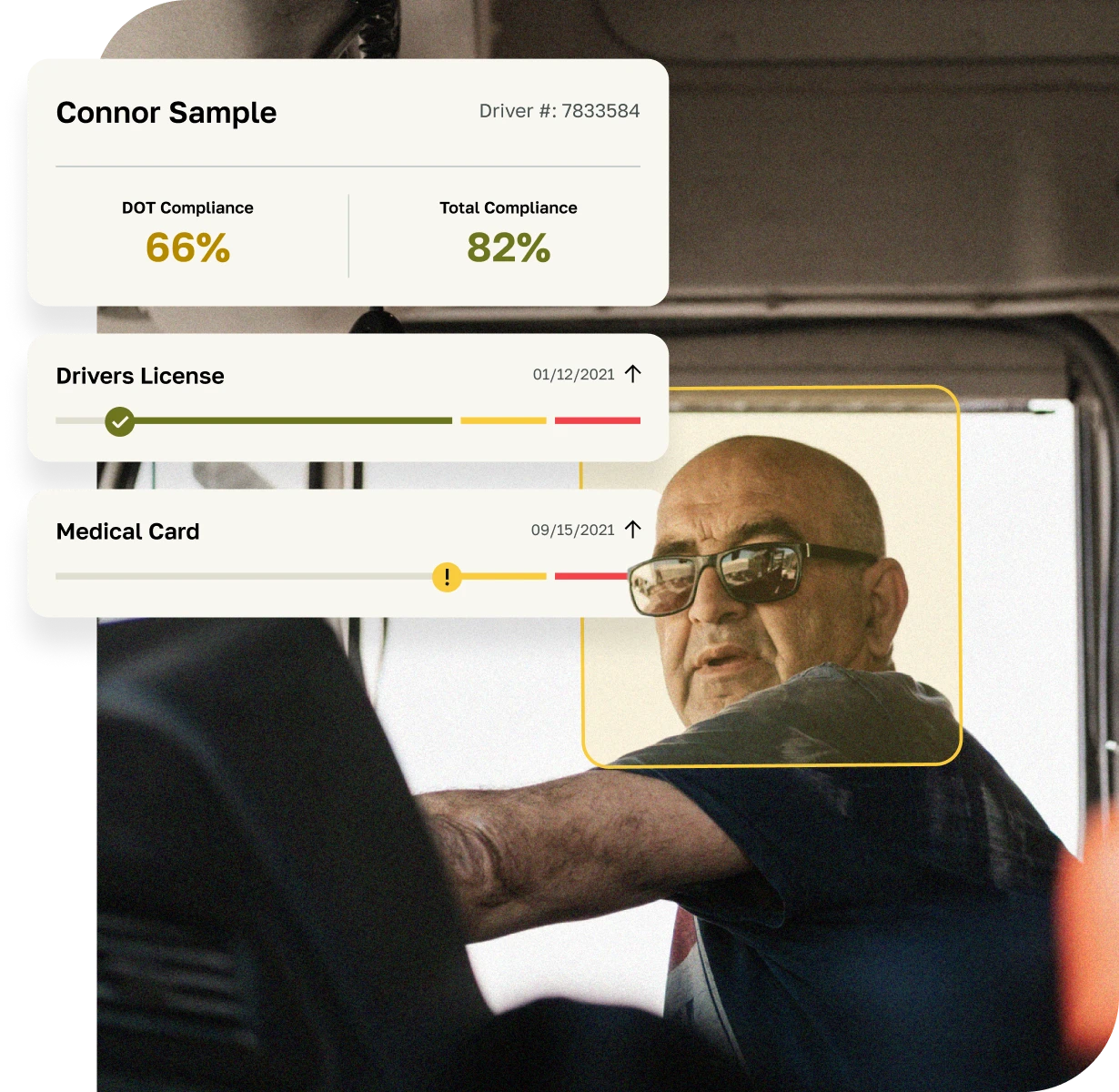
Driver Qualification File Management
Simplify one of fleet compliance’s most complex requirements by centralizing records, tracking expirations, and keeping every driver audit-ready.
Learn More
Preparing for a DOT audit involves organizing all required records, ensuring compliance with federal regulations, and confirming that both drivers and vehicles meet safety standards.
To prepare effectively:
Review Driver Qualification Files (DQFs): Verify CDLs, medical cards, MVRs, and background checks.
Check Vehicle Maintenance Records: Ensure preventive maintenance, repair logs, and inspection reports are current.
Audit Hours of Service (HOS) Logs: Confirm ELD data accuracy and HOS compliance.
Update Drug and Alcohol Testing Records: Maintain pre-employment, random, and post-accident testing documentation.
Verify Accident Reports: Keep detailed records for any DOT-reportable incidents.
Conduct a Mock Audit: Review records internally or with a compliance consultant.
Fleets often use compliance management software to automate documentation and streamline the audit process.
In short, preparing for a DOT audit is about being organized, proactive, and ready to prove compliance across every aspect of fleet operations.
A DOT audit (or FMCSA compliance review) is a detailed inspection of a fleet’s records, safety practices, and regulatory compliance. It can happen randomly, after an accident, or when your CSA (Compliance, Safety, Accountability) score flags potential issues.
Being prepared can make the difference between a smooth review and costly penalties. Here’s how to ensure your fleet is always audit-ready.
DOT audits can take several forms:
New Entrant Safety Audit: For carriers operating within the first 12 months of obtaining DOT authority.
Compliance Review: A comprehensive audit evaluating all aspects of compliance.
Focused Review: Targets specific problem areas, such as HOS or vehicle maintenance.
Security or Hazardous Materials Review: For fleets carrying regulated or hazardous goods.
Knowing which type applies helps you focus on relevant documentation.
Your DQFs are often the first thing auditors review. Each file should include:
A valid Commercial Driver’s License (CDL).
A current Medical Examiner’s Certificate (DOT physical).
Employment applications and background checks.
Pre-employment drug and alcohol test results.
Annual Motor Vehicle Record (MVR) reviews.
Tip: Use digital compliance systems to store, track, and update all driver files automatically.
Auditors will examine your fleet’s Electronic Logging Device (ELD) data for accuracy and compliance with Hours of Service rules.
Prepare by:
Using FMCSA-certified ELDs.
Ensuring drivers are properly trained on their use.
Reviewing logs weekly for errors or missing data.
Retaining records for at least six months.
Non-compliance in this category is one of the most common audit failure points.
Your maintenance documentation should show a clear record of safe operation and timely repairs. Include:
Annual DOT inspection reports.
Preventive maintenance schedules.
Repair records and parts invoices.
Daily Driver Vehicle Inspection Reports (DVIRs).
Missing inspection or maintenance documentation is a red flag for auditors.
FMCSA Part 382 requires strict adherence to testing programs. For audit readiness:
Maintain proof of pre-employment, random, and post-accident tests.
Verify registration in the FMCSA Drug & Alcohol Clearinghouse.
Keep training and policy acknowledgment records.
Store all documentation securely and confidentially.
Non-compliance here can lead to some of the most serious penalties.
You must provide records for all DOT-reportable accidents over the past three years, including:
Accident reports and police records.
Corrective action documentation.
Evidence of driver retraining when applicable.
It’s also wise to maintain a documented Fleet Safety Program, showing your company’s proactive efforts to reduce risk.
Internal or third-party mock audits simulate real DOT inspections. They help you identify missing records, inconsistent data, or non-compliant procedures before regulators do.
Mock audits typically include:
File reviews (drivers, maintenance, testing).
HOS log spot-checks.
Policy and training verification.
Interview preparation for compliance managers.
Tip: Partner with compliance consultants who specialize in DOT audit preparation for expert guidance.
All relevant employees should know how to respond during an audit. Train your team to:
Retrieve records quickly and confidently.
Answer auditor questions accurately and professionally.
Avoid speculation or unnecessary commentary.
Assign one designated compliance manager to communicate directly with the auditor.
Fleet compliance management software streamlines audit readiness by:
Storing driver, vehicle, and safety documentation.
Automating alerts for expiring files.
Generating audit-ready reports and dashboards.
Tracking corrective actions post-audit.
Digital systems save hours of manual preparation and reduce the risk of missing documents.
DOT audits can happen anytime. Staying compliant year-round is the best defense.
Conduct quarterly self-audits.
Monitor CSA scores monthly.
Update compliance policies annually.
Keep staff informed about new FMCSA regulations.
A proactive mindset keeps your fleet inspection-ready 365 days a year.
Preparing for a DOT audit isn’t just about collecting paperwork, it’s about proving your fleet operates safely, responsibly, and within the law.
By maintaining accurate driver files, up-to-date vehicle records, proper testing documentation, and trained personnel, you can approach every audit with confidence.