Driver Qualification File Management
Simplify one of fleet compliance’s most complex requirements by centralizing records, tracking expirations, and keeping every driver audit-ready.
Learn More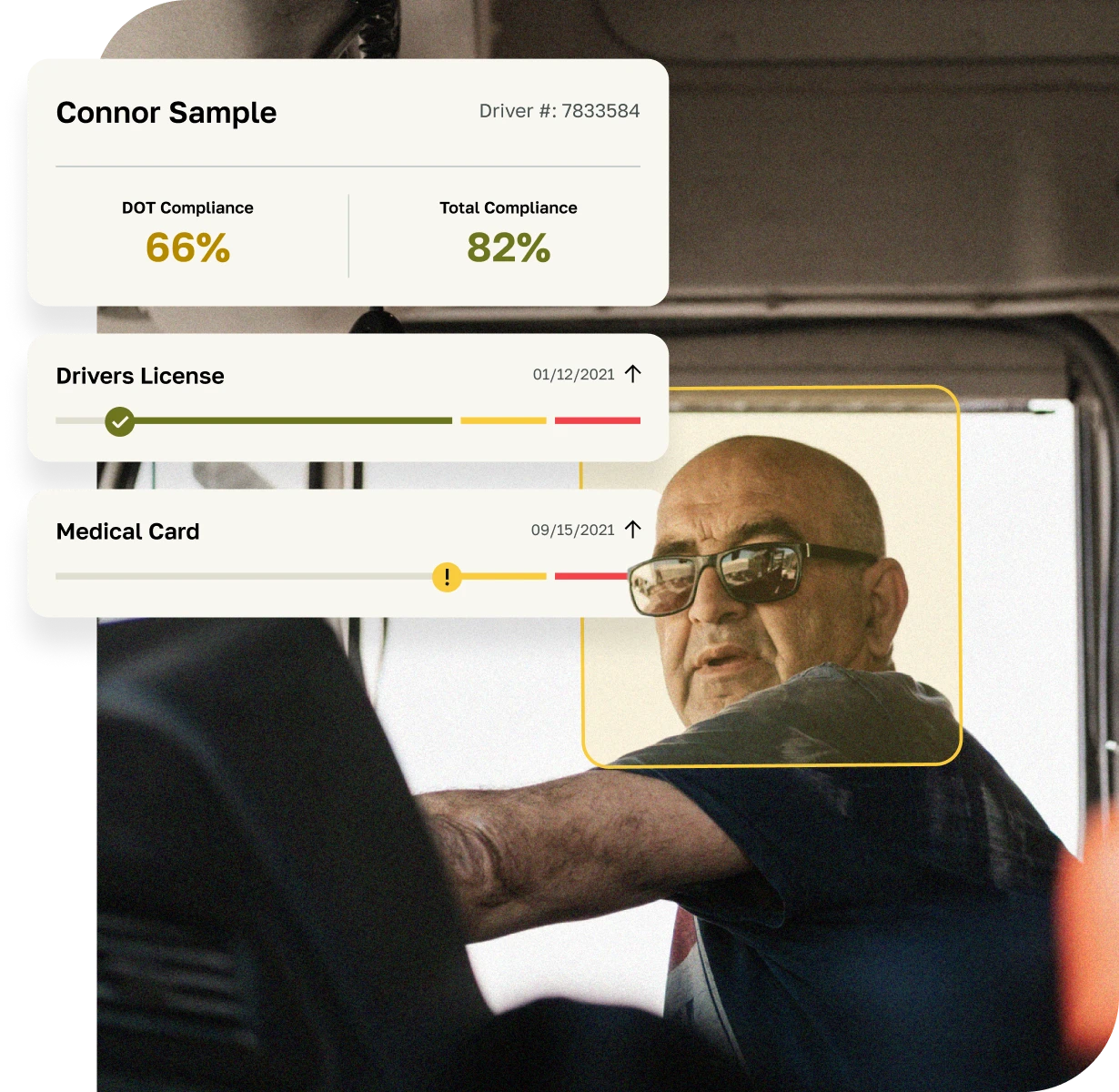
Driver Qualification File Management
Simplify one of fleet compliance’s most complex requirements by centralizing records, tracking expirations, and keeping every driver audit-ready.
Learn More
FMCSA fleet compliance refers to meeting the safety, operational, and record-keeping requirements set by the Federal Motor Carrier Safety Administration. These regulations are designed to ensure that commercial motor carriers operate safely and legally across U.S. highways.
Key FMCSA compliance areas include:
Driver Qualification Files: Verifying CDL, medical certification, and background checks.
Hours of Service: Tracking driving hours using FMCSA-approved electronic logging devices.
Vehicle Maintenance: Performing and documenting required inspections and repairs.
Drug and Alcohol Testing: Complying with FMCSA Part 382 testing requirements.
Record-Keeping: Maintaining accurate documentation for audits and safety reviews.
FMCSA compliance helps fleets avoid fines, improve safety performance, and maintain their operating authority. Many carriers use compliance management software to automate these processes and ensure they meet all FMCSA standards year-round.
The Federal Motor Carrier Safety Administration oversees the regulations that govern commercial motor vehicle operations in the United States. FMCSA fleet compliance ensures that carriers follow these laws, protecting drivers, the public, and company operations from risk.
Non-compliance can result in costly penalties, safety rating downgrades, and even suspension of operating authority. Here’s how to stay compliant.
FMCSA fleet compliance involves following all federal safety and operational regulations outlined in the Federal Motor Carrier Safety Regulations. These rules apply to commercial vehicles that operate in interstate commerce or transport passengers or goods for hire.
The goal is to reduce crashes, injuries, and fatalities involving large trucks and buses by enforcing safety standards for:
Drivers (training, qualifications, and behavior)
Vehicles (maintenance, inspections, and safety performance)
Operations (documentation, hours tracking, and safety management)
FMCSA Part 391 requires fleets to maintain accurate, complete DQFs for every driver. These files include:
Valid Commercial Driver’s License.
Medical Examiner’s Certificate verifying fitness to drive.
Pre-employment background checks and Motor Vehicle Records.
Safety performance history from previous employers.
Signed policy acknowledgments and training documentation.
Tip: Review and update DQFs quarterly to ensure ongoing compliance.
FMCSA’s HOS regulations limit how long drivers can operate before resting. Fleets must:
Use FMCSA-registered Electronic Logging Devices.
Retain driving and on-duty logs for at least six months.
Train drivers on accurate log usage and certification.
Regularly review logs for violations.
Purpose: Prevent fatigue-related accidents and promote safer operations.
FMCSA Part 396 mandates systematic inspection, repair, and maintenance programs for all commercial vehicles. Fleets must:
Conduct daily pre-trip and post-trip inspections.
Schedule and document regular preventive maintenance.
Complete annual DOT inspections.
Keep records for each vehicle for 12 months after leaving service.
Tip: Use maintenance software to automate inspection schedules and store records electronically.
FMCSA Part 382 requires fleets to maintain a controlled substances and alcohol testing program. Key elements include:
Pre-employment, random, post-accident, and return-to-duty testing.
Secure documentation of all test results.
Reporting violations to the FMCSA Drug & Alcohol Clearinghouse.
Supervisor training on recognizing substance abuse.
Non-compliance in this area carries some of the highest FMCSA penalties.
Per FMCSA Part 390.15, fleets must report and document all DOT-recordable accidents within three years. Records should include:
Police and crash reports.
Corrective actions and retraining documentation.
Root cause analysis.
These records demonstrate the carrier’s safety management practices during audits or reviews.
FMCSA assigns each carrier a safety rating, Satisfactory, Conditional, or Unsatisfactory, based on compliance reviews.
A Satisfactory rating means compliance with all regulations.
A Conditional rating signals issues that require corrective action.
An Unsatisfactory rating may result in loss of operating authority.
Compliance reviews evaluate:
DQFs and driver training.
HOS logs and ELD accuracy.
Maintenance and inspection records.
Drug and alcohol testing documentation.
Staying organized and proactive ensures a positive rating outcome.
Modern compliance management systems simplify FMCSA compliance by:
Storing and tracking driver and vehicle documents.
Generating automated alerts for renewals or expiring certifications.
Integrating telematics and ELD data into compliance dashboards.
Creating audit-ready reports for inspections or reviews.
Benefit: Automation reduces administrative workload and ensures nothing falls through the cracks.
Missing or incomplete Driver Qualification Files.
Inaccurate or missing ELD logs.
Expired CDLs or medical certificates.
Missed vehicle inspections or maintenance records.
Incomplete drug and alcohol testing documentation.
Poor record retention or disorganized files.
Prevention Strategy: Conduct quarterly internal audits and use software to track all compliance tasks.
Legal Protection: Prevents costly fines and shutdown orders.
Safety: Reduces the risk of crashes and liability.
Operational Continuity: Maintains your fleet’s operating authority.
Financial Benefits: Lowers insurance premiums and improves efficiency.
Reputation: Builds trust with shippers, regulators, and drivers.
FMCSA compliance is the foundation of a safe and successful fleet operation.
FMCSA fleet compliance isn’t optional, it’s essential for maintaining safe, legal, and efficient fleet operations.
By managing DQFs, HOS logs, maintenance schedules, and testing records through organized systems and technology, fleets can remain audit-ready and compliant year-round.
A strong compliance program doesn’t just prevent violations, it drives safety, accountability, and long-term operational success.