Driver Qualification File Management
Simplify one of fleet compliance’s most complex requirements by centralizing records, tracking expirations, and keeping every driver audit-ready.
Learn More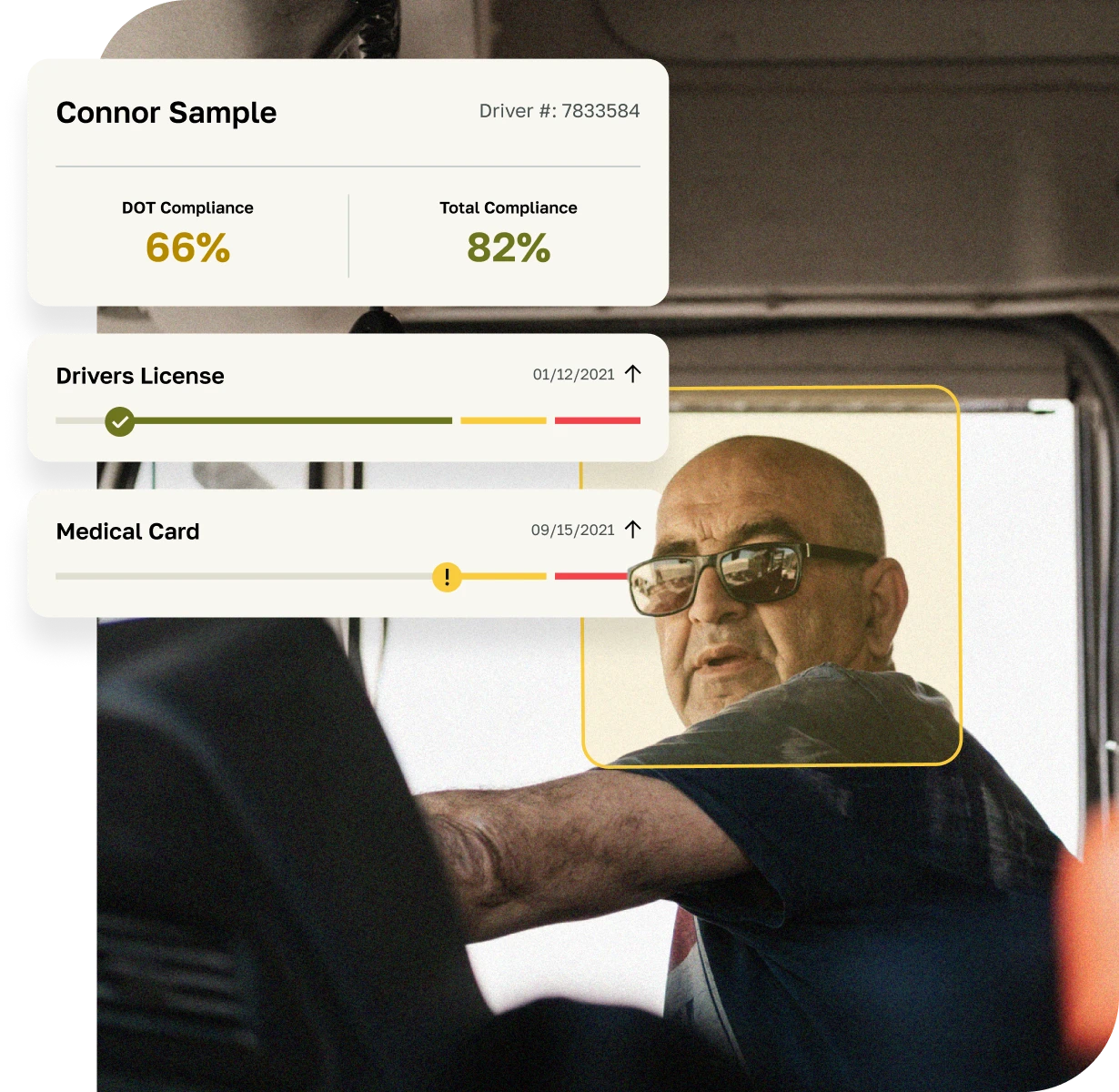
Driver Qualification File Management
Simplify one of fleet compliance’s most complex requirements by centralizing records, tracking expirations, and keeping every driver audit-ready.
Learn More
A fleet compliance guide is a structured playbook that consolidates the laws, company policies, and day-to-day procedures required to operate vehicles legally and safely. It translates regulations into clear actions, assigns responsibilities, sets documentation standards, and outlines how to maintain audit readiness. In short, it is the organization’s single source of truth for keeping drivers, vehicles, and operations within legal and contractual requirements.
At its core, the guide connects three elements. First, the regulatory baseline that applies to the operation, such as transport authority rules, road safety standards, equipment requirements, and tax or licensing mandates. Second, internal policies that interpret those rules for your business model, routes, vehicle classes, and risk appetite. Third, the practical workflows that staff follow, including checklists, forms, software steps, and escalation paths. When these layers align, teams can execute consistently and defend their compliance posture during inspections, claims, or customer audits.
Scope varies by fleet type, but a comprehensive guide usually covers the following domains.
Driver management. Qualification standards, background checks, medical certification, license checks, training matrix, hours-of-service controls, drug and alcohol testing programs, and corrective action processes. It should clarify who reviews Motor Vehicle Records, how often they do it, which infractions trigger interventions, and how retraining is documented.
Vehicle standards and maintenance. Inspection routines, defect reporting, preventative maintenance intervals, critical component standards, tire and brake policies, and out-of-service criteria. It should describe pre- and post-trip inspections, digital or paper DVIR workflows, work order approvals, and record retention periods.
Operational controls. Routing, dispatch, load securement, weight and dimension compliance, fueling, idling and emissions rules, winter operations, and roadside inspection response steps. Include instructions for hazmat, passenger transport, or specialized equipment if applicable.
Regulatory filings and credentials. Vehicle registration, plates, permits, cross-border credentials, fuel tax filings, road user taxes, insurance certificates, and required display markings. The guide should track renewal cycles, responsible owners, and supporting documentation.
Incident and claims management. Collision response, reporting timelines, evidence capture, telematics data preservation, injury reporting, and carrier communications. Provide scripts for roadside interactions, photo requirements, and post-incident testing protocols where mandated.
Data, records, and audits. Document retention schedules, ELD or tachograph data management, access controls, version control for policies, and internal audit cadence. Define how corrective actions are issued, tracked, and closed.
Technology and integrations. Telematics, ELD or tachograph systems, maintenance software, HRIS, and document management platforms. State which system is the system of record for each dataset and how exceptions are handled.
A well-crafted guide is not a static binder. It is a living system that supports training, onboarding, change management, and continuous improvement. New vehicles, new geographies, customer requirements, or regulatory updates should trigger revisions. Version control, change logs, and acknowledgment tracking ensure staff follow the current process.
To make this tangible, consider a few practical scenarios.
Hours-of-service. The guide maps roles to tasks. Dispatchers assign loads within legal limits. Drivers complete pre-trip inspections and confirm their duty status in the ELD. Safety staff review exception reports daily. If violations occur, the guide defines the coaching process and documentation.
Maintenance and DVIRs. Drivers submit defect reports in the app before leaving a site. The maintenance team triages defects by severity and schedules repairs. Vehicles with critical defects are red-tagged, and the guide explains who can clear them and how the clearance is documented.
Fuel tax and registrations. The guide sets a quarterly calendar for fuel tax filings, lists required reports from telematics and fuel cards, and names the approver. It also lists renewal dates for registrations and who receives renewal notices, reducing the chance of expired credentials.
Roadside inspections and collisions. The guide gives a step-by-step checklist for interactions with inspectors, captures required documents, and identifies who must be notified. For collisions, it provides a short script for drivers, evidence capture guidance, and the internal escalation path.
Many organizations underestimate the breadth of variation that affects compliance. Key nuances include:
Jurisdictional differences. US fleets contend with federal motor carrier rules plus state-level variations. In Canada, National Safety Code standards apply, and electronic logging is rolling out federally. In the EU and UK, tachograph use, driver CPC, and operator licensing obligations apply. Australia’s Chain of Responsibility imposes duties across the supply chain. A sound guide maps the fleet’s specific lanes and terminals to the applicable rules and embeds those differences into processes and training.
Vehicle class and use-case. Light-duty service vehicles face different standards than heavy trucks pulling trailers, and passenger transport carries its own requirements. The guide should segment rules by vehicle category and body type so staff do not apply the wrong standard.
Owned, leased, and contractor assets. The organization remains responsible for work performed under its control, even when using contractors or owner-operators. Include onboarding requirements for third parties, proof-of-insurance thresholds, equipment standards, and data-sharing obligations.
Grey fleet. If employees use personal vehicles for business, define eligibility, insurance minimums, inspection requirements, and reimbursement documentation. Many programs miss this category and carry hidden risk.
Technology misconceptions. ELDs, telematics, and maintenance platforms improve visibility, but they do not create compliance by themselves. The guide must define who reviews alerts, how exceptions are handled, how data is reconciled to dispatch and payroll, and what proof is kept for audits.
Records and privacy. Retention periods vary by record type and region. The guide should reference applicable timelines and specify storage and access rules. For telematics and camera data, include privacy considerations, access approvals, and deletion schedules aligned with legal requirements.
If you are drafting or refreshing a fleet compliance guide, a practical approach is to work backward from the risks and the audits you expect to face.
Map operations. List vehicle types, routes, cargo, facilities, and contractors. Confirm which authorities and standards apply to each segment.
Define roles and accountability. Assign an owner to every requirement, from driver files to permit renewals. Use a RACI-style model to clarify who does what.
Translate rules into workflows. For each requirement, write the steps, timing, forms, and system screens. Include screenshots or form links when helpful.
Set metrics and reviews. Choose a few leading indicators such as on-time maintenance, ELD unassigned miles, or license check currency. Schedule internal audits and management reviews.
Train and attest. Integrate the guide into onboarding and recurrent training. Capture acknowledgments and make the guide easy to access on mobile devices.
Update continuously. Track regulatory changes and customer contract clauses. Revise the guide promptly and notify staff. Archive prior versions with dates.
Ultimately, a fleet compliance guide is both a reference and an operating manual. It gives front-line staff clear instructions, keeps leadership informed about risk, and demonstrates due diligence to regulators and customers. When built with real workflows, ownership, and data discipline, it turns complex regulations into everyday routines that protect people, equipment, and the business.