Driver Qualification File Management
Simplify one of fleet compliance’s most complex requirements by centralizing records, tracking expirations, and keeping every driver audit-ready.
Learn More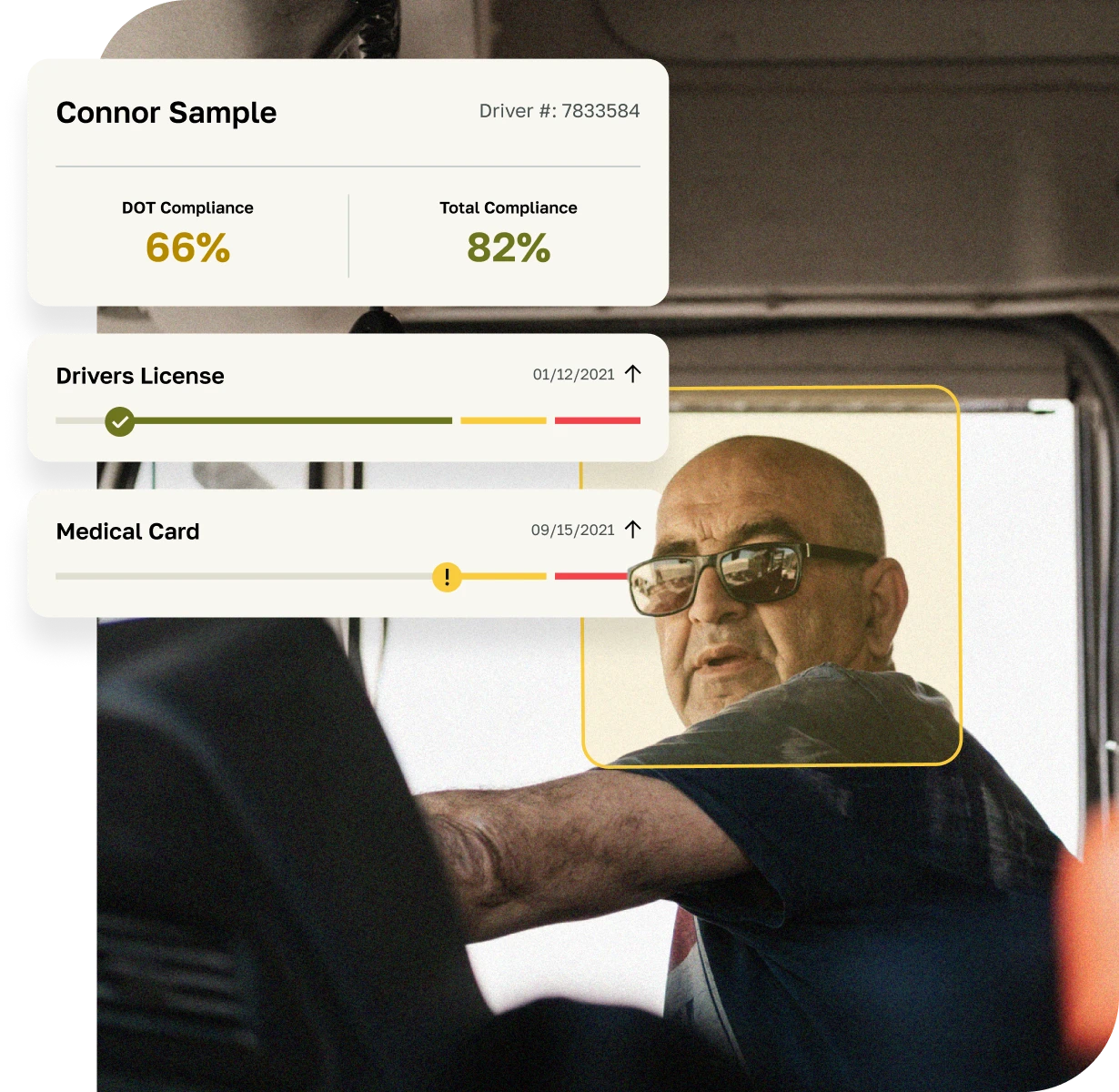
Driver Qualification File Management
Simplify one of fleet compliance’s most complex requirements by centralizing records, tracking expirations, and keeping every driver audit-ready.
Learn More
Fleet compliance in California means adhering to both federal transportation regulations and the state’s unique environmental and safety laws. Carriers operating in California must follow FMCSA and DOT standards while also meeting California Air Resources Board and Biennial Inspection of Terminals program requirements.
Key California fleet compliance elements include:
CARB Truck & Bus Regulation: Enforces diesel emission standards and reporting deadlines.
BIT Inspection Program: Requires terminal inspections every two years.
Intrastate Motor Carrier Permit (MCP): Mandatory for all commercial carriers operating within California.
Driver & Vehicle Documentation: Includes CDL verification, maintenance logs, and inspection records.
Failure to comply can result in fines, suspended MCPs, or out-of-service orders. Many fleets use compliance management software to track CARB reporting, inspection schedules, and record retention.
In short, fleet compliance in California requires meeting some of the most comprehensive and stringent transportation standards in the U.S.
California is one of the most heavily regulated states for commercial fleets. Carriers operating here must comply not only with FMCSA and DOT requirements but also with state-level environmental and safety programs enforced by agencies such as the California Air Resources Board (CARB) and the California Highway Patrol (CHP).
Whether you’re an interstate carrier entering California or an intrastate operator, understanding the state’s fleet compliance rules is essential to maintaining legal and efficient operations.
Federal compliance covers safety standards (FMCSA, DOT) such as driver qualification, Hours of Service (HOS), drug testing, and vehicle inspections.
California compliance adds environmental and operational layers such as CARB emissions, BIT inspections, and intrastate carrier registration.
To operate in California legally, fleets must satisfy both.
CARB regulates emissions from diesel trucks and buses operating in California.
Key requirements include:
Truck and Bus Regulation: Requires 2007 or newer engines or verified diesel filters on heavy-duty trucks.
Clean Truck Check (formerly HD I/M): Mandates emissions testing for all heavy-duty vehicles over 14,000 lbs.
Reporting: Fleets must register and update vehicles in the TRUCRS (Truck Regulation Upload, Compliance, and Reporting System).
Non-compliance penalties: Thousands in fines per vehicle and potential registration holds through the DMV.
Tip: Maintain emissions documentation and registration proof for all fleet vehicles.
The CHP BIT Program requires terminal inspections every two years for carriers operating commercial vehicles in California.
BIT inspections evaluate:
Driver qualification and licensing.
Vehicle inspection and maintenance records.
Accident and violation documentation.
Safety management practices.
Best practice: Maintain inspection-ready documentation at all times — fleets that fail BIT inspections can face fines or suspension of operating privileges.
Every intrastate commercial carrier must obtain a Motor Carrier Permit (MCP) from the California Department of Motor Vehicles (DMV).
Requirements for MCP approval:
Proof of liability insurance.
Valid Employer Identification Number (EIN).
CA number issued by CHP.
Current USDOT number (for interstate fleets).
Renewal: MCPs must be renewed annually and kept current to operate legally in-state.
California mirrors FMCSA requirements but also adds specific recordkeeping expectations under Title 13 CCR § 1234.
Each driver file should include:
Valid Commercial Driver’s License (CDL).
Medical Examiner’s Certificate.
Employment history and safety performance documentation.
Drug and alcohol testing results (for CDL drivers).
Tip: California inspectors may review both federal and state-required driver files during audits — digital storage systems simplify compliance.
California requires carriers to retain inspection and maintenance records for each vehicle, including:
Daily Driver Vehicle Inspection Reports (DVIRs).
Preventive maintenance schedules.
Annual DOT inspections.
Repairs and part replacements.
Retention: Records must be kept at the terminal for at least one year while the vehicle is in service.
Carriers operating interstate must comply with International Fuel Tax Agreement (IFTA) reporting and California-specific weight-distance tax obligations.
Tip: Keep accurate trip sheets, odometer readings, and fuel receipts for audit purposes.
Fleets operating in construction, waste, or utility sectors must comply with additional environmental and safety regulations.
Conduct regular hazardous materials (HazMat) or spill prevention training.
Maintain employee certifications and training logs for audit verification.
Missing or expired MCPs.
Non-compliance with CARB diesel emission standards.
Incomplete BIT inspection records.
Missing driver medical certifications.
Failure to register or renew TRUCRS data.
Solution: Schedule quarterly compliance reviews and use automated alerts for renewals and reporting deadlines.
Compliance management platforms can automate:
CARB reporting and TRUCRS updates.
MCP renewals and insurance tracking.
BIT inspection preparation with digital document storage.
Driver file management for FMCSA and CHP requirements.
Result: Fewer administrative errors, faster audits, and continuous compliance confidence.
Fleet compliance in California requires more than meeting federal standards, it demands mastery of the state’s unique environmental and operational regulations.
From CARB emissions to BIT inspections and MCP renewals, California fleets face higher expectations, but also have greater access to tools that make compliance manageable.
By automating reporting, maintaining organized records and staying informed about regulation updates, carriers can operate safely, legally and efficiently across the Golden State.