Driver Qualification File Management
Simplify one of fleet compliance’s most complex requirements by centralizing records, tracking expirations, and keeping every driver audit-ready.
Learn More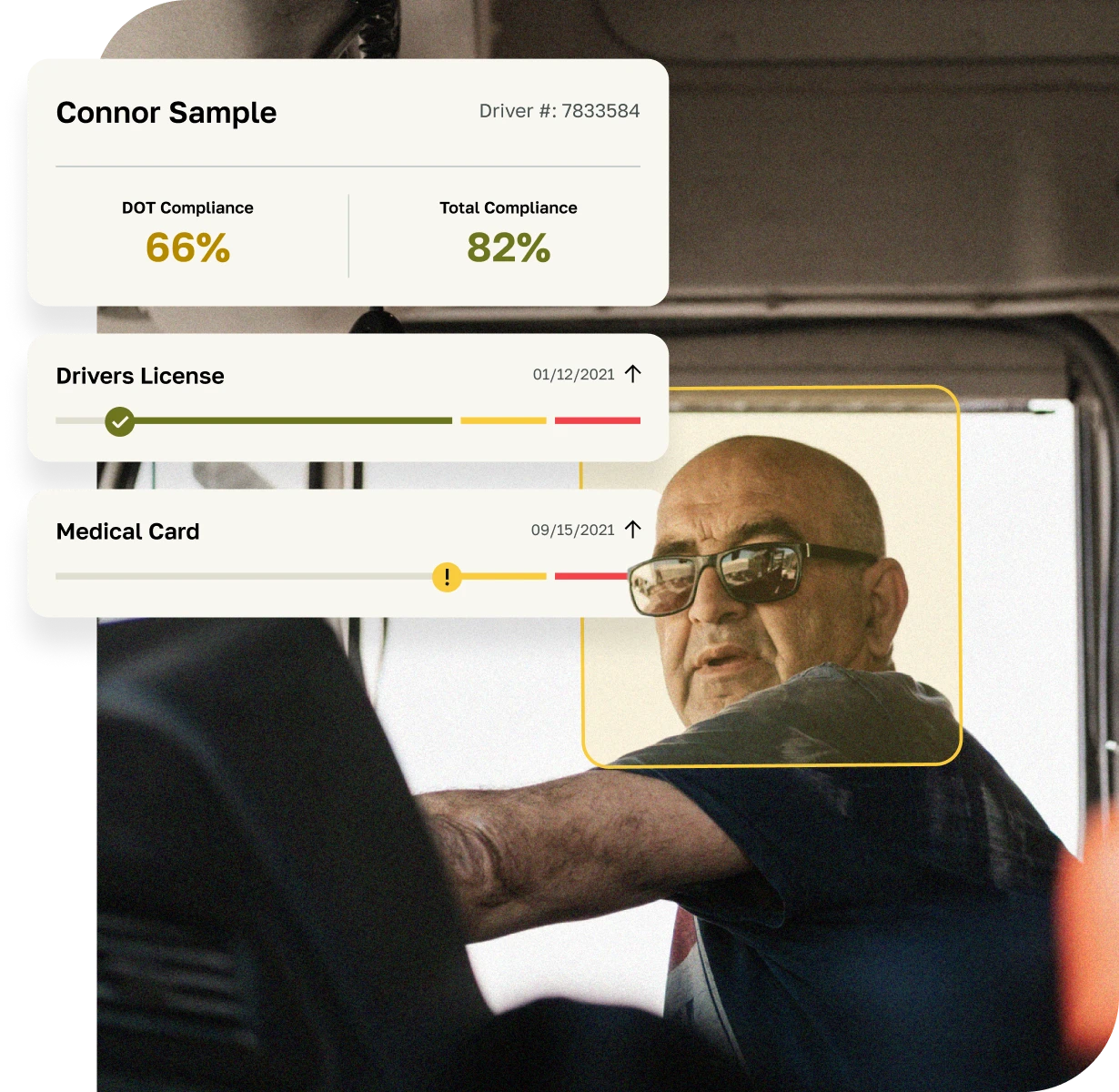
Driver Qualification File Management
Simplify one of fleet compliance’s most complex requirements by centralizing records, tracking expirations, and keeping every driver audit-ready.
Learn More
Yes, maintaining strong fleet compliance can significantly reduce insurance costs. Insurance companies reward fleets that demonstrate safety, organization, and adherence to Department of Transportation and Federal Motor Carrier Safety Administration regulations.
Fleet compliance programs help prevent violations and accidents by ensuring drivers are qualified, vehicles are well-maintained, and Hours of Service rules are followed. Fewer violations mean lower Compliance, Safety, Accountability scores, a key factor insurers consider when calculating premiums.
Additionally, fleets that document compliance through audits, training, and maintenance records show insurers that they actively manage risk. This often leads to premium discounts, reduced deductibles, and better policy terms.
In short, fleet compliance isn’t just about following regulations, it’s a cost-saving strategy. By preventing accidents and improving safety performance, compliant fleets protect both their drivers and their bottom line.
The short answer: yes. Strong fleet compliance can lower insurance premiums, reduce claims, and improve a carrier’s overall financial stability.
Fleet insurance providers base rates on risk and compliance is one of the most reliable indicators of a low-risk, well-managed operation.
Insurance underwriters assess several factors when pricing commercial auto policies: safety record, claims history, CSA scores, and overall risk management. A strong compliance program directly improves these factors by:
Reducing Violations: Organized compliance programs prevent lapses like expired CDLs or missing inspections.
Lowering Accident Rates: Adherence to Hours of Service and preventive maintenance schedules reduces fatigue and mechanical failures.
Improving CSA Scores: Better safety scores signal lower risk to insurers.
Demonstrating Accountability: Documentation and training prove that a fleet takes risk management seriously.
In essence, compliance lowers operational risk and insurers reward that with lower premiums.
Insurance companies favor fleets that maintain clean driver records. Regular driver qualification checks and safety training:
Reduce accidents caused by human error.
Improve driver retention and accountability.
Show insurers that your fleet invests in risk prevention.
Example: Fleets with active driver safety training programs often qualify for up to 10–15% lower insurance premiums over time.
Breakdowns and mechanical failures increase the likelihood of costly claims. Maintaining accurate maintenance logs and following DOT inspection requirements:
Prevents unsafe vehicles from being on the road.
Demonstrates proactive fleet management.
Builds trust with both regulators and insurers.
Tip: Provide your insurer with documentation showing your preventive maintenance program, it may qualify you for risk-based discounts.
HOS violations and fatigue-related crashes are red flags for insurers. Using FMCSA-certified Electronic Logging Devices ensures accurate time tracking and reduces fatigue-related risk.
Impact: Fewer HOS violations = fewer accidents = better insurance rates.
Fleets with robust FMCSA Part 382 testing programs demonstrate high safety standards. Insurers view these programs as essential safeguards that lower the probability of impaired driving incidents.
Accurate documentation helps insurers close claims faster and evaluate fault fairly. Fleets that use compliance software to track incidents can share detailed, time-stamped records that build trust and transparency.
When underwriting commercial fleet policies, insurers consider:
CSA and SMS Scores: Poor scores indicate frequent violations or unsafe driving habits.
Safety Program Documentation: Written compliance policies and training logs prove proactive management.
Claims History: Fewer claims often correlate with strong compliance practices.
Audit Results: Fleets with clean DOT audit histories demonstrate low regulatory risk.
A strong compliance record essentially becomes your “proof of safety” helping negotiate better rates and coverage.
Fleet compliance is an investment that pays off in measurable ways:
Lower Insurance Premiums: Carriers with fewer violations and claims often enjoy reduced base rates.
Fewer Downtime Costs: Well-maintained fleets avoid service interruptions and emergency repairs.
Fewer Accidents: Compliance training and monitoring prevent costly collisions.
Better Driver Retention: Safe, compliant operations attract and retain qualified drivers.
In other words, compliance not only reduces risk but also drives profitability through operational efficiency and cost control.
Share CSA and Audit Records: Present clean compliance reports to underwriters.
Show Training Logs: Demonstrate consistent driver education.
Provide Maintenance History: Document inspections and repairs.
Leverage Telematics Data: Use data from GPS and ELD systems to prove safe driving behavior.
Many insurers now offer usage-based or data-driven insurance discounts for fleets that can provide telematics and compliance documentation.
While documentation and audits are critical, compliance is ultimately a cultural effort. Fleets that emphasize compliance as a daily responsibility, not just a regulatory requirement, tend to see the greatest long-term cost reductions.
Practical steps:
Make compliance part of new hire onboarding.
Reward drivers for clean inspections or zero violations.
Review compliance metrics during safety meetings.
When drivers understand that compliance protects them as well as the company, adherence and safety naturally improve.
Fleet compliance and insurance costs are directly connected. A compliant fleet demonstrates lower risk, safer operations, and better control, all of which translate into lower premiums and stronger insurer relationships.
By maintaining driver files, following maintenance schedules, and documenting every aspect of compliance, fleets can not only meet DOT and FMCSA standards but also unlock measurable financial benefits.