Driver Qualification File Management
Simplify one of fleet compliance’s most complex requirements by centralizing records, tracking expirations, and keeping every driver audit-ready.
Learn More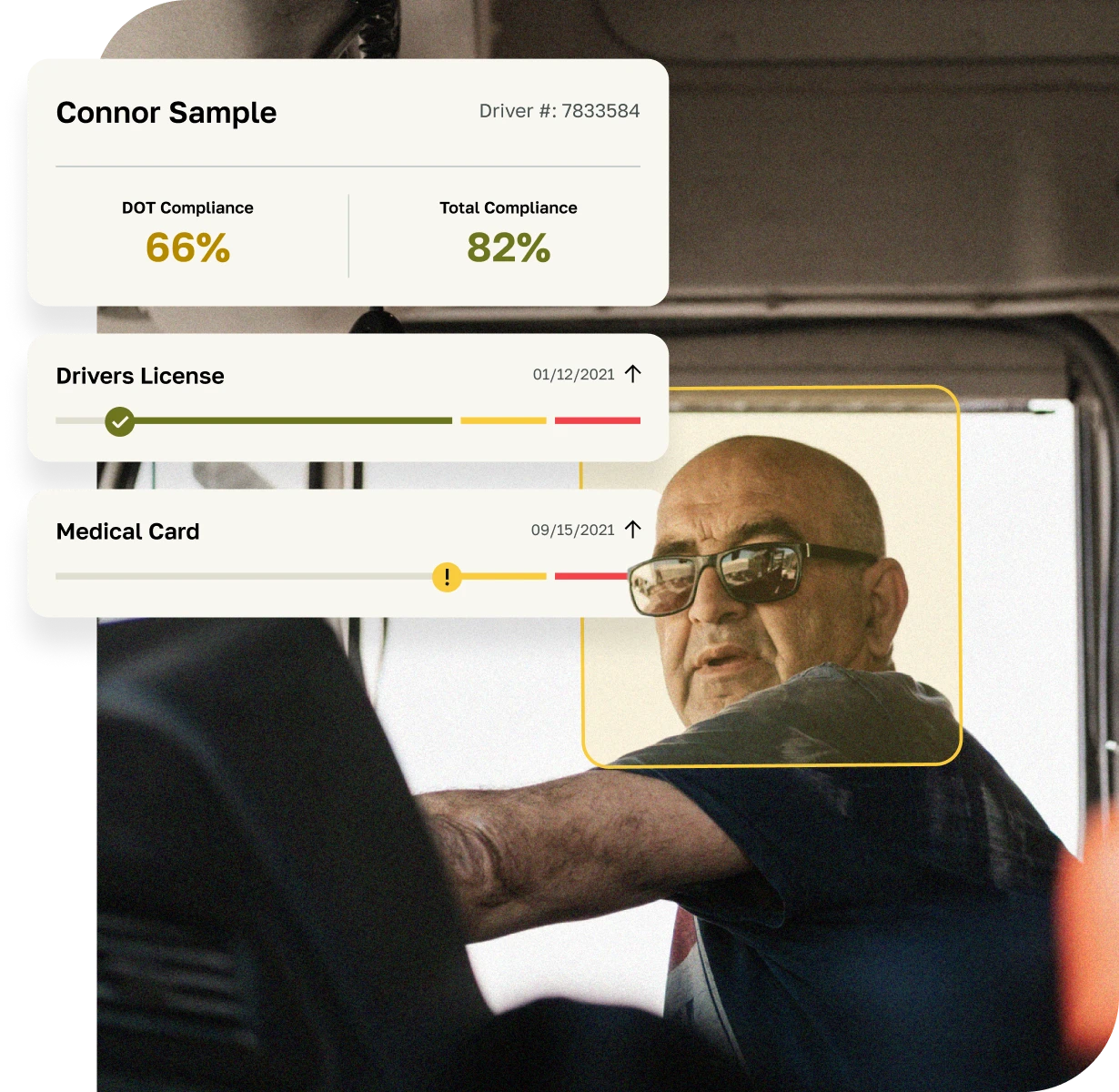
Driver Qualification File Management
Simplify one of fleet compliance’s most complex requirements by centralizing records, tracking expirations, and keeping every driver audit-ready.
Learn More
Maintaining fleet compliance means consistently meeting Department of Transportation (DOT) and Federal Motor Carrier Safety Administration (FMCSA) regulations. The key is to stay proactive, not reactive, with organized systems and ongoing oversight.
Top tips for maintaining fleet compliance include:
Keep Driver Files Updated: Regularly review CDLs, medical certificates, and background checks.
Use FMCSA-Approved ELDs: Ensure accurate Hours of Service (HOS) logging and training.
Schedule Preventive Maintenance: Track inspections, repairs, and defect reports.
Stay Current on Drug & Alcohol Testing: Maintain proper records and Clearinghouse registration.
Train Continuously: Provide regular compliance and safety refreshers for drivers.
Use Compliance Software: Automate alerts for renewals and recordkeeping.
Conduct Mock Audits: Review documentation quarterly to catch issues early.
By combining technology, training, and documentation discipline, fleets can stay compliant, minimize violations, and remain fully audit-ready year-round.
Fleet compliance isn’t a one-time task, it’s an ongoing commitment to safety, organization, and accountability. Whether you operate five vehicles or five hundred, maintaining compliance with DOT and FMCSA regulations requires consistency, clear processes, and the right tools.
Below are essential tips to help your fleet remain compliant, safe, and audit-ready.
Each driver must have a complete and up-to-date Driver Qualification File (DQF) that includes:
Valid Commercial Driver’s License (CDL) and endorsements.
Current Medical Examiner’s Certificate (DOT physical).
Annual Motor Vehicle Record (MVR) reviews.
Pre-employment screening and safety performance history.
Drug and alcohol testing results.
Tip: Conduct quarterly reviews to ensure no expired or missing documents.
Accurate tracking of driver hours is a key DOT requirement. Fleets must:
Use FMCSA-certified Electronic Logging Devices (ELDs).
Train drivers on proper use and log certification.
Review logs regularly for accuracy and violations.
Retain ELD data for at least six months.
Tip: Automate log reviews and flag potential violations before audits.
Preventive maintenance helps fleets stay safe and compliant.
Follow a documented maintenance schedule for each vehicle.
Perform pre-trip and post-trip inspections daily.
Keep annual DOT inspection reports on file.
Address defects immediately and document all repairs.
Tip: Use fleet management software to track maintenance intervals and inspection results automatically.
FMCSA Part 382 mandates testing for all CDL drivers.
Conduct pre-employment, random, post-accident, and return-to-duty testing.
Retain all testing documentation securely.
Register with the FMCSA Drug & Alcohol Clearinghouse.
Tip: Partner with a qualified third-party administrator (C/TPA) to simplify program management.
Documentation is the backbone of compliance.
Store records digitally for quick retrieval during audits.
Follow FMCSA retention requirements (e.g., 3 years for DQFs, 6 months for HOS logs).
Standardize file naming and structure for consistency.
Tip: Create a digital compliance dashboard with alerts for expiring records.
Driver and staff training should be an ongoing process.
Include compliance education in onboarding and annual refresher courses.
Train on HOS rules, accident reporting, and safety protocols.
Reinforce policies through regular safety meetings.
Tip: Track training completion through a learning management system (LMS) or compliance software.
Mock audits prepare your fleet for real DOT or FMCSA inspections.
Review all DQFs, inspection logs, and maintenance records.
Verify accident reports and drug/alcohol test files.
Identify and correct compliance gaps before an official audit.
Tip: Schedule mock audits twice per year or after major policy updates.
Your Compliance, Safety, Accountability (CSA) score reflects your fleet’s safety performance.
Check your CSA scores regularly through the FMCSA portal.
Analyze trends and recurring violations.
Implement corrective actions to address problem areas.
Tip: Assign a compliance manager to review CSA data monthly and report findings.
Manual compliance tracking is time-consuming and error-prone. Modern compliance management software can:
Send alerts for license and inspection expirations.
Generate audit-ready reports.
Integrate ELD, telematics, and maintenance data.
Provide a centralized dashboard for all compliance documentation.
Tip: Choose a platform that offers customization for your fleet size and reporting needs.
DOT and FMCSA regulations evolve frequently.
Subscribe to FMCSA updates or industry newsletters.
Participate in webinars or compliance workshops.
Update policies and training materials promptly after rule changes.
Tip: Assign one compliance leader to monitor and communicate regulatory updates fleet-wide.
Maintaining fleet compliance is about consistency, not crisis management. By keeping records organized, training staff, leveraging technology, and conducting regular internal audits, fleets can operate confidently and avoid fines, downtime, and reputational damage.
The most compliant fleets are proactive, building strong systems today to prevent violations tomorrow.