Driver Qualification File Management
Simplify one of fleet compliance’s most complex requirements by centralizing records, tracking expirations, and keeping every driver audit-ready.
Learn More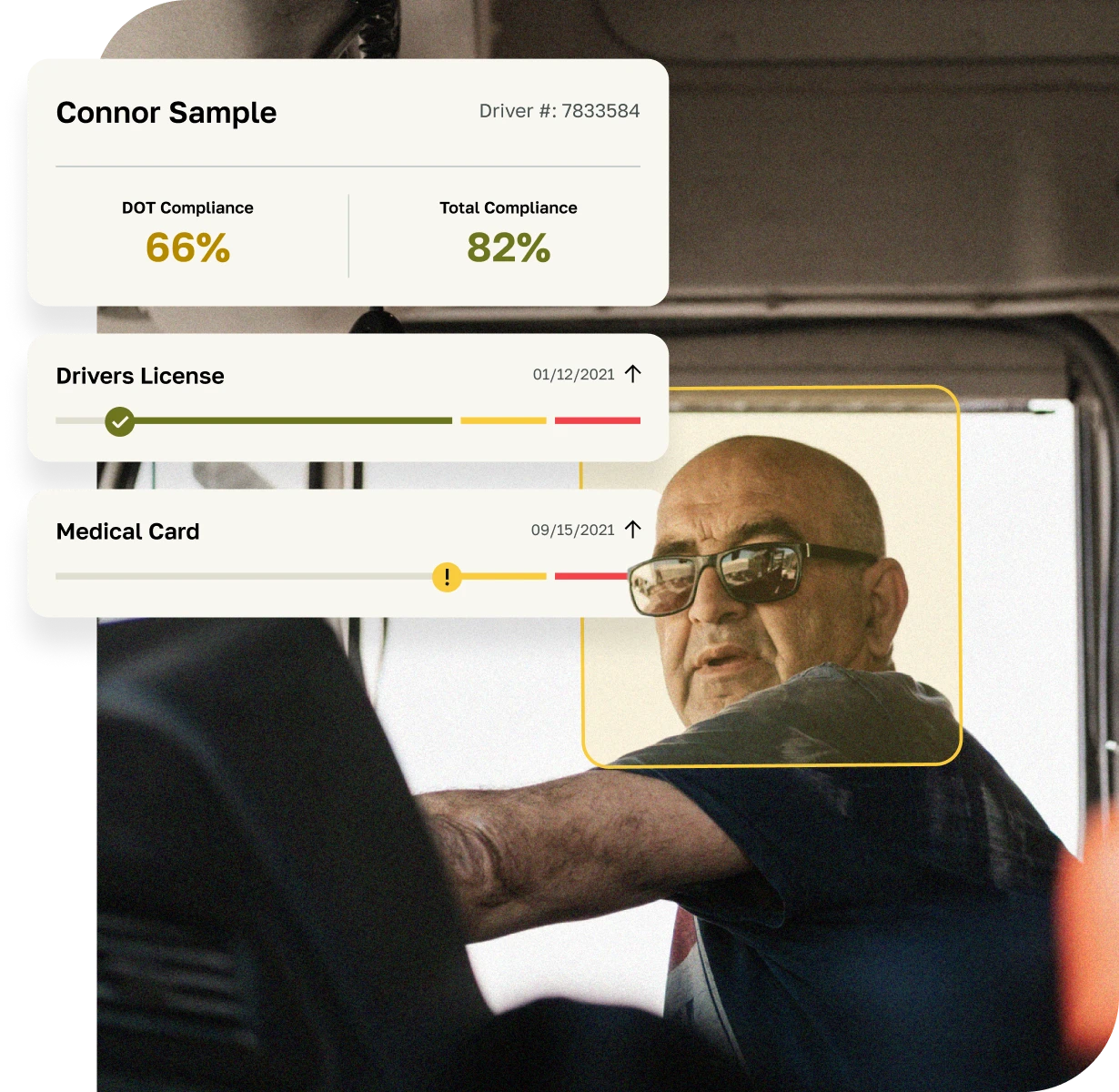
Driver Qualification File Management
Simplify one of fleet compliance’s most complex requirements by centralizing records, tracking expirations, and keeping every driver audit-ready.
Learn More
Fleet compliance and fleet safety are closely related but focus on different aspects of fleet management.
Fleet compliance refers to meeting all legal and regulatory requirements set by the Department of Transportation and Federal Motor Carrier Safety Administration. It focuses on maintaining driver qualification files, vehicle inspections, electronic logging device data, Hours of Service records, and drug and alcohol testing. Compliance ensures a fleet operates legally and remains audit-ready.
Fleet safety, on the other hand, focuses on preventing accidents, reducing risk, and protecting drivers, vehicles, and the public. It includes driver behavior monitoring, safety training, preventive maintenance, and the use of telematics for performance tracking.
In short, compliance is about following the rules, while safety is about protecting people and assets. The most successful fleets integrate both, using compliance systems to stay legal and safety programs to build a culture of responsibility and prevention.
Fleet compliance and fleet safety are often discussed together and for good reason. They both aim to protect drivers, vehicles, and the public. But while they overlap, they serve distinct purposes within a transportation company’s operations.
Understanding the difference and how they work together, is key to creating a fleet that’s both legally compliant and genuinely safe.
Fleet compliance refers to meeting the legal and regulatory requirements that govern commercial vehicle operations. These requirements are enforced by agencies such as the Department of Transportation and the Federal Motor Carrier Safety Administration.
Key focus areas of fleet compliance include:
Driver Qualification Files: Ensuring all drivers have valid CDLs, medical certificates, and background checks.
Hours of Service Regulations: Tracking driver hours through FMCSA-approved Electronic Logging Devices.
Vehicle Inspections and Maintenance: Keeping up with DOT inspection requirements and repair documentation.
Drug and Alcohol Testing: Maintaining testing programs in line with FMCSA Part 382.
Record-Keeping: Storing compliance documents for required retention periods and preparing for audits.
In essence, fleet compliance is about staying legal, ensuring every driver and vehicle meets the federal and state regulations necessary for safe, lawful operation.
Fleet safety goes beyond compliance. It focuses on creating a proactive culture of safety that reduces accidents, injuries, and costly downtime.
Key focus areas of fleet safety include:
Driver Behavior Monitoring: Using telematics to identify speeding, harsh braking, or distracted driving.
Preventive Maintenance Programs: Ensuring vehicles are kept in top condition to prevent breakdowns and mechanical failures.
Safety Training: Providing regular driver education on defensive driving, accident prevention, and situational awareness.
Accident Investigation: Reviewing incidents and implementing corrective actions to prevent recurrence.
Safety Metrics and KPIs: Tracking data like incident rates, fuel efficiency, and driver performance scores.
Fleet safety is about prevention, reducing risk before violations or accidents occur.
| Category | Fleet Compliance | Fleet Safety |
|---|---|---|
| Primary Focus | Legal and regulatory adherence | Preventing accidents and promoting driver well-being |
| Governing Body | DOT / FMCSA | Internal company policies and safety teams |
| Purpose | To avoid fines, penalties, and operating restrictions | To reduce risk, injuries, and property damage |
| Activities | Driver file management, audits, inspections, testing | Training, monitoring, risk assessment, coaching |
| Measurement | CSA scores, audit results, compliance rates | Safety metrics, incident frequency, driver behavior data |
While compliance ensures you’re meeting the minimum legal standards, safety programs help you exceed them, resulting in fewer accidents, better insurance rates, and improved employee morale.
In reality, compliance and safety aren’t separate silos, they support each other.
Compliance supports safety: Adhering to DOT regulations ensures vehicles and drivers meet baseline safety requirements.
Safety supports compliance: Safe driving habits and preventive maintenance reduce violations and improve CSA scores.
A fleet that’s compliant but unsafe still risks accidents and downtime. Conversely, a fleet that’s safe but non-compliant risks legal penalties and loss of operating authority. The key is integration, aligning compliance systems with safety programs for total fleet protection.
Legal Protection: Compliance avoids fines and keeps your operating authority intact.
Accident Reduction: Safety programs prevent crashes and protect your workforce.
Improved Reputation: Customers and regulators prefer fleets with both strong compliance and safety records.
Financial Benefits: Fewer violations and accidents mean lower insurance costs and higher profitability.
When compliance and safety teams work together, the result is a fleet that operates efficiently, legally, and responsibly.
Develop Written Policies: Outline compliance standards and safety expectations in one unified handbook.
Use Technology: Integrate compliance software and telematics to monitor both legal and safety data.
Train Regularly: Include compliance education and defensive driving in the same training cycles.
Audit and Review: Conduct internal audits for compliance and safety performance at least quarterly.
Foster a Culture of Accountability: Encourage drivers to take ownership of both compliance and safety behaviors.
Fleet compliance keeps your business legal, fleet safety keeps it protected. Compliance ensures you meet the rules; safety ensures you thrive beyond them.
The best fleets don’t choose between compliance and safety, they blend the two into a single, seamless program. By doing so, they minimize risk, protect drivers and build lasting operational excellence.