Driver Qualification File Management
Simplify one of fleet compliance’s most complex requirements by centralizing records, tracking expirations, and keeping every driver audit-ready.
Learn More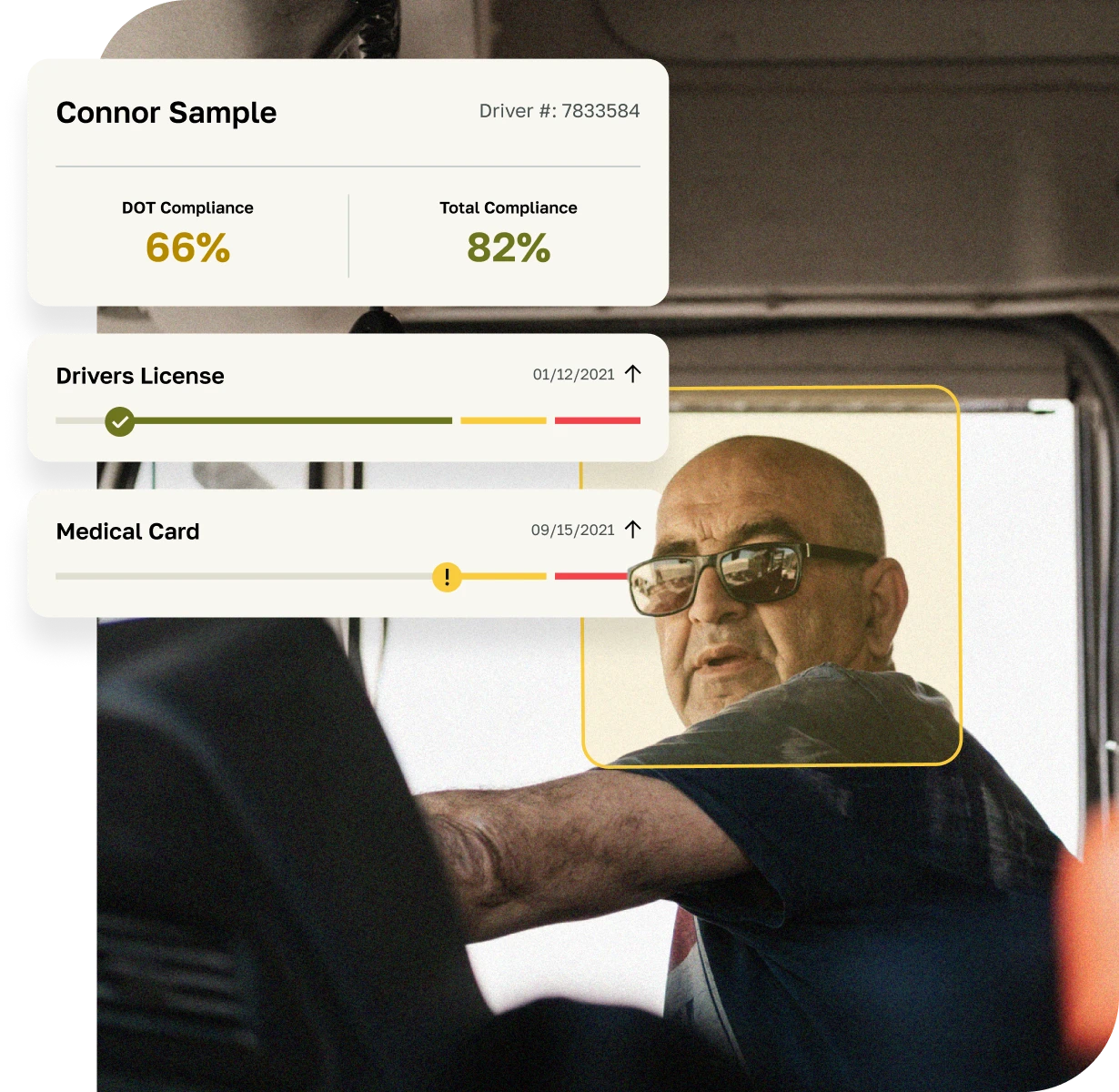
Driver Qualification File Management
Simplify one of fleet compliance’s most complex requirements by centralizing records, tracking expirations, and keeping every driver audit-ready.
Learn More
Fleet compliance policy examples are written documents that outline how a company ensures its drivers, vehicles, and operations follow Department of Transportation (DOT) and Federal Motor Carrier Safety Administration (FMCSA) regulations. These policies establish standards for safety, training, inspections, and record-keeping, helping fleets stay compliant and audit-ready.
Common fleet compliance policy examples include:
Driver Qualification Policy: Defines licensing, background checks, and medical certification requirements.
Hours of Service (HOS) & ELD Policy: Explains how drivers log hours and comply with ELD regulations.
Vehicle Maintenance Policy: Details inspection intervals, defect reporting, and repair responsibilities.
Drug and Alcohol Testing Policy: Outlines pre-employment, random, and post-accident testing procedures.
Safety & Accident Reporting Policy: Describes how incidents are reported and reviewed.
Well-documented fleet compliance policies protect businesses from risk, improve safety, and make DOT and FMCSA audits faster and easier.
Fleet compliance policies are the written backbone of every compliant operation. They define how your company manages safety, driver conduct, vehicle maintenance, and regulatory obligations under the Department of Transportation (DOT) and the Federal Motor Carrier Safety Administration (FMCSA).
Having clear, well-documented policies not only ensures legal compliance, it also builds consistency, accountability, and trust across your organization.
Establish Accountability: Policies clearly define responsibilities for drivers, supervisors, and fleet managers.
Ensure Consistency: Every employee follows the same standards for safety and compliance.
Simplify Audits: Written procedures make documentation easy to produce during inspections.
Reduce Risk: Policies that outline preventive maintenance, safety checks, and training reduce violations and accidents.
Build Safety Culture: Compliance policies reinforce a company-wide commitment to safety.
Here are several examples of policies that should be part of any comprehensive fleet compliance program:
Defines the process for hiring and managing commercial drivers, including:
Valid CDL and endorsements required for the role.
Annual Motor Vehicle Record (MVR) reviews.
Completion of DOT physical exams and medical certification.
Background checks and prior employment verification.
Maintaining complete Driver Qualification Files (DQFs).
Outlines how your company ensures compliance with FMCSA HOS rules:
Use of FMCSA-approved ELDs.
Maximum driving hours and mandatory rest periods.
Record-keeping and log submission procedures.
Disciplinary action for falsified logs.
Describes inspection, repair, and maintenance standards:
Required pre-trip and post-trip inspections.
Preventive maintenance schedules by vehicle type.
Documentation and storage of inspection reports.
Immediate reporting of safety-related defects.
Details your FMCSA Part 382 testing program:
Pre-employment, random, and post-accident testing.
Procedures for return-to-duty and follow-up tests.
Secure handling of results and confidentiality standards.
Consequences of positive test results or refusals.
Explains how safety events and incidents are managed:
Immediate reporting process after an accident.
Completion of accident investigation reports.
Root-cause analysis and corrective actions.
Driver retraining requirements following preventable accidents.
Specifies how compliance documents are stored and maintained:
Retention timelines per FMCSA standards.
Use of digital systems for tracking and retrieval.
Procedures for responding to DOT audit requests.
Review Regulatory Requirements – Identify all DOT, FMCSA, OSHA, and EPA regulations relevant to your operations.
Assess Internal Processes – Map current compliance workflows to find gaps or inconsistencies.
Write Clear, Actionable Policies – Use plain language, list responsibilities, and include consequences for non-compliance.
Train Employees – Incorporate policy education into onboarding and recurring compliance training.
Update Regularly – Review and revise policies annually or when regulations change.
Centralize Policies: Store all compliance documents in one accessible digital platform.
Require Acknowledgment: Have employees sign policy acknowledgment forms.
Align with Technology: Ensure your ELD, telematics, and compliance software support policy enforcement.
Audit Adherence: Conduct regular policy compliance checks to verify implementation.
Engage Leadership: Senior management should reinforce compliance as a strategic priority.
Policy Name: Driver Qualification and Safety Policy
Purpose: To ensure all commercial drivers meet DOT and FMCSA requirements for safety and fitness.
Scope: Applies to all employees operating commercial motor vehicles.
Procedures:
Drivers must maintain valid CDLs and current medical certificates.
All new hires must pass a DOT pre-employment drug test.
Annual MVR checks will be conducted for all active drivers.
Drivers will receive safety training annually.
Non-Compliance: Violations may result in suspension or termination.
This example provides structure while remaining adaptable to your company’s operations.
Fleet compliance policy examples serve as templates for building consistent, legally sound, and safety-focused operations. Clear policies help fleets maintain DOT and FMCSA compliance, reduce violations, and foster accountability.
By formalizing your compliance practices, training employees, and regularly reviewing these policies, your organization can stay ahead of regulatory changes and operate with confidence.