Driver Qualification File Management
Simplify one of fleet compliance’s most complex requirements by centralizing records, tracking expirations, and keeping every driver audit-ready.
Learn More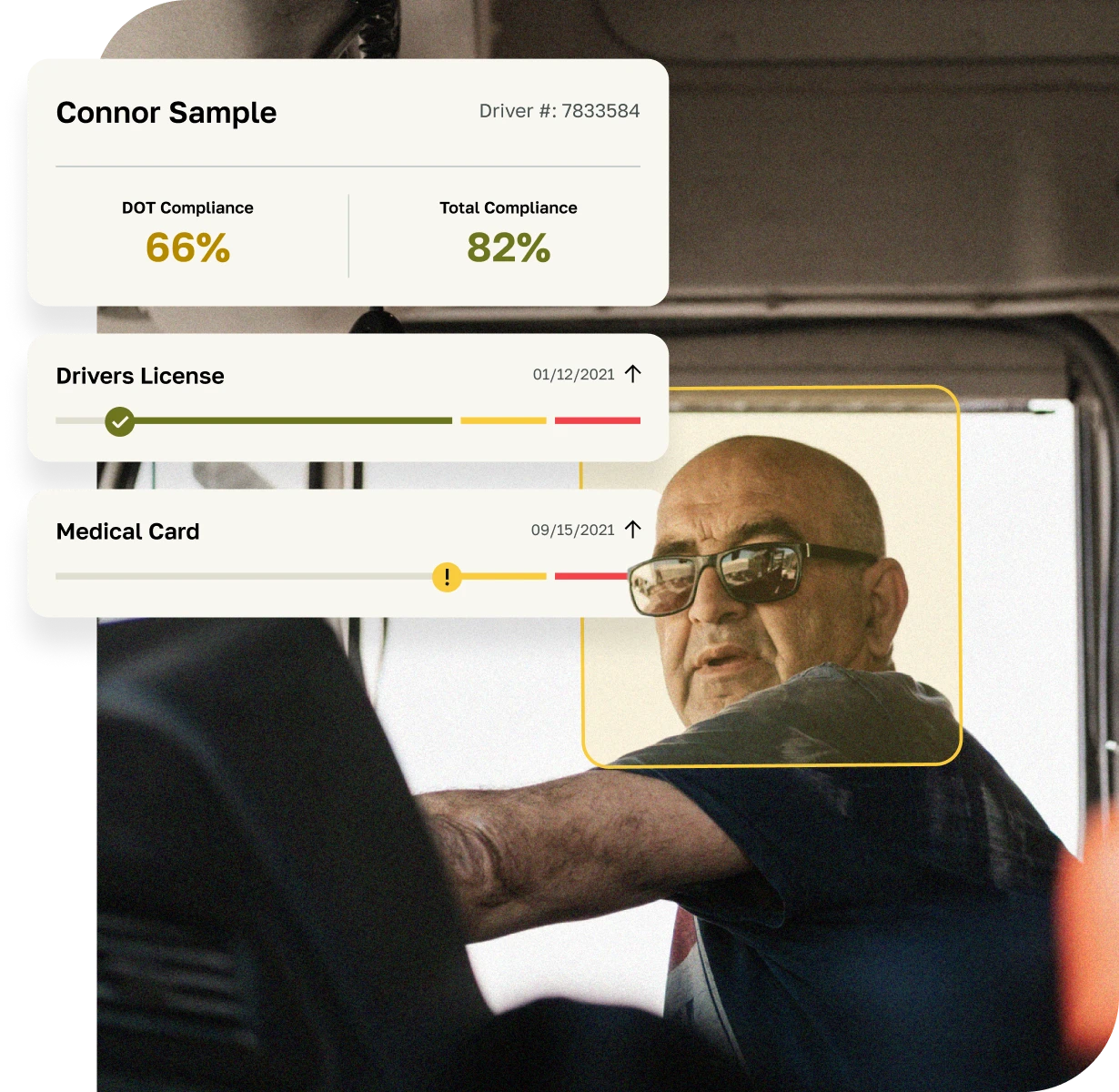
Driver Qualification File Management
Simplify one of fleet compliance’s most complex requirements by centralizing records, tracking expirations, and keeping every driver audit-ready.
Learn More
Fleet compliance requirements are the rules and standards that commercial carriers must follow to meet federal and state transportation regulations. These requirements are primarily set by the Department of Transportation and the Federal Motor Carrier Safety Administration to ensure that fleets operate safely and legally.
Key fleet compliance requirements include maintaining driver qualification files (valid CDLs, medical certificates, background checks), conducting drug and alcohol testing, performing regular vehicle inspections and maintenance, and using FMCSA-approved electronic logging devices to track Hours of Service.
Fleets must also keep organized records, provide safety training, and maintain up-to-date insurance and registration documents. Failure to meet these requirements can result in fines, out-of-service orders, or loss of operating authority.
In short, fleet compliance requirements are the foundation of a safe and legal fleet operation, protecting both drivers and the public while minimizing risk and ensuring readiness for audits.
Fleet compliance requirements refer to the laws, regulations, and safety standards that every commercial transportation company must follow. These requirements are designed to ensure that fleets operate responsibly, prevent accidents, and maintain accurate records for audits and inspections.
Meeting these standards isn’t optional, it’s a legal obligation enforced by the Department of Transportation and the Federal Motor Carrier Safety Administration.
Below are the major areas every fleet must manage to remain compliant:
Every driver operating a commercial motor vehicle must meet the following:
Possess a valid Commercial Driver’s License with appropriate endorsements.
Maintain a current Medical Examiner’s Certificate.
Pass a pre-employment background check and Motor Vehicle Record review.
Complete drug and alcohol testing before hire and randomly thereafter.
Keep a complete Driver Qualification File including employment history and safety performance records.
Fleets must ensure all vehicles are safe and roadworthy by:
Performing annual DOT inspections and maintaining records.
Completing preventive maintenance at required intervals.
Keeping documentation of all repairs, parts replacements, and inspections.
Displaying proper markings, identification numbers, and registration.
Drivers are required to comply with federal HOS rules that regulate driving and rest periods.
ELD Use: Most fleets must use FMCSA-approved electronic logging devices to track hours automatically.
HOS Limits: Maximum 11 hours of driving after 10 consecutive off-duty hours.
Record Retention: Carriers must retain logs for at least six months.
FMCSA Part 382 requires carriers to maintain a controlled substances and alcohol testing program:
Pre-employment, random, post-accident, and return-to-duty testing.
Secure record-keeping of all results.
Enrollment in the FMCSA Drug & Alcohol Clearinghouse.
Document and report any accidents involving fatalities, injuries, or vehicle tows.
Maintain records of corrective actions and driver retraining.
Conduct safety meetings or ongoing driver education programs.
Keep all required records (DQFs, inspections, maintenance, ELD logs) organized and accessible.
Follow FMCSA’s document retention timelines.
Prepare documentation for audits or compliance reviews on demand.
Legal Compliance – Non-compliance can lead to fines, shutdown orders, or loss of operating authority.
Safety – Meeting maintenance and HOS standards reduces accidents and fatigue-related incidents.
Insurance Savings – Good compliance records improve CSA scores and may lower premiums.
Business Reputation – Shippers and clients prefer fleets with strong safety compliance.
Operational Efficiency – Organized compliance programs reduce downtime and audit stress.
Implement a Fleet Compliance Program – Define policies and assign responsibilities.
Use Compliance Software – Automate reminders for licenses, inspections, and training renewals.
Conduct Regular Internal Audits – Identify gaps before official reviews.
Provide Ongoing Training – Keep drivers and managers up to date on changing regulations.
Partner with Compliance Experts – Consultants can assist with audits, reporting, and compliance strategy.
Expired CDLs or medical certificates.
Missing vehicle inspection reports.
Incorrect or missing ELD data.
Failure to conduct random drug and alcohol testing.
Incomplete driver qualification files.
These violations can lead to steep penalties and harm a company’s safety rating.
Fleet compliance requirements are the backbone of safe, efficient, and legally sound fleet operations. By meeting these standards, from driver qualification and vehicle maintenance to record-keeping and ELD usage, fleets protect their drivers, maintain customer trust, and avoid costly penalties.
Successful fleets treat compliance as an ongoing process, not a one-time task. With the right systems, software, and training, any company can stay ahead of DOT and FMCSA regulations while building a culture of safety and accountability.