Driver Qualification File Management
Simplify one of fleet compliance’s most complex requirements by centralizing records, tracking expirations, and keeping every driver audit-ready.
Learn More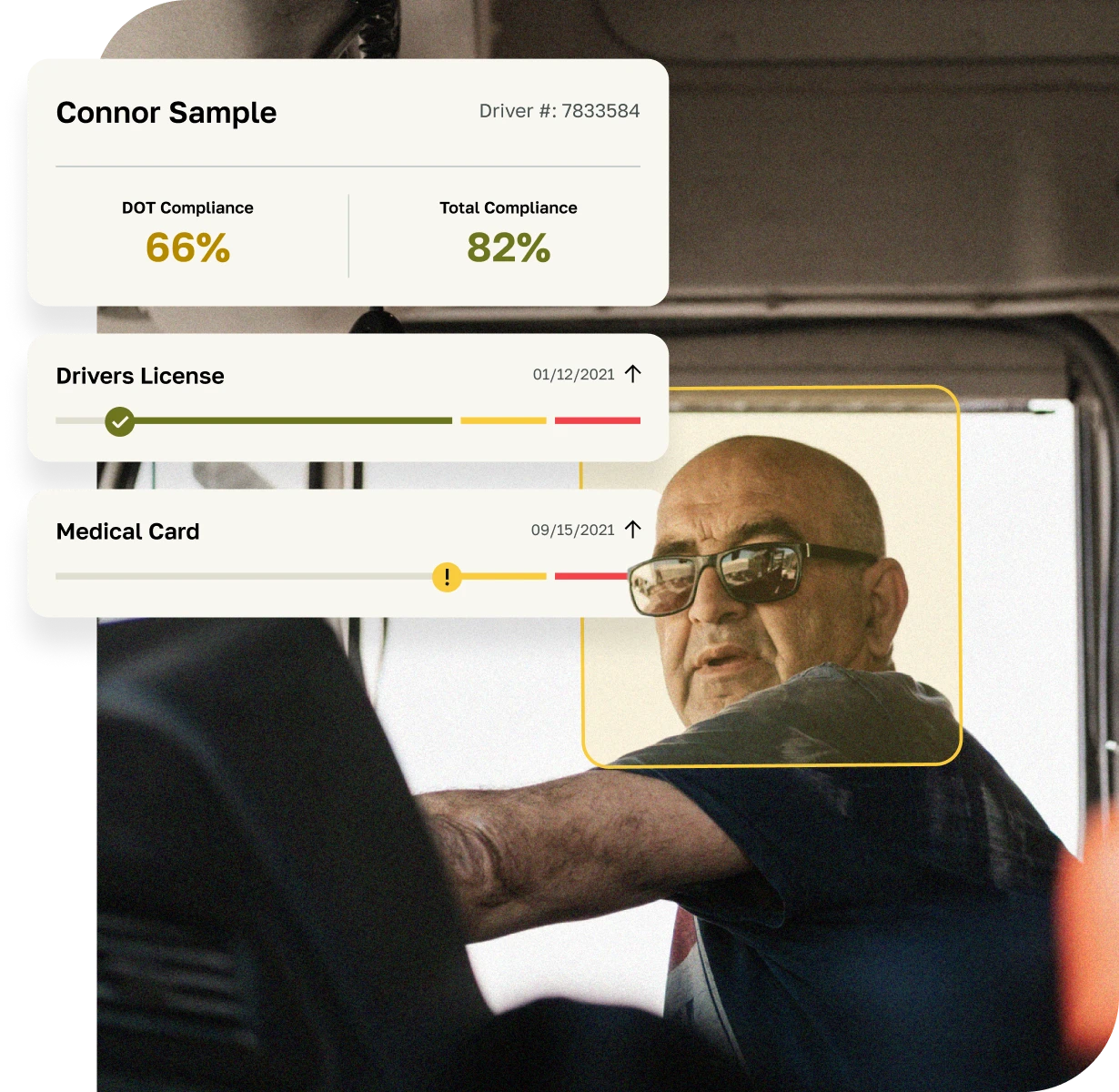
Driver Qualification File Management
Simplify one of fleet compliance’s most complex requirements by centralizing records, tracking expirations, and keeping every driver audit-ready.
Learn More
Fleet compliance programs are structured systems that help transportation companies meet Department of Transportation (DOT), Federal Motor Carrier Safety Administration (FMCSA), and state-level regulations. Instead of handling compliance reactively, a fleet compliance program provides an organized framework for managing driver files, vehicle inspections, electronic logging device (ELD) data, Hours of Service (HOS) rules and drug and alcohol testing requirements.
A strong program typically includes policies, training, reporting tools, and ongoing monitoring to ensure a fleet stays “audit-ready.” Programs may be developed internally by fleet managers or outsourced to compliance specialists who tailor them to industry and fleet size.
The benefits of compliance programs include improved safety, reduced violations, lower insurance premiums, and protection of operating authority. They also make DOT and FMCSA audits less stressful by ensuring that records and documentation are always up to date.
In short, fleet compliance programs are a proactive way for companies to manage risk, protect drivers, and keep vehicles on the road safely and legally.
Managing compliance is one of the biggest challenges for transportation companies. With constantly changing DOT and FMCSA regulations, fleets need more than ad-hoc solutions, they need structured fleet compliance programs that systematize the process of staying compliant.
A fleet compliance program is a comprehensive framework that combines policies, training, technology, and audits to ensure a fleet operates legally, safely and efficiently.
Driver Qualification & Safety
Maintaining complete driver qualification files (DQFs).
Tracking CDL renewals, endorsements, and medical certificates.
Conducting ongoing safety and compliance training.
Vehicle Maintenance & Inspection
Scheduling preventive maintenance aligned with DOT requirements.
Documenting inspections and repair history.
Ensuring vehicles meet federal and state safety standards.
Hours of Service (HOS) & ELD Compliance
Monitoring electronic logging device (ELD) data.
Ensuring drivers stay within HOS limits.
Providing ELD training for accuracy and compliance.
Drug and Alcohol Testing Programs
Managing random, pre-employment, and post-accident testing.
Maintaining compliance with FMCSA Part 382 requirements.
Keeping accurate test records for audits.
Audit Preparation & Record-Keeping
Conducting mock audits to identify compliance gaps.
Keeping all compliance records organized and accessible.
Preparing documentation for DOT or FMCSA inspections.
Proactive Risk Management: By catching compliance gaps early, fleets avoid costly fines and violations.
Audit Readiness: Programs ensure fleets are always prepared for DOT or FMCSA audits.
Improved CSA Scores: Consistent compliance reduces violations, lowering CSA scores and insurance costs.
Safety Improvements: Training and oversight reduce accidents, protecting drivers and the public.
Operational Efficiency: With structured processes, fleets spend less time chasing paperwork and more time focusing on productivity.
Internal Programs: Managed by a fleet’s own compliance staff using software and policies.
Outsourced Programs: Developed and maintained by compliance consulting firms who monitor and support regulatory requirements.
Hybrid Programs: Combine in-house oversight with outside expertise and compliance software.
Staying Current on Regulations — DOT and FMCSA rules change frequently.
Driver Turnover — High turnover can disrupt compliance processes.
Paperwork Overload — Manual filing leads to disorganization and lost records.
Technology Gaps — Fleets without software may struggle to track renewals and deadlines.
Centralize Compliance Records — Keep all driver and vehicle files in one digital system.
Automate Reminders — Use software to track license renewals, inspections, and deadlines.
Train Continuously — Provide regular training for drivers and staff on compliance changes.
Conduct Regular Mock Audits — Test compliance readiness before official inspections.
Review CSA Scores Regularly — Address problem areas before they escalate.
Small Fleets — Avoid administrative overload by standardizing compliance processes.
Growing Carriers — Scale compliance programs as operations expand into new markets.
Enterprise Fleets — Standardize compliance policies across multiple states and terminals.
Specialized Fleets — Construction, utility, and hazmat fleets gain tailored compliance strategies.
Fleet compliance programs are more than a regulatory requirement, they are a strategic investment in safety, efficiency and long-term success. By creating a structured compliance framework, fleets protect themselves from violations, reduce risk and improve overall operations.
Whether managed internally, outsourced to specialists, or built as a hybrid solution, compliance programs ensure that fleets remain audit-ready, drivers stay safe and vehicles operate legally.