Driver Qualification File Management
Simplify one of fleet compliance’s most complex requirements by centralizing records, tracking expirations, and keeping every driver audit-ready.
Learn More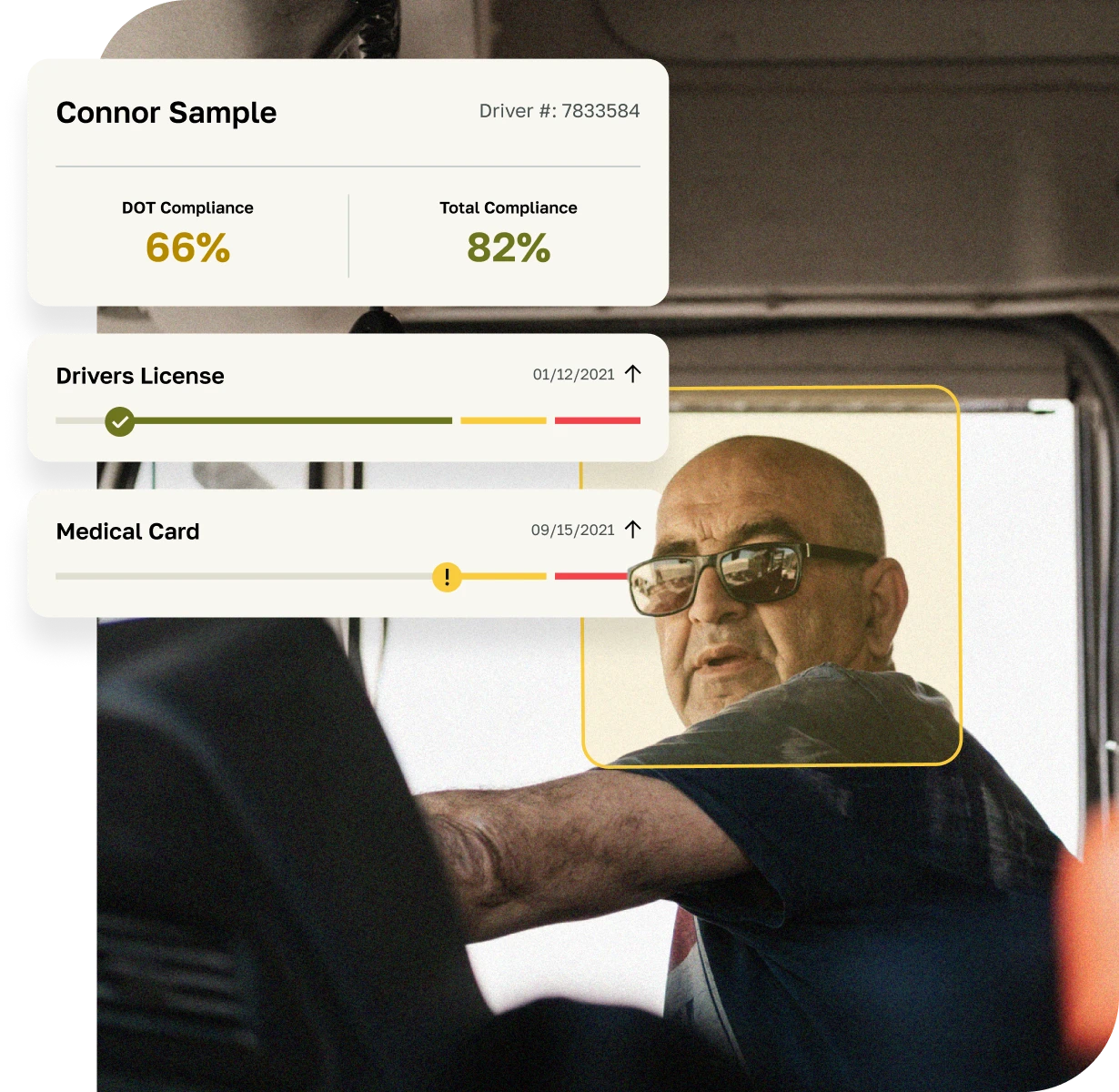
Driver Qualification File Management
Simplify one of fleet compliance’s most complex requirements by centralizing records, tracking expirations, and keeping every driver audit-ready.
Learn More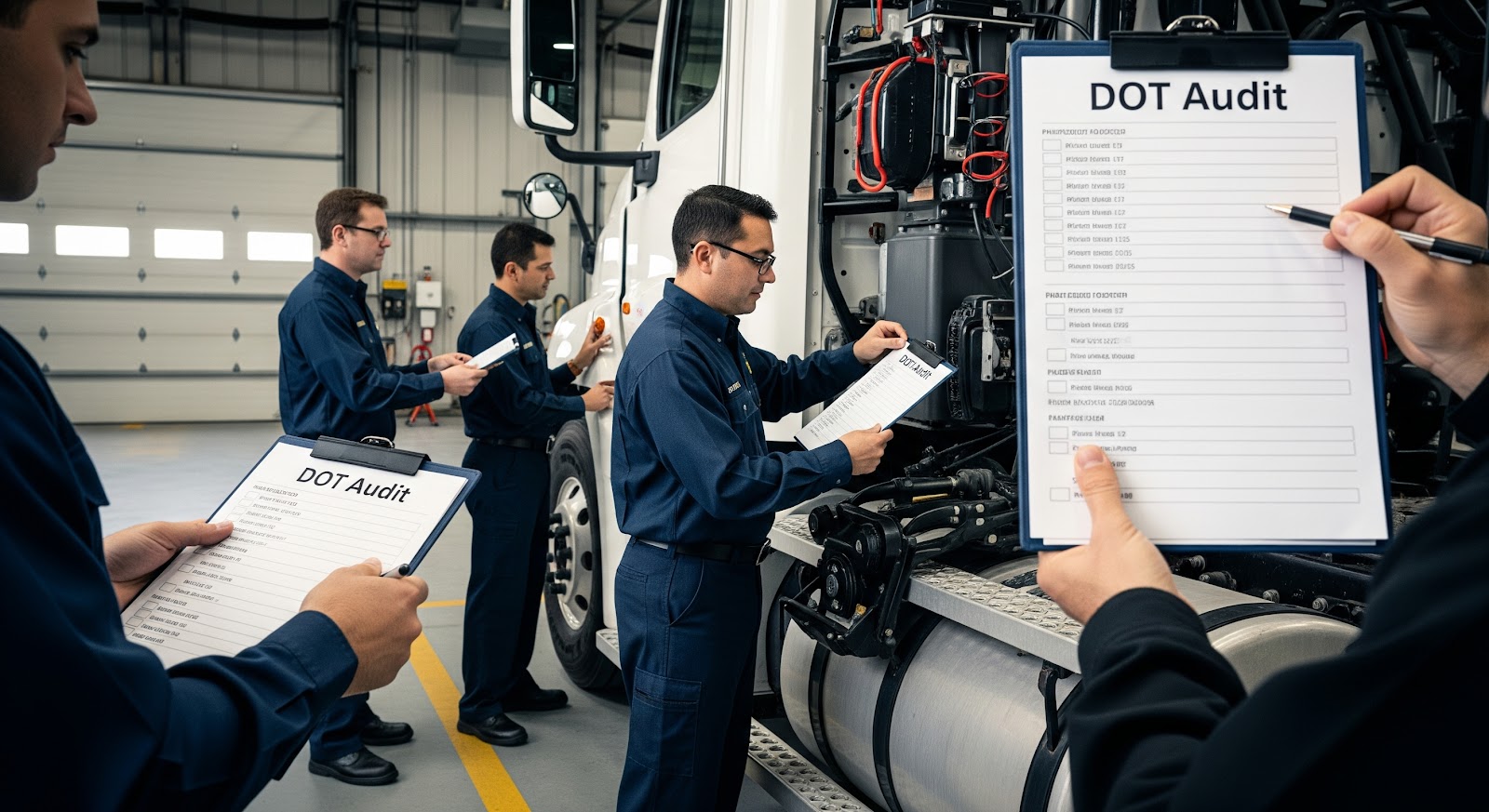
Fleet compliance audits are formal reviews of a company’s drivers, vehicles, and operational records to ensure compliance with Department of Transportation (DOT) and Federal Motor Carrier Safety Administration (FMCSA) regulations. These audits evaluate whether a fleet is meeting requirements for driver qualification files, hours of service (HOS), electronic logging devices (ELDs), vehicle maintenance records, and drug and alcohol testing programs.
Audits may be conducted by regulatory agencies such as the FMCSA or internally through “mock audits” to identify risks before an official inspection. A fleet compliance audit typically includes reviewing documentation, inspecting vehicles and interviewing drivers and management staff.
Fleets that fail an audit risk fines, penalties, and in severe cases, being placed out of service. By preparing in advance, often with compliance software or consulting services, companies can ensure they remain audit-ready at all times.
In short, fleet compliance audits protect businesses by verifying that operations are safe, legal and aligned with federal and state transportation standards.
Fleet compliance audits are structured reviews designed to ensure that transportation companies comply with federal, state, and local regulations. For fleets, these audits are most often tied to the Federal Motor Carrier Safety Administration (FMCSA), a division of the U.S. Department of Transportation (DOT).
A compliance audit verifies that your fleet’s drivers, vehicles, and record-keeping systems meet the required standards. Failure to comply can result in steep fines, damaged CSA (Compliance, Safety, Accountability) scores, and even suspension of operating authority.
Audits typically include:
Driver Qualification Files (DQFs)
Valid CDLs, endorsements and medical certificates.
Employment applications, driving history and background checks.
Drug and alcohol testing program documentation.
Hours of Service (HOS) & ELDs
Review of electronic logging device (ELD) data.
Verification that drivers comply with HOS regulations.
Inspection of log records for accuracy.
Vehicle Maintenance & Inspections
Preventive maintenance schedules.
DOT inspection records.
Repair and service logs.
Safety and Accident Records
Documentation of accidents, incident reports and corrective actions.
Evidence of driver training on safety protocols.
Drug and Alcohol Testing Compliance
Random testing program documentation.
Post-accident and return-to-duty test records.
Records in compliance with FMCSA Part 382.
FMCSA Compliance Review (CR): A formal audit conducted by the FMCSA to evaluate compliance with federal safety regulations.
DOT Safety Audit: Often performed for new carriers within the first 12 months of operation.
Internal or Mock Audit: Conducted by fleets themselves or with the help of consultants to identify compliance gaps before a formal inspection.
Avoiding Penalties and Fines: Non-compliance can lead to thousands of dollars in fines.
Protecting Operating Authority: A failed audit can result in suspension of a company’s ability to operate.
Reducing Liability: In the event of an accident, strong compliance records protect against legal exposure.
Improving CSA Scores: Good audit results lower CSA scores, which can also reduce insurance premiums.
Maintain Accurate Records: Keep driver, vehicle, and safety documentation up to date and organized.
Conduct Mock Audits: Partner with compliance consultants or use software to simulate real audits.
Use Fleet Compliance Software: Automate reminders for driver license renewals, medical exams, and inspections.
Train Drivers and Staff: Ensure drivers know HOS rules, proper ELD use and safety requirements.
Stay Current on Regulations: DOT and FMCSA rules evolve, ongoing training and consulting help fleets adapt.
Expired CDLs or medical certificates.
Incomplete driver qualification files.
Improper or missing ELD records.
Missed preventive maintenance or inspection logs.
Lack of random drug and alcohol testing documentation.
Fleet compliance audits are more than a regulatory requirement, they are a safeguard for your business. By ensuring your fleet is always audit-ready, you reduce the risk of fines, improve safety and maintain your operating authority.
Whether preparing for an FMCSA review or conducting an internal audit, the key is organization, documentation and proactive monitoring. Many fleets find that using compliance software, combined with consulting support, makes audits less stressful and far more successful.