Driver Qualification File Management
Simplify one of fleet compliance’s most complex requirements by centralizing records, tracking expirations, and keeping every driver audit-ready.
Learn More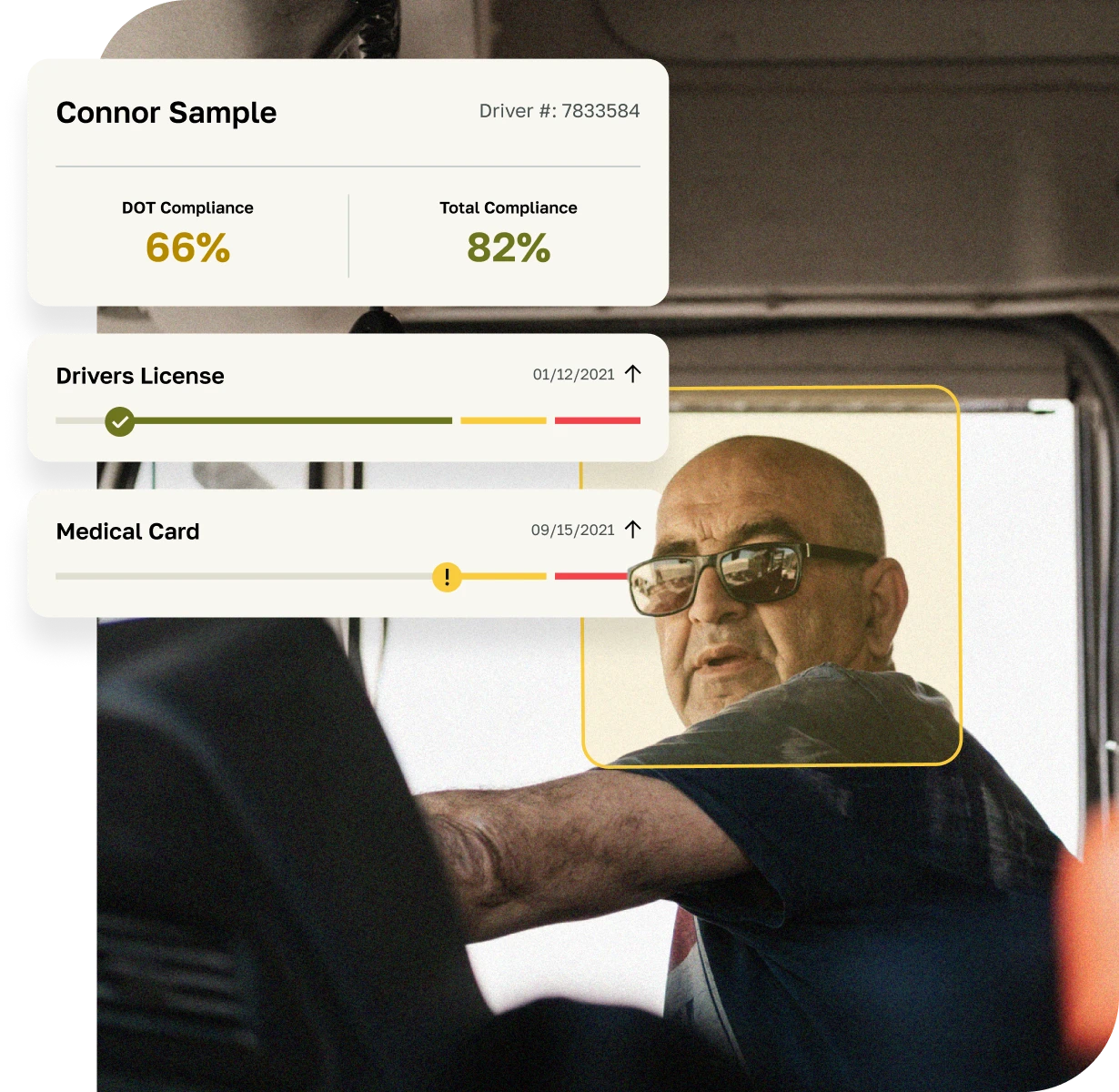
Driver Qualification File Management
Simplify one of fleet compliance’s most complex requirements by centralizing records, tracking expirations, and keeping every driver audit-ready.
Learn More
Fleet compliance services are professional solutions designed to help businesses meet Department of Transportation, Federal Motor Carrier Safety Administration and state-level regulations. Instead of managing compliance in-house, companies can partner with experts who handle critical tasks such as driver qualification file management, vehicle inspection scheduling, electronic logging device monitoring and audit preparation.
These services often include compliance audits, training programs, and ongoing monitoring to ensure fleets remain “audit-ready.” Providers may also offer consulting to create or update compliance policies, customize reporting dashboards, and help fleets avoid violations that lead to fines, downtime, or higher insurance premiums.
Fleet compliance services benefit organizations of all sizes, from small businesses with just a few vehicles to nationwide carriers managing hundreds of drivers. By outsourcing compliance responsibilities, companies reduce administrative burdens, improve safety records, and gain peace of mind knowing that their fleet operates within regulatory requirements.
Operating a commercial fleet requires strict adherence to federal, state, and local regulations. Falling out of compliance can result in costly fines, downtime, and damage to your company’s reputation. Fleet compliance services provide businesses with expert assistance to manage regulatory requirements, streamline operations and maintain safety standards.
Most service providers offer a mix of ongoing monitoring, consulting, and training tailored to a fleet’s size and industry. Common offerings include:
Driver Qualification Management
Maintaining driver qualification files.
Tracking CDL renewals, endorsements, medical certificates and background checks.
Ensuring only fully qualified drivers are on the road.
Vehicle and Equipment Compliance
Scheduling preventive maintenance and required DOT inspections.
Tracking repair history and certifications.
Ensuring all vehicles meet federal and state safety requirements.
Electronic Logging Device and Hours of Service Compliance
Monitoring ELD data for violations.
Training drivers on HOS rules.
Preparing digital reports for FMCSA audits.
Compliance Audits & Reporting
Conducting mock audits to prepare for DOT or FMCSA inspections.
Generating compliance scorecards and risk assessments.
Identifying weak areas before they result in violations.
Training & Consulting
Offering driver and manager training on safety regulations.
Providing policy development and compliance program design.
Keeping fleets up to date with regulatory changes (DOT, FMCSA, OSHA, EPA).
Regulatory Confidence: Partnering with experts ensures your fleet meets all requirements, minimizing the risk of fines and penalties.
Time and Resource Savings: Compliance paperwork and monitoring can overwhelm internal staff. Outsourcing frees up time for core operations.
Improved Safety Records: Services that monitor driver behavior, training, and vehicle maintenance help reduce accidents and improve CSA scores.
Lower Insurance Costs: Fleets with strong compliance records are often rewarded with reduced premiums.
Audit Readiness: Having documentation and digital records organized ensures smooth audits and inspections.
Small Fleets — Avoid being buried in paperwork by outsourcing compliance management.
Mid-Sized Fleets — Gain expertise and automation without hiring a full-time compliance team.
Enterprise Carriers — Scale compliance programs across multiple states and business units with standardized processes.
Specialized Fleets — Construction, utility, delivery, and hazardous materials fleets often require industry-specific compliance programs.
It’s important to distinguish between fleet compliance software and fleet compliance services.
Software: A tool for internal teams to track compliance tasks.
Services: A managed solution where experts actively monitor, audit, and support compliance on your behalf.
Many businesses use both, software for daily tracking and services for consulting, audits, and training.
When evaluating fleet compliance service providers, consider:
Experience — Does the provider specialize in DOT/FMCSA regulations?
Customization — Can they tailor programs for your industry?
Technology Integration — Do they integrate with telematics, GPS, and ELD systems?
Support — Do they offer 24/7 assistance, training, and ongoing updates?
Fleet compliance services are more than just a safety net, they are a strategic investment in operational efficiency and risk management. By partnering with experts who understand DOT, FMCSA, and industry-specific regulations, businesses ensure their fleets operate legally, safely and efficiently.
Whether your company manages five vehicles or five hundred, compliance services help reduce administrative stress, improve safety performance and safeguard your reputation in a competitive industry.