New Fleet Owner Checklist

FLEETWORTHY · SMALL FLEET RESOURCES

New Fleet Owner Checklist

For 2+ trucks: everything a growing fleet needs to get legal, insured, staffed, and hauling. Check items off as you go; your progress is saved on this device.

0/34
Fleet ready
1

Business & legal setup

  • Choose your business structure: Limited Liability Company (LLC), S Corporation (S-Corp), or C Corporation (C-Corp).
  • Get your Employer Identification Number (EIN) from the Internal Revenue Service (IRS).
  • Open a business bank account, separate from your personal one.
  • Open a dedicated tax reserve account and move a percentage of every settlement into it.
  • Set up payroll if you're bringing on W-2 drivers.
2

FMCSA & DOT registration

  • Register for your U.S. Department of Transportation (USDOT) number and Motor Carrier (MC) number.
  • File your BOC-3 process agent designation.
  • Register for Unified Carrier Registration (UCR).
  • Know a new entrant safety audit is likely in your first year, and get your files in order before it happens.
3

Insurance

  • Primary liability insurance.
  • Cargo insurance.
  • Physical damage insurance for your trucks and trailers.
  • Check your state's workers' compensation requirement once you have a driver who isn't you.
4

Truck & compliance

  • Buy or lease your trucks.
  • Register for the International Registration Plan (IRP).
  • File Form 2290, the Heavy Vehicle Use Tax, for every truck right after you register for IRP. Most IRP registrations need a completed 2290 before they can finish.
    ETTSelf-file through ExpressTruckTax by Fleetworthy, the #1 Form 2290 e-file provider for the industry, built to handle a multi-truck filing in one pass.
    ETT+Rather call it in? ExpressTruckTax Plus files every truck for you by phone, no login required.
  • Register for the International Fuel Tax Agreement (IFTA). This isn't a one-time step, returns are due every quarter for as long as you're running interstate.
  • Check if you need a weight-distance tax registration. Connecticut, Kentucky, New Mexico, New York, and Oregon each charge their own mileage-based tax on top of IFTA if you run through them: CT's Highway Use Tax, KY's KYU, NM's Weight Distance Tax, NY's Highway Use Tax (HUT), and OR's Weight-Mile Tax.
  • Choose a Federal Motor Carrier Safety Administration (FMCSA)-registered Electronic Logging Device (ELD) for every truck.
  • Register with the FMCSA Drug & Alcohol Clearinghouse and enroll in a testing consortium.
  • Build a driver qualification file for every driver you hire, before they're dispatched. This one isn't a build-it-once task either: MVRs need an annual pull, medical certs expire and need renewing, and the file needs upkeep for as long as that driver's on staff.
    • Employment application with a full 10-year history
    • Initial and annual Motor Vehicle Record (MVR)
    • Commercial Driver's License (CDL) copy and Department of Transportation (DOT) Medical Examiner's Certificate
    • Pre-employment drug test result
    • Road test certificate and annual Certificate of Violations
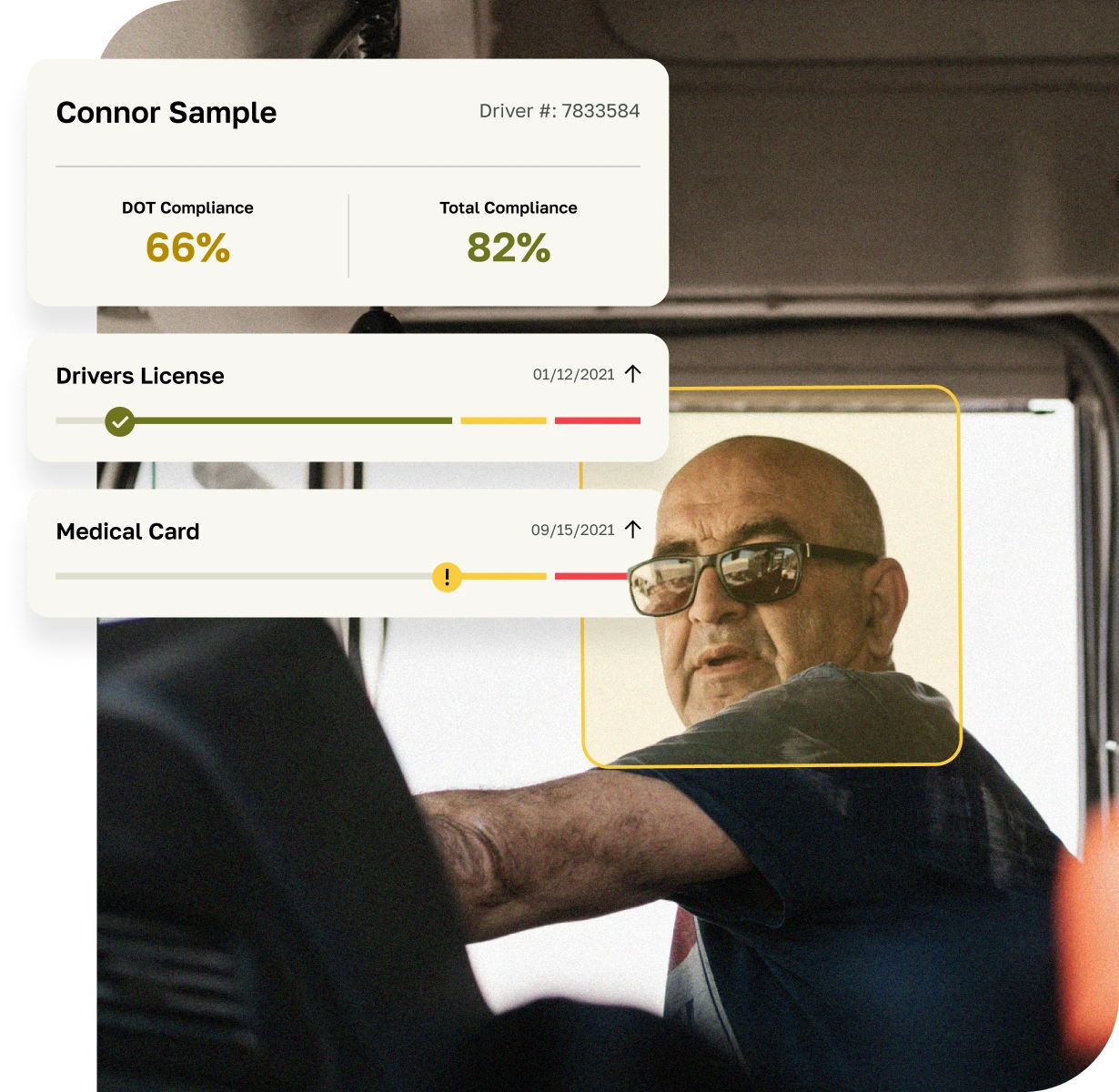
    HaulHaul by Fleetworthy keeps every driver file audit-ready with AI-powered document reading, cutting the admin work by up to 40 percent, without adding headcount.
  • Classify every driver correctly: employee (W-2) or contractor (1099), and collect a signed W-9 from every contractor before they haul a load.
5

On the road

6

Taxes & money

7

Finding & keeping work